
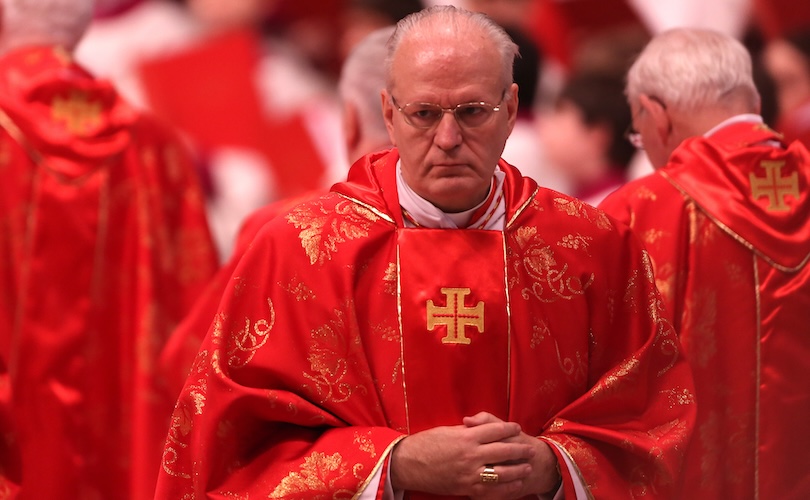
Cardinal Peter Erdő returned to public worship on Pentecost Sunday after three months away due to ill health, stepping back into a familiar role in front of the faithful. His presence at Mass offered a quiet sign of resilience and a moment for the community to gather and hope together. The day carried extra meaning because Pentecost is about renewal and unity, and his attendance underscored both themes in a simple, human way.
The image of a senior church leader back in a congregation resonates beyond church walls. People notice when someone who has been absent for months shows up again, and that recognition brings a ripple of relief and curiosity. For parishioners and colleagues alike, seeing him at Mass felt like a small victory — proof that routines can resume and that care and prayer matter.
Pentecost itself adds a layer of symbolism to the scene. It’s a day when communities remember the coming of the Holy Spirit and the start of shared mission, so a leader returning to public worship on that date carries symbolic weight. Attending Mass on Pentecost can feel like stepping into renewed responsibility while leaning on collective support, and the timing amplified the emotional charge of his appearance.
His return also highlights the balance between health, vocation, and public life for clergy. Church roles often demand visible presence, but real recovery needs privacy, rest, and measured steps back into public duties. When a figure like Cardinal Erdő shows up at Mass after months away, it signals a careful re-engagement rather than a full sprint back into everything at once.
The congregation’s response matters as much as the act of attending. People who have watched over someone through a period of illness tend to show up with gratitude, tempered optimism, and a readiness to help if needed. That combination makes the liturgy itself feel supportive, not just ceremonial, and turns a regular service into a communal act of encouragement.
For observers who follow church life more broadly, the appearance prompts questions about future public engagements and responsibilities. Will this be a gradual return to a normal schedule, or will duties be adjusted to match ongoing recovery? Those are practical concerns, but they spring from a single, clear fact: the cardinal was present at a significant service after a prolonged absence.
In the end, the moment was straightforward and human. It was not a dramatic announcement or a formal pronouncement; it was a person reclaiming a piece of ordinary life in a place that matters to him and to others. That plainness is part of why the scene resonated — it reminded people that recovery often shows up in small, steady steps rather than big headlines.
