
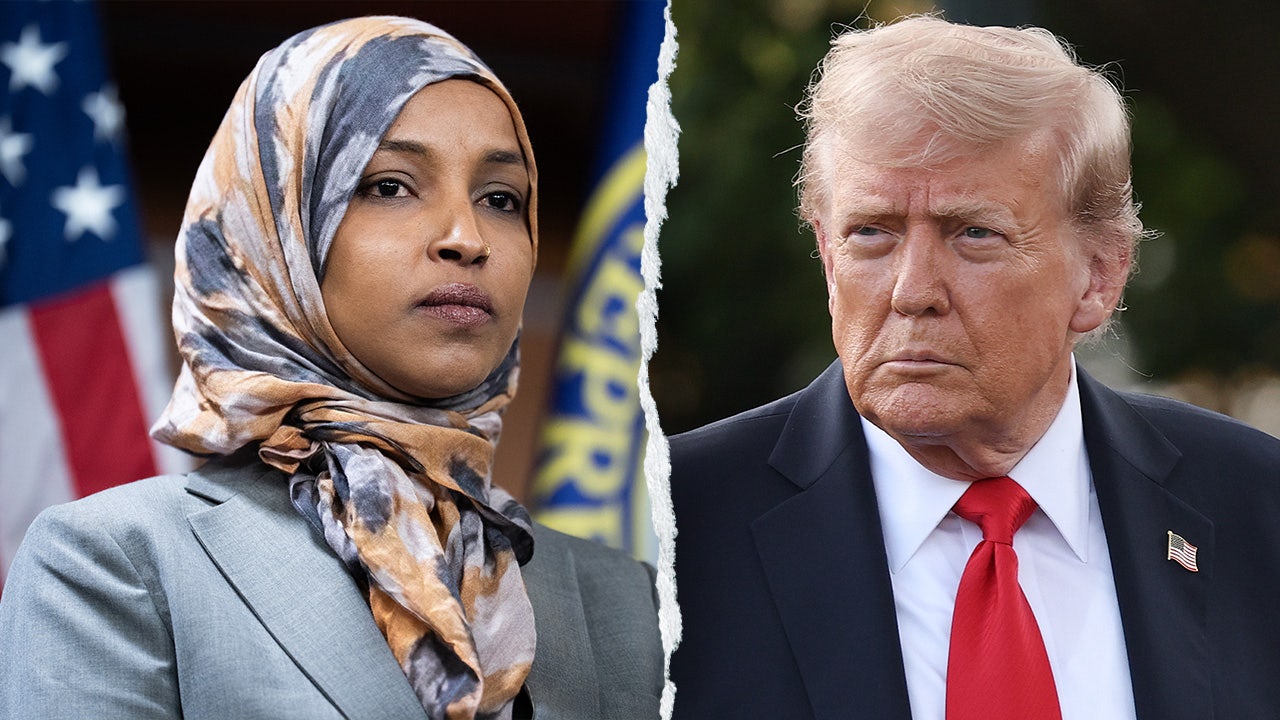
President Donald Trump took aim at Rep. Ilhan Omar on Tuesday, saying she could face jail or deportation as federal investigators examine allegations tied to her citizenship history. His comments landed hard, with Trump calling the Minnesota Democrat “a disgrace to our country” and framing the dispute as a matter of honesty, immigration law, and basic accountability.
The exchange happened in the Oval Office during an event on fraud incentives, after a reporter asked whether questions about Omar’s age could affect her immigration status. Trump answered without hesitation, saying, “Well, she could be. She could also go to jail,” before adding, “You know, they keep talking about deportation. No, she could go to jail.”
Trump did not lay out a specific charge, and he did not present fresh evidence during the back-and-forth. He did, however, sharpen his criticism by calling Omar “a very dishonest person” who “hates our country,” turning the moment into a broader attack on her public stance and political identity.
The pressure around Omar has intensified because of a federal investigation into allegations involving her citizenship paperwork. At the center of it is a question over whether her birth year was misrepresented, a detail that could matter a great deal if it affected how she was able to obtain U.S. citizenship through her father in 2000.
That timeline is the heart of the issue. If Omar was still a minor when her father became a citizen, she may have qualified through him, but if she was already 18, she would have needed to pursue citizenship on her own. That small-looking detail has become the kind of bureaucratic flashpoint that can change everything.
Border czar Tom Homan has also stepped into the fight, saying Omar could lose her citizenship and be deported if investigators prove immigration fraud. Federal agents reportedly searched her Washington, D.C., home on Oct. 12 and seized her cellphone and other belongings, a move that signaled the probe was not just chatter from the sidelines.
Homan has argued that denaturalization is possible when someone lies during the naturalization process, and he made clear that the same rules apply no matter how loud the political noise gets. “Of course, if you lie during the naturalization process, there is a process to denaturalize somebody. We’ve done it before,” he said. “And certainly, if the evidence points that way, that could happen.”
Omar has denied wrongdoing and says the investigation is pure political persecution. She is hardly alone in that view, with Democrats like House Minority Leader Hakeem Jeffries also blasting the inquiry as an attack on a high-profile Trump critic in the middle of a bruising election cycle.
That defense has kept the story locked in the center of a bigger national fight over immigration, naturalization, and how aggressively the government should go after suspected fraud. Homan has said Omar would be treated like anyone else, while declining to reveal the details investigators may be weighing.
Trump used the moment to hit Omar on more than paperwork. He criticized her for speaking about how America should be run, questioning why she would lecture the country after coming from Somalia and casting her rise to Congress as something he views with disbelief.
“Then she comes over here, and she says that she wants to tell us how to run America,” Trump said. “She wants to tell us how to run the United States of America.” He then dismissed her claims to constitutional rights as he kept pressing the point that her election had been “amazing.”
By the end of the exchange, Trump settled on a line that was blunt even by his standards. “She’s a disgrace to our country,” he said, before adding one softer note: “I hope they treat her fairly.”
