
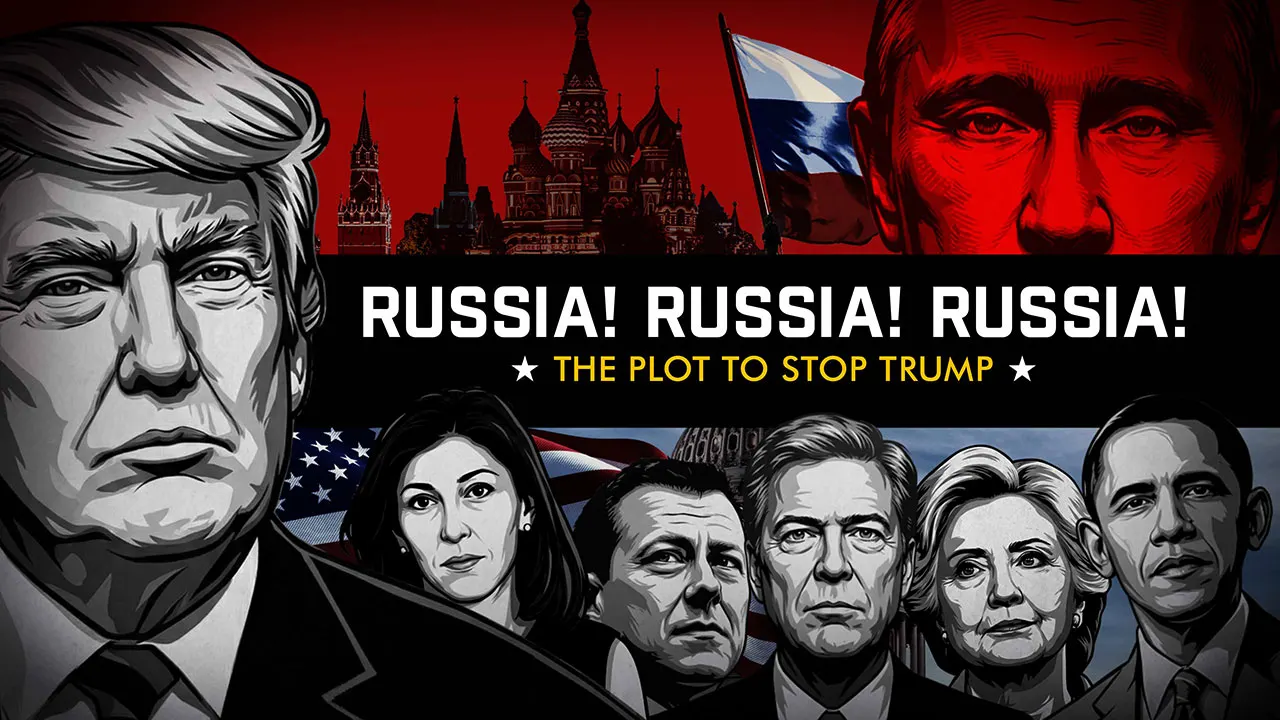
• The Russia collusion narrative and how it took hold
• The role of Hillary Clinton’s campaign and the Steele dossier
• FBI, CIA, and Obama-era officials in the wider push
• Peter Strzok, Lisa Page, and the “insurance policy” angle
• Robert Mueller’s long investigation and what it failed to find
For years, the Trump-Russia story hung over American politics like a storm cloud that never moved. What began as a loud accusation turned into a full-blown national obsession, fueled by leaks, media frenzy, and a steady drip of claims that always seemed bigger than the evidence behind them.
The new Fox Nation documentary series, “Russia! Russia! Russia! The Plot to Stop Trump,” digs into that chaos with newly disclosed records and declassified material. The result is a hard look at how a narrative can snowball when powerful people, curious reporters, and determined political operatives all decide the same story is too useful to question.
The accusation itself was simple and explosive: Donald Trump had supposedly worked with Russia to win the 2016 election. That claim dominated headlines, shaped public opinion, and infected nearly every corner of political debate, even though the supposed proof never seemed to catch up with the outrage.
At the center of the mess sits the Steele dossier, the infamous collection of opposition research that was treated like treasure by the people who wanted Trump gone. The program argues that Hillary Clinton’s campaign played a key role in pushing the false storyline, helping turn a partisan weapon into a national scandal.
That matters because the dossier was not some neutral intelligence product dropped from the sky. It was a political document dressed up as something more serious, then passed along to institutions with the power to make it sound official.
Once the accusation reached the FBI and other agencies, it took on a life of its own. Officials who should have been cautious instead gave the rumor oxygen, and the press ran with it as if doubt was a sign of weakness rather than responsibility.
The series also digs into the behavior of former FBI agent Peter Strzok and FBI lawyer Lisa Page, whose private texts showed a deep anti-Trump bias. Those messages have long been central to questions about whether the bureau was pursuing facts or chasing a political outcome.
One phrase in particular still stands out: “insurance policy.” That idea, according to the material discussed in the documentary, suggests the investigation itself was treated by some insiders as a tool to damage Trump no matter what the evidence showed.
Then there is the larger cast of Obama-era officials and intelligence figures who were caught up in the aftermath. Brennan, Comey, and others are presented as part of a chain of events where suspicion hardened into an accepted storyline, even as the underlying claims remained shaky.
The documentary’s take is blunt: the public was told one thing while a very different reality was unfolding behind the scenes. Instead of transparency, there were careful omissions, strategic leaks, and enough selective handling of information to keep the fire burning.
That is what made the Russia saga so toxic. It was not just a political fight. It became a machine for shaping belief, and once that machine was running, facts had a hard time breaking through the noise.
Robert Mueller’s investigation added even more weight to the whole affair, lasting for 22 months and consuming endless attention. Yet after all that time and all that drama, the central accusation never delivered the blockbuster proof that so many people had promised.
That gap between the certainty of the accusations and the emptiness of the final result is what still makes the story sting. The damage was real, the accusations were huge, and the appetite for scandal was bigger than the truth.
The documentary does not treat that as a footnote. It treats it as the point, showing how a political hit job can spread through Washington when the right people decide the target matters more than the facts.
