
I’ll cover the history and science behind fracking, explain how the technique actually works, address water and chemical concerns, highlight the scale and economic importance, and note why energy policy and emerging tech demand make fracking central today.
Fracking sits on a long chain of inventions that pushed human ability to move and measure fluids. Think Torricelli’s mercury tube in 1643, the pump technology the Egyptians used millennia ago, and later mechanical advances like Rudolf Diesel’s engine. Those building blocks, stretched and improved over centuries, make modern hydraulic fracturing possible.
Early experiments in well stimulation go back further than most realize; Halliburton performed the first hydraulic fracture job in 1949, and inventive, risk‑tolerant techniques like E.A. Roberts’ nitroglycerin-loaded torpedoes date to the 19th century. Practical advances were incremental and often driven by wildcatters willing to bet on new methods. That pragmatic streak is the backbone of U.S. oilfield innovation.
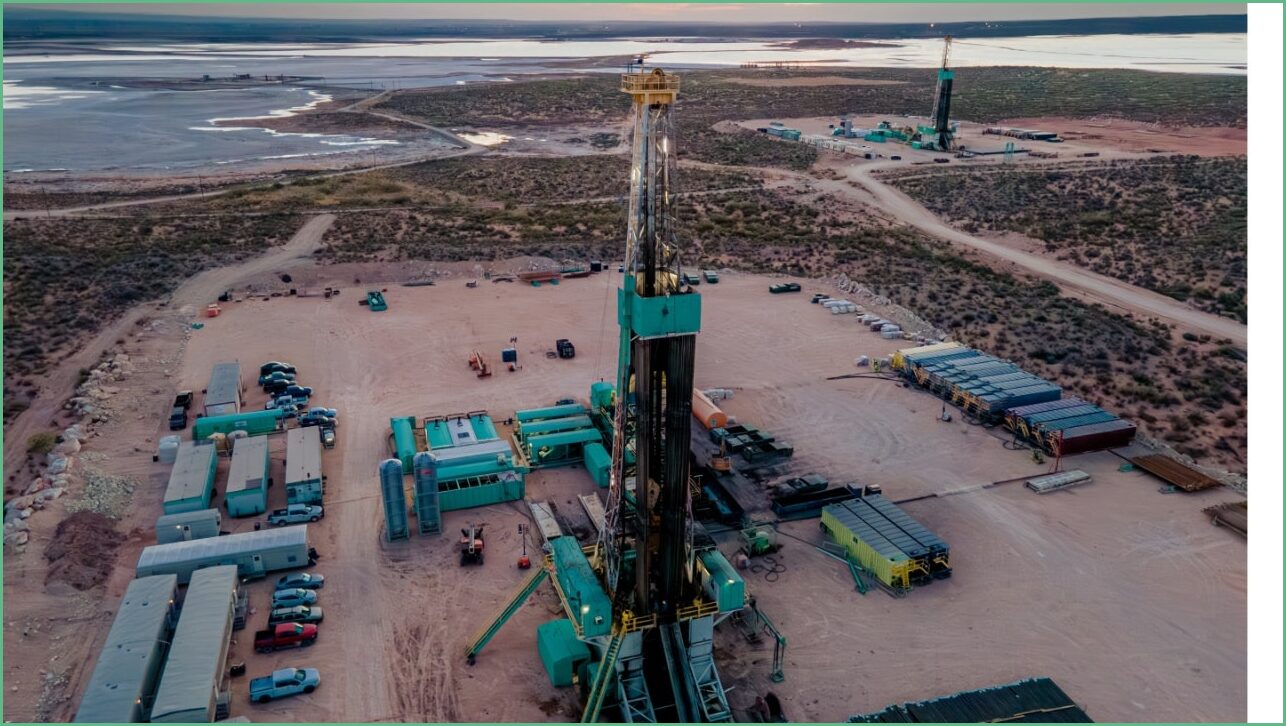
The science is not mystical. Geologists and rock mechanics calculate the pressures needed to crack a formation, and completions engineers design fracture programs around those numbers. Wireline crews segment the well into stages, perforate casing in spots a few hundred feet at a time, and frac crews pump a mix of water, sand and additives down the vertical, then deep into the horizontal leg.
Pumping rates and pressures are intense by design: flows can reach several thousand gallons per minute against surface pressures measured in the thousands of psi. The goal is to create a conductive network of fractures so hydrocarbons can flow back to the wellbore. Horizontal exposure multiplies the contact area with the reservoir, which is why combining directional drilling with high‑rate fracking unlocked shale plays.
George Mitchell deserves credit for proving the combo of horizontal drilling and aggressive fracturing could make source rocks like shale economically productive. He spent his own money testing the idea and turned a theory into an industry, changing the math on U.S. production and reshaping global markets. That commercial success is what turned fracking from a curiosity into a pillar of domestic energy.
Concerns about sand and water get loud because they’re visible. Millions of pounds of silica sand are used in a typical multi‑stage well, and millions of gallons of water are pumped downhole. A useful comparison: the watering of U.S. golf courses uses more water than all of North America’s fracking activity, and most golf course watering is not recycled at all.
Chemicals are another target, but the reality is complex: modern frac fluids rely on things like polyacrylamides for friction reduction, guar from bean extracts for viscosity, simple clay stabilizers and small doses of acids and biocides. Many of these materials are hazardous only at concentrated levels, and industry has shifted to lower-toxicity blends while recycling produced water where possible. If you want a dramatic demonstration, some industry advocates have even staged stunts to show fluid toxicity is overstated, and the broader takeaway is that industry practices have changed a lot.
Worries about groundwater contamination often focus on surface handling or well integrity rather than the subsurface fracture itself, and experienced operators point out there’s scant evidence of a frack-induced “intrusion into an aquifer”. Many companies now treat and reuse produced water, and electric pumping fleets are replacing diesel rigs to cut emissions—steps taken voluntarily by operators, not always by regulation.
TRUMP ADMIN RELAUNCHES KEY COUNCIL AFTER BIDEN ADMIN SHUTTERED IT: ‘IGNORANCE AND ARROGANCE’
Still, the debate is as much political as technical. Fracking supplies roughly three‑quarters of U.S. oil and gas production; eliminate that and you don’t just raise prices, you hollow out energy security. Funded campaigns and documentaries have pushed a narrative that ignores the tradeoffs and the reality that affordable, reliable energy underpins modern life.
AMERICAN ENERGY DOMINANCE GIVES US THE POWER TO FEND OFF ENEMIES AND RESCUE VENEZUELA
Proposals to move to all‑electric grids run into hard math. As noted by some analysts, achieving a fully electric system with meaningful backup would require storage on an enormous scale—on the order of months of battery reserves versus the minutes we effectively have today. The costs and environmental footprint of building that capacity would be staggering, and it’s reasonable to question whether a wholesale swap is practical without massive economic pain.
And then there’s demand growth from emerging tech. Power-hungry AI data centers and cloud services are increasingly natural gas customers, creating a new, industrial-scale appetite for reliable domestic gas. That shift reinforces a simple fact: fracking isn’t just history and hydraulics, it’s the enabler for jobs, national security and technological progress in the near term. The debate will continue, but energy planners ignore that reality at their peril.
