
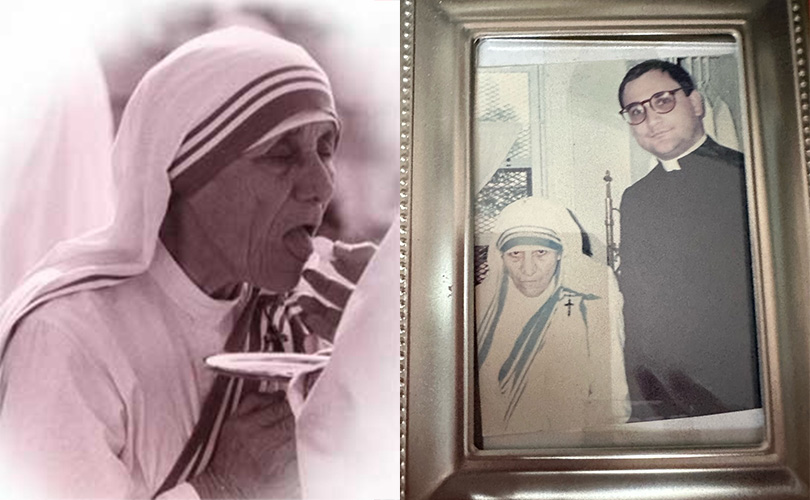
Fr. John Perricone is pushing back after questions arose about his citation of St. Mother Teresa’s “unsparing judgment,” and he has produced a personal photograph with the saint to back up his account. The image and his explanation have reignited discussion about Mother Teresa’s uncompromising moral clarity and how contemporary clergy cite and interpret her words. This piece looks at why the photo matters, what the phrase suggests about her approach, and why this exchange matters to people watching the Church today.
Fr. Perricone has stood his ground amid suggestions that he misrepresented Mother Teresa. He insists the phrase “unsparing judgment” accurately reflects her style of speaking and the firmness she brought to pastoral matters. The dispute is less about who was right or wrong and more about how a revered figure’s tone gets used in today’s debates.
Mother Teresa is widely remembered for radical charity, but also for speaking plainly about moral questions. That mix of tenderness and clarity is what makes her remarks so quotable and, at times, controversial. When a modern priest cites her in a strong way, it invites fresh attention to both her life and her language.
There’s symbolic weight in a personal photograph of a priest with a canonized saint. Images like that give a human face to a line of transmission, tying an abstraction—an attributed phrase—to a living connection. For many Catholics, seeing a priest who actually met Mother Teresa lends credibility and an emotional charge the written word alone cannot provide.
Still, a photograph does not resolve every question about context and meaning. Photos show presence but not private conversations or intent. The debate over a single phrase often comes down to interpretation, and people interpret through the lens of their own priorities and concerns.
People who defend Fr. Perricone point out that saints are complex and their statements can be sharp when addressing moral urgency. To them, “unsparing judgment” captures a pastoral firmness that refused to compromise on core truths. That perspective resonates with believers who want clear moral guidance rather than hedged language.
Critics worry that quoting a strong phrase without full context can create a caricature of a figure like Mother Teresa. They argue for careful citation to avoid turning a nuanced witness into a blunt instrument in contemporary disputes. It is a reasonable caution in an era where snippets travel fast and nuance often gets lost.
The priest’s photo has also sparked conversation online and in parishes about how clergy should represent the saints they admire. Some say personal anecdotes and images deepen the faithful’s connection to tradition. Others urge that such materials be paired with thorough explanation to prevent misunderstandings.
Beyond personalities, this episode taps into a broader tension: how to balance reverence for saintly witness with responsible use of their words. Saints are models, but they are also historical actors whose statements reflected specific moments and challenges. Responsible citation requires remembering both the witness and the context.
For parishioners watching the exchange, the matter can feel personal. They want priests who are honest about their sources and who present role models faithfully. At the same time, they value encounters—like meeting or seeing a saint in a photo—that make the faith feel immediate and alive.
What will likely stick from this is less about winning an argument and more about tone. How clergy quote holy men and women shapes how the faithful hear doctrine and charity in practice. Fr. Perricone’s photograph did not end the discussion, but it did bring attention back to Mother Teresa’s uncompromising moral example and how it is remembered today.
