
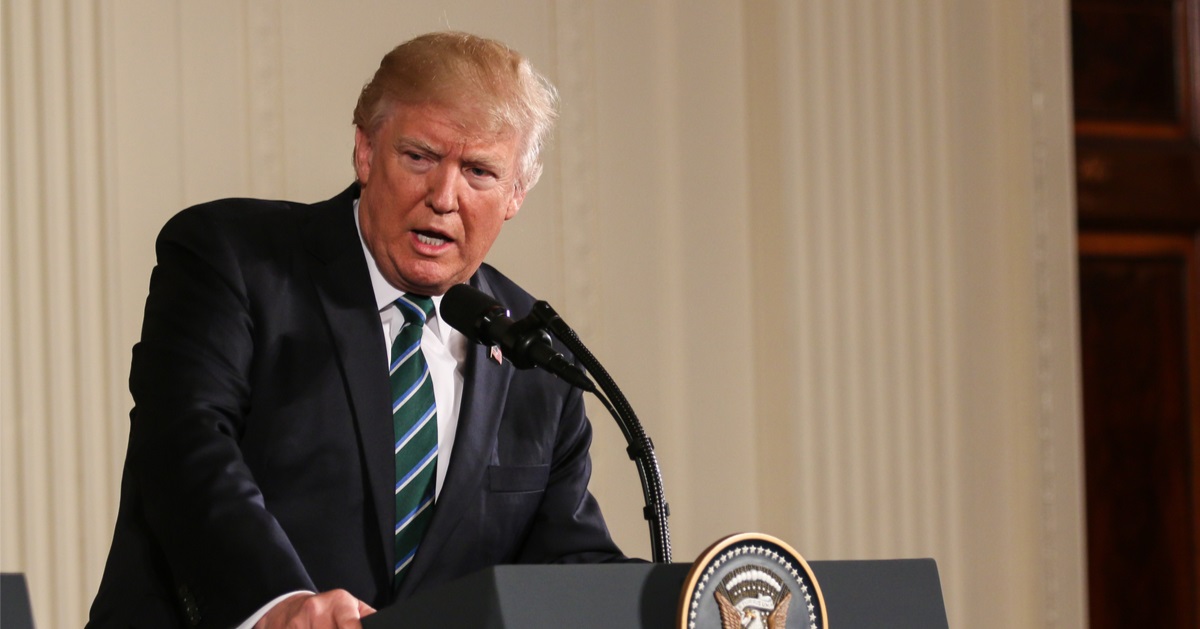
President Donald Trump recently expressed his support for banning congressional members from trading individual stocks. During an interview with Time magazine, Trump confirmed that he would favor such a measure, although he acknowledged that just backing the idea doesn’t ensure its implementation. This stance from Trump comes amid ongoing legislative efforts facing resistance within Congress, where members have much at stake.
In the interview, Trump openly supported the ban when asked if he would endorse it, pointing specifically to Nancy Pelosi’s financial gains. He remarked, “Well, I watched Nancy Pelosi get rich through insider information, and I would be okay with it. If they send that to me, I would do it.” To clarify his position, the interviewer pressed Trump further, and he responded with a firm, “Absolutely.”
Trump’s mention of Pelosi highlights a broader concern regarding congressional stock trading. Pelosi, a long-time influential figure in Washington, D.C., has been a focal point due to her and her husband’s lucrative stock market ventures. Their impressive success rates have raised eyebrows, suggesting potential insider trading activities.
Reports this year have amplified these concerns, especially with the Nancy Pelosi Stock Tracker account on X.com (formerly Twitter) revealing that her investment portfolio returned an impressive 54% in 2024. This achievement surpassed even the popular Inverse Cramer account, making her portfolio the top performer on the Autopilot investment app. Such results have fueled calls for change.
Criticism has mounted against Pelosi and others who have achieved remarkable stock market success while in office. In response, some lawmakers are championing bills to prevent congressional members from stock trading. Senator Josh Hawley of Missouri has been at the forefront of this movement, introducing the “PELOSI Act” in 2023.
Fox News reported that Hawley’s proposal initially struggled under President Joe Biden’s administration but has since gained traction across the political spectrum. With Trump voicing his support, there is renewed hope for the legislation. Trump stated last week that he would “absolutely” sign the ban if it reached his desk, signaling bipartisan interest.
Senator Hawley stressed the need for change, asserting that lawmakers should prioritize their constituents over personal financial gains. He stated, “Members of Congress should be fighting for the people they were elected to serve—not day trading at the expense of their constituents.” This sentiment resonates with many voters who feel that public service should not be a path to personal enrichment.
The debate over congressional stock trading continues to be a hot topic, highlighting the ongoing struggle between transparency and privilege in Washington. As discussions progress, the pressure mounts for lawmakers to address this issue head-on. Ultimately, the question remains whether Congress will act to curb these practices.
The potential ban could reshape the way lawmakers engage with financial markets, aligning their actions more closely with public interests. As the legislative process unfolds, attention will focus on the bill’s progress and the willingness of Congress to enact meaningful reforms. The outcome could set a precedent for future governance and accountability.
This conversation is not just about stock trading but the broader ethical standards expected from public officials. The push for reform underscores a desire for integrity and trust in government. As the nation watches, the decisions made in the coming months will reflect the values that lawmakers prioritize.
For now, the spotlight remains on those in power to demonstrate their commitment to serving the people. The public’s call for transparency and fairness is clear, and how Congress responds will be closely scrutinized. As policymakers deliberate, their choices will shape the narrative of accountability in American politics.
The journey toward reform is complex, with various interests at play, but the stakes are high. The nation looks to its leaders to navigate these challenges and emerge with solutions that reinforce democratic principles. Amid the ongoing debate, the hope is for a resolution that upholds the public’s trust.
Navigating this issue requires careful consideration of both ethical concerns and practical implications. Lawmakers must weigh the potential impact of the ban on their financial activities against their responsibilities to the electorate. The discourse around this topic is a reminder of the constant balancing act in governance.
Ultimately, the goal is to create a system that prioritizes the public good over personal gain. Whether through legislative action or public pressure, the aspiration for a fairer political landscape endures. As the conversation evolves, the nation awaits the decisions that will define the integrity of its institutions.
The dialogue surrounding congressional stock trading is a testament to the enduring quest for accountability. In the face of challenges, the expectation is for leaders to rise to the occasion and enact meaningful change. As the process unfolds, the nation remains hopeful for a resolution that aligns with its democratic ideals.
