
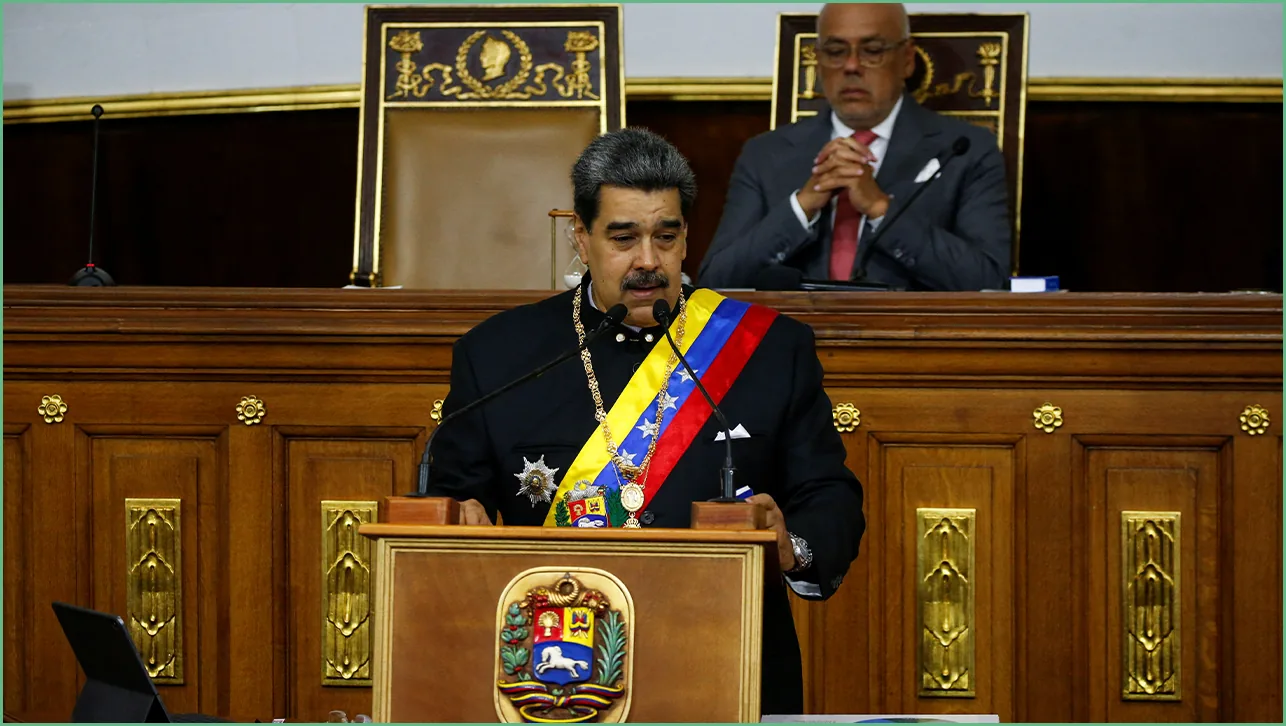
I watched a nightmare from my childhood turn into something I could almost believe: the man who crushed my family’s life taken into custody by American forces. My mother called, sobbing, and said three words that landed harder than any headline: “Trump is doing it!” That moment cracked open a mix of grief, relief and a fierce gratitude for the country that gave us a second chance.
Growing up in Venezuela, my parents ran a small cosmetics business until price controls and state mandates forced them to shut their doors. They cut back on food and sleep so I could study and dream of something better. Those daily losses were not abstract policy failures; they were the concrete reasons we eventually fled.
As a student, I spoke out against the regime and for economic liberty, and I paid for it. I was expelled, labeled a terrorist and threatened with prison while relatives who protested faced jail time. The only safe path was to seek asylum in America, where my life was spared and my future rebuilt.
America opened doors I never expected to see again, and President Trump’s administration delivered a kind of justice we had dared to hope for. News of Maduro’s capture sent shockwaves through families still under repression, but celebrations had to be careful and quiet. Open jubilation risks retribution because the regime’s networks of control and surveillance remain dangerous.
Maduro is now sitting in a New York jail after years of brutal rule and a 2020 indictment for narco-terrorism, and that matters. He was never a legitimate leader; his “elections were scams” and his alliances with China, Russia, Cuba and Iran helped turn Venezuela into a tool of hostile actors. With him detained, the regime is weaker, but power structures built on corruption and force do not dissolve overnight.
Opposition figures like María Corina Machado have popular backing but not full control of the armed forces, which have become a criminalized apparatus tied to cartels. That is why a careful American approach is necessary — not naive withdrawal, but a plan aimed at stabilization, recovery and transition to avoid chaos. If parts of the Venezuelan leadership start to fracture, it could open the space for a real, peaceful handover rather than another cycle of bloodshed.
Maduro’s playbook included silencing dissent with laws and intimidation, and he weaponized institutions to crush critics. The regime even used the so-called “Anti-Hate Speech Law” to target religious voices and punish Catholics who spoke up, and clergy were publicly insulted as “devils in cassocks,” while investigations were ordered against them. Venezuela’s bishops warned correctly that Marxist policies “threatens freedom and the rights of persons and associations and has led to oppression and ruin in every country where it has been tried.”
Watching Venezuelans cheer quietly from living rooms and back alleys, I felt pride in America’s resolve and a cold reminder about how fragile liberty can be. This moment is volatile: internal splits, reprisals or a negotiated path forward are all on the table, and the United States must keep a steady, principled hand. My story is one of survival and a plea: don’t allow freedoms to be chipped away here the way they were taken from my homeland.
