
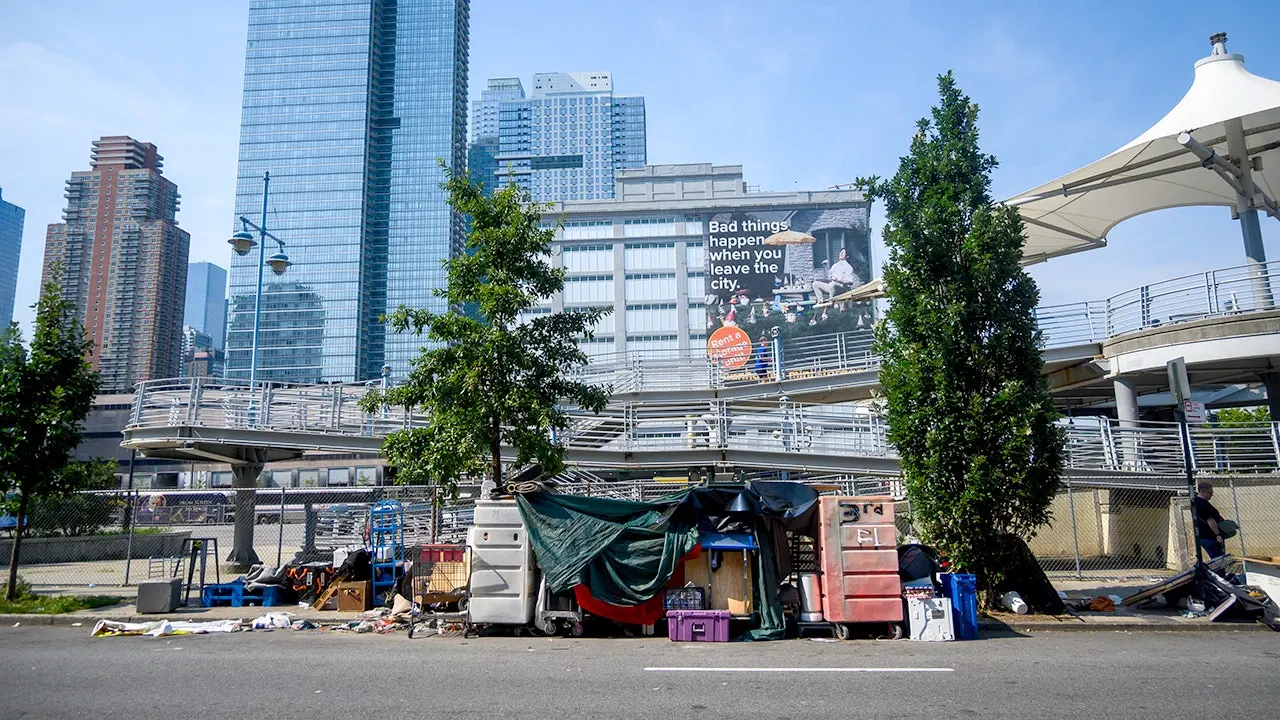
Democrats are pushing back hard against a Trump administration move aimed at getting help to tens of thousands of homeless Americans with serious mental illness. The fight is really about what kind of care works, who gets to decide it, and whether the current system is actually leaving people stranded in the open instead of being treated.
The core issue is brutal and simple: too many people with severe mental illness and addiction are living on the streets with almost no stable support. That situation did not appear overnight, and it is not being fixed by the same old rules that have dominated state mental health policy for decades.
For years, federal policy has leaned heavily toward so-called community-based care, often interpreted in a way that gives states little room to build stronger options for the most vulnerable patients. In practice, that has meant a lot of independence on paper, but not enough structure in real life for people who cannot safely manage on their own.
That gap matters because severe mental illness can make basic daily decision-making extremely hard, especially when addiction is also in the picture. Many of these Americans do not need to be left alone in an apartment with optional services and a hope for the best outcome. They need a setting that combines housing, supervision, and treatment in one place.
The administration’s new approach tries to create that middle ground. It does not call for a return to the old giant psychiatric institutions that drained budgets and carried real historical abuse, but it does open the door to smaller supportive housing models where care is part of the environment rather than an afterthought.
That distinction is huge. A community group home or similar setting can offer order, treatment, and safety without turning into a warehouse for the forgotten, which is what critics fear most. The point is not confinement for its own sake, but a realistic option for people who are too ill to thrive in totally independent living.
Opponents argue that this is a step backward, even comparing it to darker chapters in the nation’s past. But that argument skips over the ugly reality on the ground, where untreated illness, addiction, victimization, and street disorder are already doing damage every day.
The current system has also been shaped by decades of legal pressure that pushed states to shrink psychiatric hospital use and favor discharge whenever possible. That may sound compassionate in theory, but it has often produced a cruel result: patients moved out before they were ready, then left to cycle through homelessness, emergency rooms, or jail.
There is nothing abstract about the consequences. People with serious disorders are among the most likely homeless individuals to be robbed, assaulted, exposed to disease, or die early. When thinking and reasoning are badly impaired, “voluntary” care can become a dead end if no one is there to insist on treatment and structure.
The broader problem is that states were boxed into a false choice. They could either follow federal pressure and rely too much on minimal care, or try to provide stronger treatment and face lawsuits claiming civil rights violations. Over time, many states chose the safer legal path, even when it meant fewer beds and weaker help for the most impaired patients.
That policy path helped hollow out the mental health system. Since the early 1990s, psychiatric hospital beds have been slashed across the country, leaving far fewer options for people who actually need more intensive care. The result is visible on sidewalks, under overpasses, and in encampments that function like open-air holding zones for untreated illness.
The old institutional abuse was real, and no serious person wants a revival of that era. But it is just as real that a system built to avoid one kind of harm has created another, and the cost has been paid by people who are too sick to advocate for themselves.
