
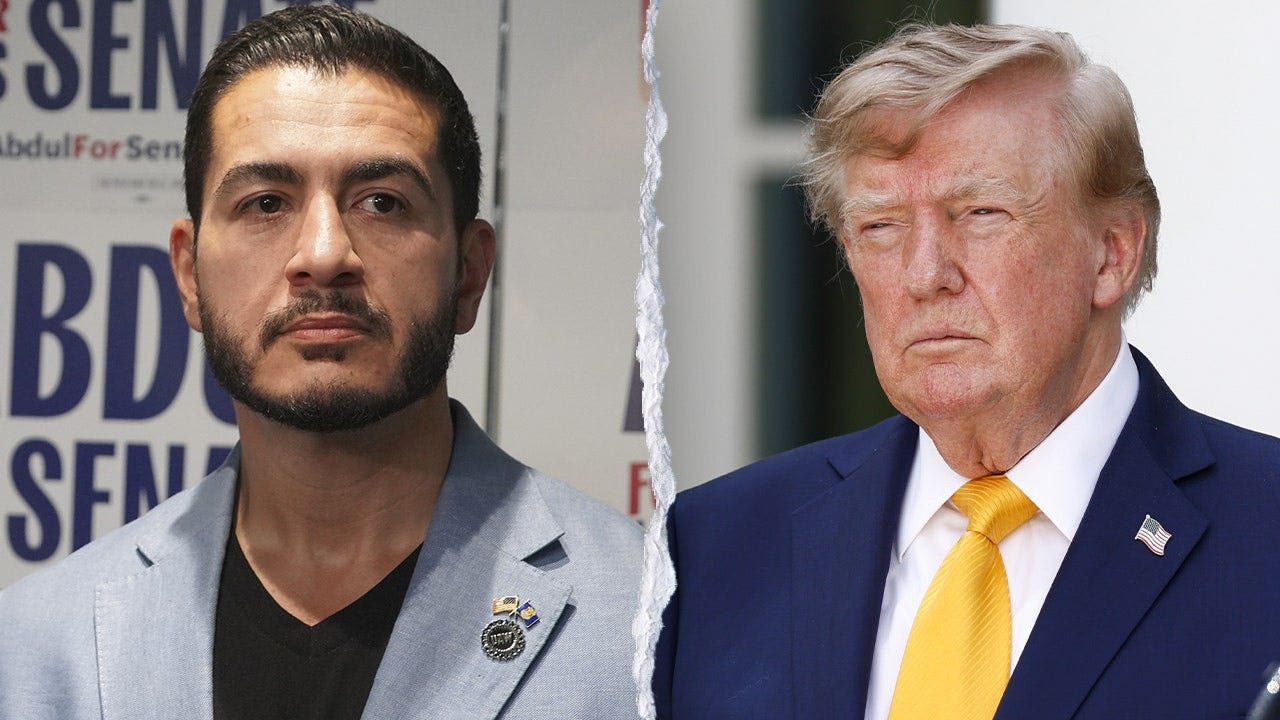
Donald Trump turned up the heat on Michigan Democratic Senate candidate Abdul El-Sayed, tying him to the Muslim Brotherhood and blasting him with a string of accusations that instantly sharpened the race. The fight centers on old family claims, public denials, and a broader argument over identity, faith, and political trust in a competitive Senate contest.
During a White House lunch in the Rose Garden, Trump went straight at El-Sayed, saying, “He’s a Muslim Brotherhood guy, 100%,” and repeating the charge for emphasis. He also mocked the idea of putting him on the Senate Intelligence Committee, calling him a “fraud” and a “con man.”
The backlash around El-Sayed traces back to comments made by his half-sister, Eman Abdelhadi, who has posted online about their mother’s political activism in Egypt during the 1970s. That history has given Republicans fresh material to press questions about El-Sayed’s background, even as his campaign pushes back hard against the insinuations.
El-Sayed has flatly rejected the claims and says there is no family connection to the group. In a recent interview on NBC’s Meet the Press, he kept it short and direct: “I have no ties; we have no ties,” he said.
He has also argued that opponents are trying to turn religion into a political weapon instead of focusing on the race itself. El-Sayed said Mike Rogers and his allies are leaning on his name and faith to create suspicion, framing the attacks as anti-Muslim rhetoric rather than a serious debate about issues.
“[Opponent Mike Rogers’] only strategy is to point to me and my name and my faith and to say that we’re different, and that you should suspect people simply because they are different than you in how they pray,” he said.
The family discussion picked up more fuel from old social media posts by Abdelhadi, who wrote in 2012, “Had an amazing talk with my mom about her activism in the Muslim Brotherhood during the early 70s while she was in college #respect,” and later added, “My family has long been MB, but I’ve always felt that it has navigated the political sphere poorly/destructively.” Those posts have become central to the current controversy, even though they do not amount to proof of any direct role by El-Sayed himself.
Trump also made clear he wants the issue to stay in front of voters, saying he looked forward to visiting Michigan to “expose this fraud that’s running.” The president’s comments fit neatly into a hard-edged campaign style that treats suspicion as a political weapon and keeps pressure on a vulnerable Democratic contender.
The dispute has now spilled beyond campaign talking points and into the broader fight over who gets defined by family history and who gets judged by public positions. For El-Sayed, the challenge is to keep the race focused on his own record while Republicans keep dragging the conversation back to the Muslim Brotherhood claims and the explosive language around them.
