
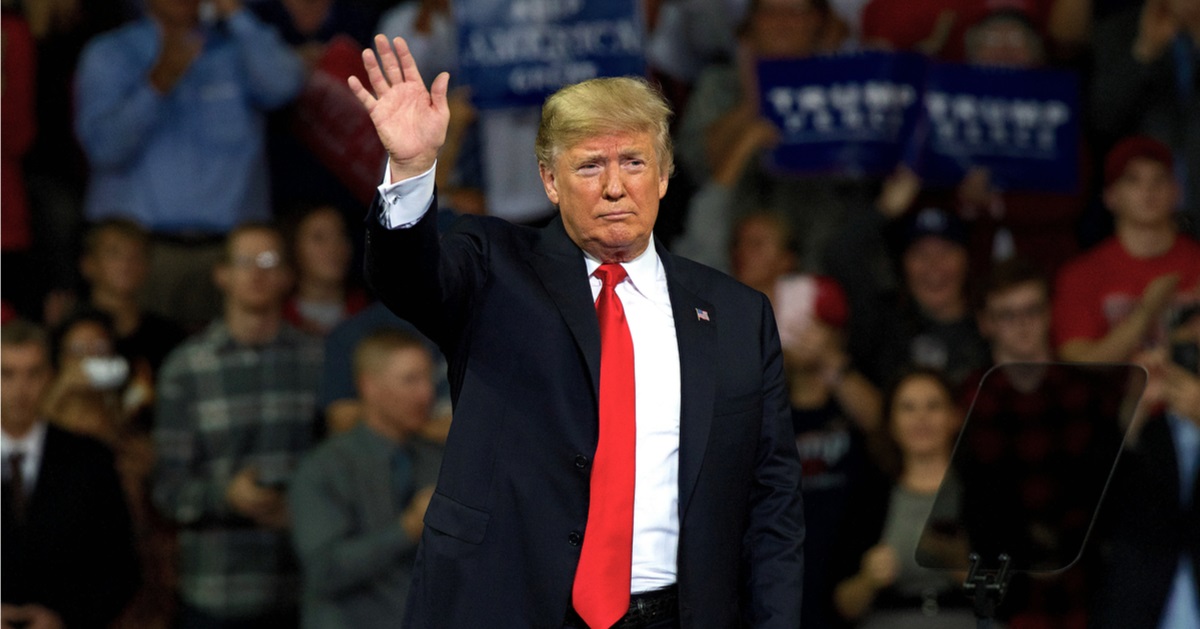
President Donald Trump recently exercised his executive clemency powers, granting over two dozen pardons and commutations to various individuals previously convicted of federal offenses. These acts of clemency included former Republican Connecticut Governor John Rowland, who served two prison terms for corruption and election fraud, as noted by Fox News. The recipients of clemency ranged from ex-politicians and a reality TV couple to a former union leader, a notorious Chicago gang leader, a rapper, and several ex-drug dealers.
John Rowland, the former governor of Connecticut, was among those pardoned by Trump. According to the Justice Department’s Office of the Pardon Attorney, Trump issued 19 pardons and eight commutations between May 27-29, including one for Rowland. Fox News reported that Rowland resigned during his third term in 2004 due to a conviction related to a pay-to-play scheme, which led to a one-year prison sentence, and later served 30 months for election fraud and obstruction charges.
Rowland’s pardon sparked mixed reactions in Connecticut, with some viewing it as justified since he had served his time, while others saw it as a reward for past misconduct. Republican Party State Chair Ben Proto supported the pardon, highlighting Rowland’s positive contributions since returning from prison. Proto stated, “When you look at what John Rowland has done since he’s returned to Connecticut from prison, he’s really led an exemplary life.”
Proto emphasized Rowland’s efforts to help former prisoners reintegrate into society, noting that he has assisted those often overlooked or judged by society. “He’s done a lot of very good things for people who are often forgotten by society or looked down upon by society,” Proto added. Rowland’s commitment to aiding others was recognized as a significant factor in his pardon.
In addition to Rowland, Trump granted clemency to Todd and Julie Chrisley, former stars of the reality TV show Chrisley Knows Best. NBC News reported that the Chrisleys were convicted in 2022 of defrauding banks and tax evasion, leading to sentences of 12 and seven years, respectively. During a press conference, Todd Chrisley maintained his innocence, stating, “Whether you believe it or not — because I was you at some point — even though this pardon has happened, I still was convicted of something that I did not do.”
Despite his wife’s previous apology and admission of guilt, Todd Chrisley criticized the justice system, suggesting they were pressured into accepting responsibility to avoid harsher penalties. He expressed frustration with the legal process, saying, “You’re placed in a position as a defendant to either bow down and kiss the ass of the Department of Justice and accept responsibility for things that you did not do in order to avoid a stronger sentence.” The Chrisleys’ case highlights ongoing debates about justice and fairness in the legal system.
One of the most controversial pardons issued by Trump involved Larry Hoover, a former leader of Chicago’s Gangster Disciples street gang. According to the BBC, Hoover has been serving multiple life sentences since 1973 for a range of serious crimes, including murder and drug trafficking. Despite renouncing his criminal past and advocating against gang involvement from prison, Hoover remains incarcerated due to a separate 200-year murder sentence in Illinois.
Alice Marie Johnson, a former drug offender pardoned by Trump during his first term, played a role in advising on several of the recent clemency decisions. Johnson, now appointed as Trump’s pardon czar, recommended pardons for individuals like New Orleans rapper NBA Youngboy. Youngboy, whose real name is Kentrell Gaulden, was convicted of federal firearms offenses and expressed gratitude to Trump for the chance to improve his life.
The clemency spree has drawn attention to the president’s power to pardon and the varied nature of those who benefit from it. Critics and supporters alike debate the motivations and implications of these decisions, questioning whether they serve justice or political interests. The diverse backgrounds of those pardoned underscore the complexity and impact of presidential clemency.
This wave of pardons and commutations is not without precedent, as past presidents have also exercised this power in significant ways. Trump’s decisions align with a broader historical pattern where presidents have used clemency to address perceived injustices or reward rehabilitation. The conversation around these actions is likely to continue, with opinions divided along political and ethical lines.
The role of clemency in the justice system remains a contentious topic, with advocates arguing for its necessity in correcting wrongful convictions or excessive sentences. Others worry it may undermine the rule of law or serve as a political tool. As the public digests these recent clemencies, the debate over presidential power and its proper use persists.
While some view these actions as a compassionate exercise of presidential authority, others see them as potentially undermining accountability. The ongoing dialogue about clemency highlights the balance between justice, mercy, and the rule of law. As the nation reflects on these decisions, the discourse around criminal justice reform continues to evolve.
Political observers will likely scrutinize the long-term effects of these pardons on public opinion and the justice system. The broader implications for those pardoned and their communities remain to be seen. Meanwhile, the conversation about clemency as a tool for justice and reform continues to shape national discussions on crime and punishment.
