
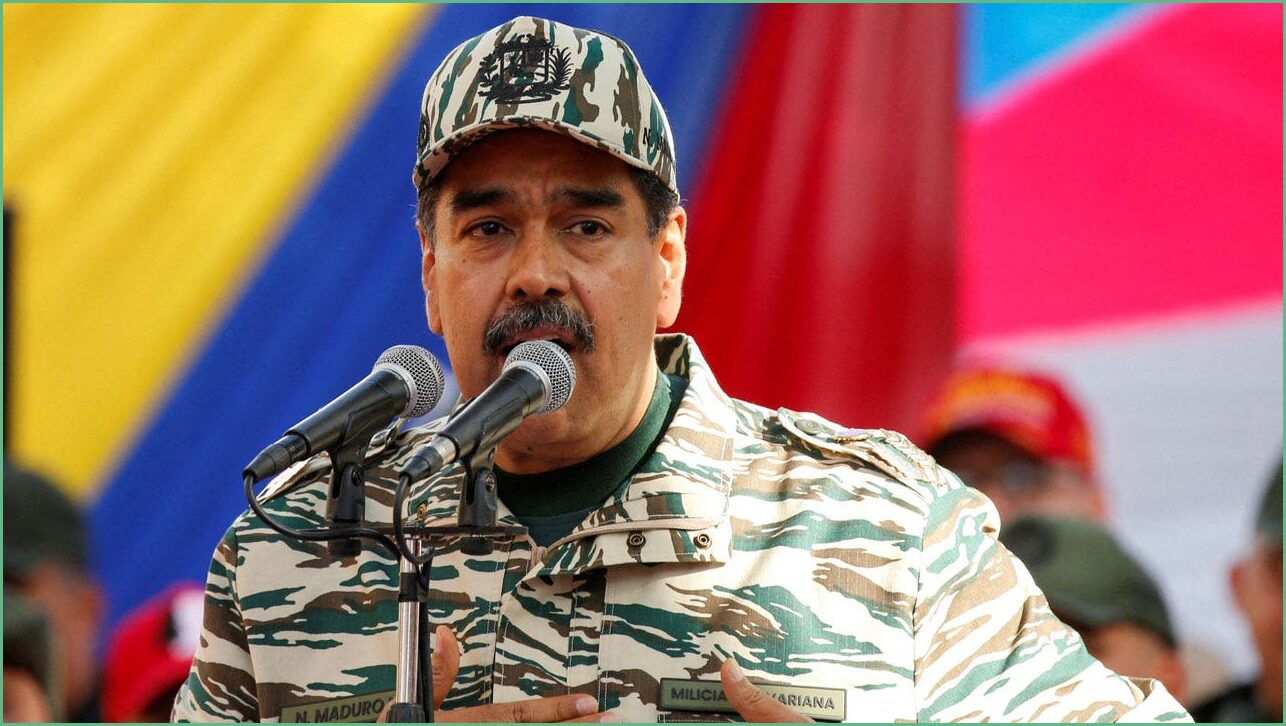
President Trump’s Operation Absolute Resolve toppled Nicolás Maduro, kept China off balance in Caracas, and handed the United States a chance to rebuild Venezuela on American terms. The raid was fast, precise and overwhelming in force, and now Washington faces the real test: turning military victory into stable, pro-American governance that secures oil, counters Chinese influence, and restores order without getting stuck in a long occupation. This article walks through the operational feat, the political stakes, the strategic logic and the immediate plans being floated for reconstruction and partnership. Expect blunt decisions, private-sector involvement and a clear message: the Western Hemisphere is not up for grabs.
The raid itself was textbook military planning executed at scale. Chairman of the Joint Chiefs of Staff General Dan “Razin” Caine led a joint-force plan that relied on intelligence down to the smallest routines and relentlessly prepared to move when conditions were right. “We watched, we waited, we prepared,” Caine explained Saturday, and when the weather and timing aligned, forces struck with surgical precision. Special Operations teams moved in while layered airpower and electronic effects shaped the battlespace.
U.S. forces overwhelmed Venezuelan defenses and neutralized command and control in a way that left Maduro no safe exit. Space and cyber assets temporarily “blanked out and blinded Venezuela’s military coordination to “create a pathway” for helicopters, enabling Special Forces to seize the compound and snatch Maduro before he could flee. “He tried to get to his safe place, but he was unable to close the door,” Trump recounted, a moment that symbolized the operation’s completeness.
The tactical picture featured overwhelming American air superiority and a diverse mix of assets. F-22s, F-35s and B-1s provided cover along with carrier-based Super Hornets, EA-18G electronic attack planes and E-2D Hawkeyes, while “a lot of drones” and various “black” Special Forces platforms supported the insertion and extraction. The extraction was risky and deliberate: forces entered hostile airspace at 1:01 a.m. Eastern time and fought their way out, with the helicopters finally clearing the area at 3:29 a.m. These were tense hours under real, lethal pressure.
The operation’s scale and speed sent a clear message across Caracas and to Beijing. A Chinese delegation had just arrived to review roughly $67 billion in Venezuelan investments, and they watched as the Miraflores Palace went from diplomatic reception to a battlefield in hours. That shock value matters; it undercuts any notion that great power investments buy invulnerability in the hemisphere. The Americans showed tactics that, as Caine put it, can be executed “against any foe, anywhere in the world.”
Military victory is only the start. The old adage “You break it, you own it.” rings loud here, and the Trump team is framing recovery as a chance to replace ruin with renewal. Trump has repeatedly said the U.S. can “make the people of Venezuela rich, independent and safe.” That is a political promise tied to an economic plan: bring in oil companies, rebuild infrastructure, and let private-sector oilmen lead the recovery so Venezuela becomes a reliable, Western-aligned energy partner.
Venezuela’s hydrocarbon potential is enormous—roughly 303 billion barrels in reserves—and unlocking that wealth is both economic and strategic. Production collapsed under socialism and poor maintenance, but smart investment and U.S. partnership could rebuild flows and create leverage against rivals. Strategic logic is simple: a free, prosperous Venezuela is an asset in a long-term competition with China and other revisionist powers, and that outcome dovetails with American interests in the region.
There are immediate political choices to make. Some local leaders may cooperate, others will resist, and the U.S. has left a clear carrot-and-stick posture on the table. Rubio and other officials have already engaged Venezuelan figures and suggested cooperation is possible; Rubio argued the leadership had chances to surrender and instead chose to “act like a wild man,” inviting the consequences. The Trump approach favors negotiated transitions where possible and decisive action where necessary.
Reconstruction will be handled differently than past occupations. The pitch is to leverage private capital, American know-how and oil-industry leadership rather than deploy a sprawling nation-building bureaucracy. That approach reduces long-term cost and focuses on practical outcomes: restore production, secure ports and pipelines, and stabilize cities so Venezuelans see material improvement quickly. The U.S. will also push to ensure Venezuela pivots away from adversaries and toward market-based reform.
Operation Absolute Resolve is a bold gamble that blends military excellence with hard-nosed geopolitical strategy. The next phase will test Washington’s ability to convert a tactical knockout into durable political advantage. If the U.S. can accelerate reconstruction, reintegrate Venezuela into the hemisphere’s economy and keep Beijing at bay, this will be remembered as a turning point. The plan is straightforward: secure the country, enlist oil professionals to rebuild, and make Venezuela a stable, American-aligned neighbor.
