
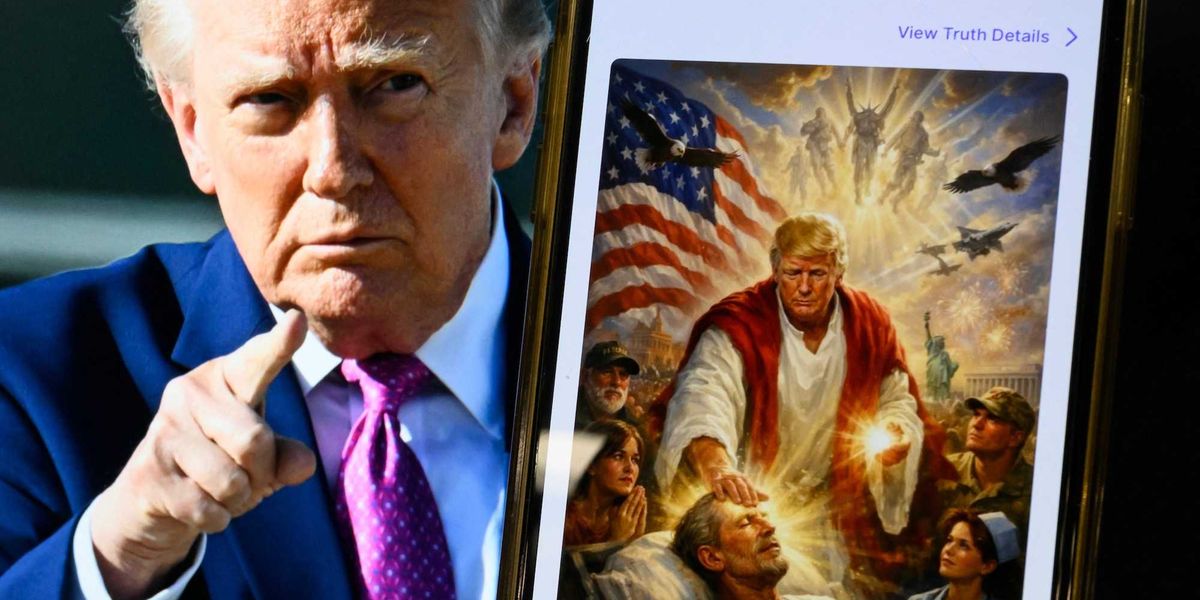
President Trump deleted a controversial image he had posted and walked reporters through why he did it, defending his intent while calling out the coverage that turned it into a scandal. The incident unfolded during a casual moment at the White House, and it quickly became a test of how media and critics read symbolism. The episode also intersected with a visit from a DoorDash driver and a short exchange about policy impact on everyday Americans.
The president acknowledged he posted the image and said it was meant to portray him in a healing role, not to mock faith or claim divinity. He explained the artwork was intended to show a caregiver or medical figure, someone associated with the Red Cross, not a religious figure standing in for Christ. The choice to remove the post came after the backlash escalated on social platforms.
‘It’s supposed to be me as a doctor, making people better, and I do make people better. I make people a lot better.’
Trump framed the reaction as another example of the media turning a benign moment into a controversy, and he used straightforward language to push back. He described the image as supportive of humanitarian work and insisted opponents were reading the worst into it. That pushback fits a larger pattern of the administration fighting what it calls fake news and misinterpretation.
The encounter that followed further softened the edges of the story: a DoorDash driver delivered a McDonald’s order to the White House, and the exchange became part of the narrative. The driver, identified by name in reports, told a personal story about savings and family struggles, and the president highlighted that anecdote to underscore his economic message. Trump used the moment to connect policy to real people who feel the benefit.
The White House posted video of his to the Rapid Response account on the X platform. That clip was shared to show the interaction directly and to provide context beyond the headlines, aiming to counteract selective reads of the earlier image. The administration leaned into the footage as a way to let viewers judge for themselves rather than accept secondhand interpretations.
Behind the headline-driven outrage, the president emphasized tangible outcomes he credits to his policies, citing tax savings and support for families coping with medical crises. He pointed to the DoorDash driver’s comments about saving on taxes as proof that policy changes have immediate effects on household budgets. The human detail—about a husband undergoing treatment—was used to remind audiences that policy debates affect real lives.
A short video clip was included with the coverage to show the moment directly and to avoid spinning by intermediaries, and a separate media element was placed where reporters and the public could view it. That visual gave the White House a chance to present the scene plainly, without contextual filters, and it served as a counterpoint to the outcry. The administration’s media team treated the release as damage control and as a way to shift attention back to substance.
While critics quickly labeled the image as tone-deaf, supporters saw an overreaction and a familiar double standard in how leaders are portrayed. The president argued that his intent—supporting humanitarian work and public health—was clear enough when viewed alongside his remarks and actions. He framed the deletion as a practical step to calm unnecessary controversy while standing by the core message.
https://x.com/RapidResponse47/status/2043733034629836827
Sharon Simmons of Arkansas, the DoorDash driver who delivered to the White House, shared a personal perspective that the president highlighted publicly, saying she had saved thousands because of tax changes and noting the medical struggles in her family. Her story became a short but potent illustration the administration wanted to elevate as proof of policy impact. The White House used that human story to steer the conversation away from symbolic interpretation toward concrete outcomes.
The episode shows how quickly images can ignite debates and how the administration prefers to respond by offering direct footage and firsthand accounts. The strategy is to rely on visible moments and personal stories to blunt what is seen as media exaggeration. For Republican supporters, the incident reinforced a distrust of selective outrage and a preference for letting policy effects and real people’s experiences shape the narrative.
After the dust settled, the president reiterated confidence in his record and the value of airing the footage to correct the record. By highlighting the DoorDash visit and the driver’s remarks, the White House aimed to reset the frame from symbolism to substance. The incident closed with a deleted post but with the administration pushing its preferred narrative directly to the public.
In short, the episode combined symbolism, swift online reaction, and a grounded personal story to create a brief but illustrative political moment. The administration’s response leaned on visual evidence and individual testimony to combat what it called misreading and to bring the focus back to policy results. That tactic reflects a broader communications playbook focused on direct appeal and practical outcomes.
Reporters continue to watch how such exchanges play out as tools for narrative control, and the White House indicated it will keep using firsthand footage and personal stories to make its case. The image remains deleted, but the debate over intent versus perception lives on and will likely surface again whenever a symbolic post meets a polarized audience.
During a later interview, Sharon Simmons also recounted her experience and her family’s situation, and the administration kept her comments visible as part of the broader response.
