
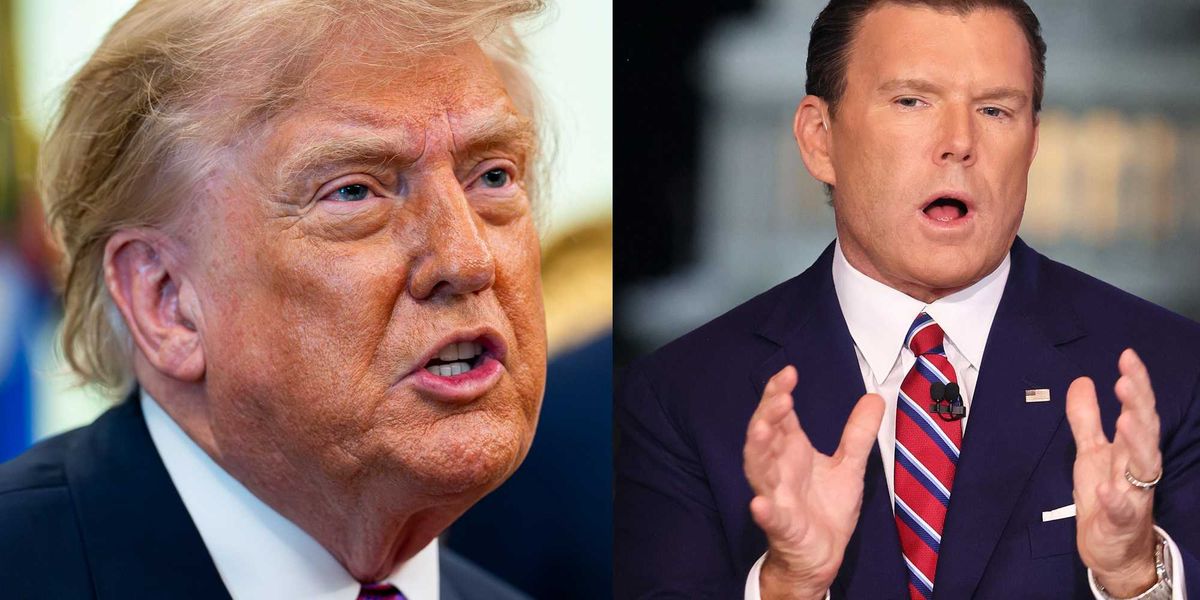
Donald Trump took aim at Fox News host Bret Baier after a report on Iran and the U.S.-Israel strikes drew his ire. The clash quickly turned into a familiar Trump-style media fight, with sharp words aimed at Fox News and a public response from Baier that kept the feud in the spotlight.
Trump’s complaint centered on how the network handled the story and who he blamed for getting it wrong. He made clear he wanted Baier to “straighten out” what he called Fox News “flunkies,” putting the channel on notice and framing the segment as part of a broader pattern he has long criticized.
The back-and-forth landed in the middle of intense attention on Iran and the wider fallout from U.S.-Israel military action. When foreign policy and cable news collide, the result is usually loud, messy, and instantly political, and this dispute fit that mold from the start.
For Trump, Fox News has often been both a friendly stage and a target when coverage doesn’t line up with his expectations. That tension was on full display here, with his comments signaling that even outlets often seen as conservative can catch heat when he thinks they’ve crossed a line.
Baier’s response added another layer to the moment, keeping the issue from fading into yet another Trump media blast. Once a network host answers back, the story changes shape fast, shifting from a one-sided complaint into a public test of credibility and control.
The bigger picture is bigger than one heated exchange. It shows how much influence cable news still carries when a major foreign policy story is unfolding, especially when the subject involves Iran, Israel, and the military decisions that can move markets, shape alliances, and trigger new rounds of debate in Washington.
Trump has never been shy about putting pressure on journalists and television personalities he thinks are off message. That instinct can turn a passing segment into a full-blown feud, and it often works because it forces the people on the other side to react in real time.
Fox News, meanwhile, has spent years navigating the awkward space between being a Trump-friendly outlet and a newsroom that still has to cover hard news. That balancing act gets harder when the former president lashes out on social media or in public remarks, because every correction or pushback becomes part of a larger loyalty test.
The Iran report also shows how quickly a foreign policy story can become a domestic media drama. Instead of staying focused on battlefield developments or strategic consequences, the conversation can get pulled toward who said what, who aired it, and whether the coverage helped or hurt a political figure’s standing.
That’s why these clashes keep happening. Trump knows the blast radius of a strong attack on television, and Fox knows any public split with him turns into a story of its own. With tensions already high over the Middle East, the argument over how it was reported only made the whole scene louder.
