
Checklist:
- Trump’s reaction to the Supreme Court ruling
- The mail-in voting fight and USPS ballot rules
- The justices’ split and Kavanaugh’s reasoning
- The effect on the 2026 midterm elections
- Trump’s broader frustration with the Court
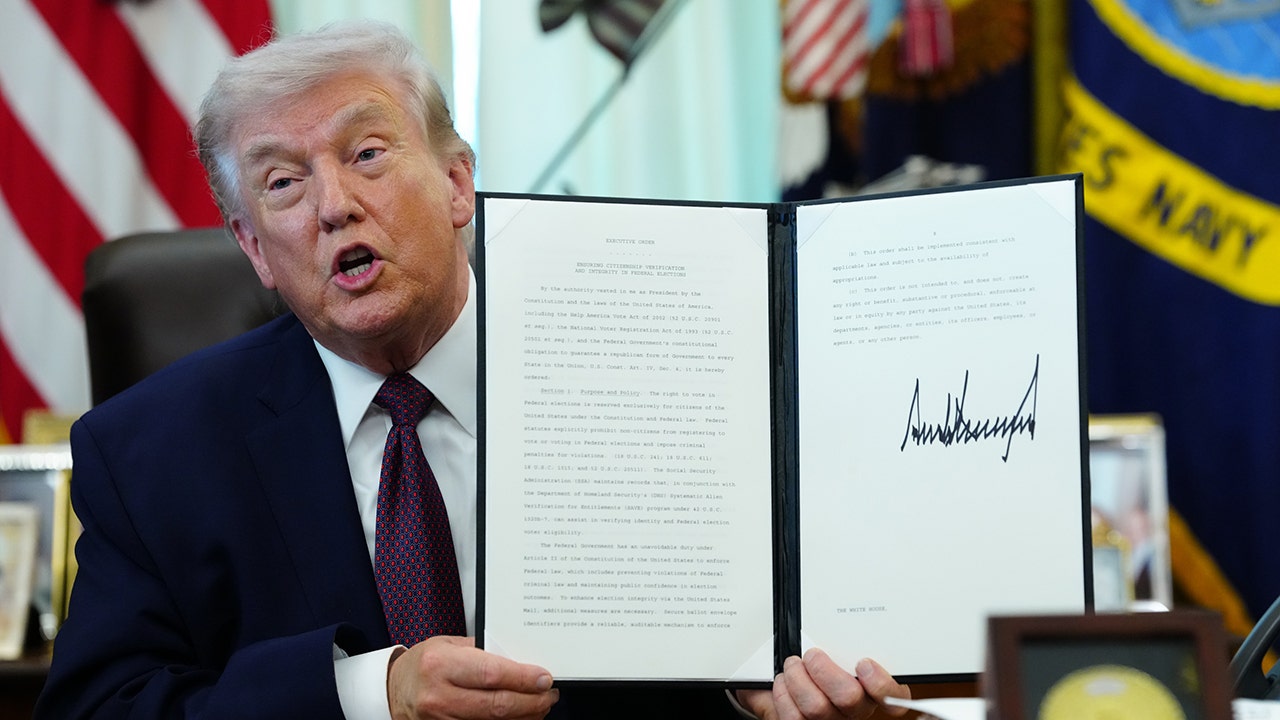
President Donald Trump unloaded on the Supreme Court after it blocked his administration’s push to reshape the rules for mail-in ballots ahead of the 2026 midterms. The ruling kept a lower court injunction in place, leaving the Postal Service plan on hold and giving Republicans a fresh flashpoint in the fight over election procedures.
Trump framed the decision as another blow from a court he believes keeps undercutting his agenda. In his post, he blasted the justices for moving too slowly and said the system had failed to respond to what he sees as a deeply broken mail-in voting process.
“Republicans just got another bad decision from the United States Supreme Court, one that the Court System took forever to give, and then blamed it, in part, on no time left to implement a solution to our totally CORRUPT and out of control Mail-In voting ‘disaster,’ which is a laughing stock all over the World, and where we are the only country that has to endure such a Nation Destroying SCAM,” Trump wrote.
He also singled out Justices Samuel Alito and Clarence Thomas, who dissented from the order, calling them “legends.” The message was classic Trump, heavy on praise for allies on the bench and just as heavy on anger toward everyone else.
The case centers on a Trump administration effort to impose new USPS rules for election mail. Under the plan, ballots would need election-mail markings, be compatible with high-speed sorting equipment, and carry a barcode tied to each voter.
Election officials would also have to submit envelope designs for review and upload voter information to a USPS portal. If materials did not meet the new standards, they would be rejected and sent back for correction, a process critics said would create headaches for states and local offices.
The Supreme Court’s Monday order was unsigned, but Justice Brett Kavanaugh wrote separately and left open the possibility that the administration’s legal position could still succeed later. Even so, he said the calendar matters, arguing the changes could not realistically be rolled out in time for the 2026 elections without creating legal problems.
“In my view, based on the briefing the Court has received at this interim stage, there is at least a fair prospect that the final rule falls within the Postal Service’s statutory authority,” Kavanaugh wrote. “But applying the rule in the 2026 elections would be arbitrary and capricious in violation of the Administrative Procedure Act because state and local election officials do not have sufficient time to reasonably implement the rule before the elections.”
That timing issue is the heart of the dispute. Supporters of tighter mail rules say the system needs guardrails, while opponents argue the changes were being rushed and would pile new burdens on states right before a major election cycle.
Trump did not stop with this one decision. He used the ruling to revisit a string of Supreme Court disappointments, including losses tied to his tariff policy and his effort to end birthright citizenship by executive order.
“It is not easy for me to write this criticism of the United States Supreme Court – it will likely cost me dearly for years to come – but I feel it my obligation and duty, as President, to do so for the America we love!” he wrote.
The clash now sits at the center of a larger battle over voting rules, administrative power, and how much control Washington should have over election mail. With the midterms approaching, both sides know the fight is not fading anytime soon, and the next round could land back in court before long.
