
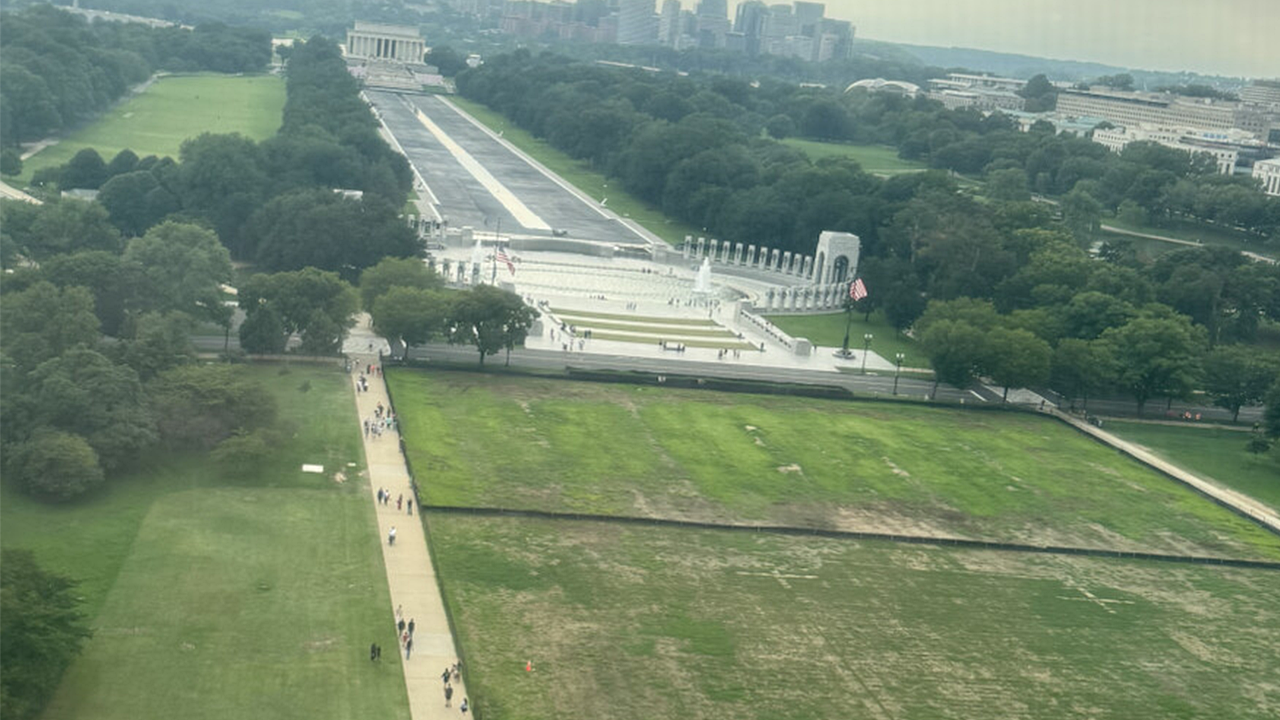
Dead grass on the National Mall has turned into the latest flashpoint around President Donald Trump, the World War II Memorial, and a patch of turf that sits in the middle of a bigger Washington fight. What looked like a simple lawn problem quickly got folded into questions about vandalism, a July 4 celebration, and whether the damage came from criminals, construction, or just the mess left behind by a huge event.
Trump pointed to the browned-out lawn near the World War II Memorial and said vandals were to blame. He posted a photo showing wide patches of dead grass and made the accusation without laying out evidence, even as the area had recently hosted a major Independence Day setup with staging and seating across much of the same ground.
“Look what VANDALS did to the grass connecting the vandalized World War II Monument and the vandalized Reflecting Pool, which will be opened again, and better than ever, shortly,” Trump wrote on Truth Social.
“Anybody who thinks the Reflecting Pool wasn’t vandalized should go back to Law School!” he continued.
The timing matters here. Trump had arranged a large stage and invited crowds to that very lawn for his Fourth of July celebration, which drew spectators for fireworks and a celebration tied to the nation’s 250th anniversary. Photos from the event show bandstands, chairs, and other structures covering most of the area that later appeared brown and worn.
When those structures came down, workers exposed the grass underneath, and the result was not pretty. That does not automatically prove what caused every dead patch, but it does show the lawn had been under heavy strain from a major public event and the equipment that came with it.
Trump has made similar accusations before, often fast and often loud, and not always with much backing them up. In Washington, that habit has become its own storyline, especially when the claims run into explanations from officials who point to construction, rushed work, or plain old wear and tear.
Earlier this month, Trump also took aim at U.S. Attorney for the District of Columbia Jeanine Pirro after her office moved to dismiss a vandalism case. That case shifted after new evidence showed the damage came from a flawed installation and a rush to finish before Independence Day, which undercut the original charge.
At the same time, there really has been vandalism on the National Mall, and one recent case drew arrests and charges. On Friday, authorities said someone was taken into custody after the words “Clean hands dirty $” were found painted on the World War II Memorial and bubbles were discovered in a fountain.
Felony charges in that matter are being pursued against Melissa Farris, according to Pirro. Even so, the charging papers do not describe the grassy area Trump singled out in his post, and officials said Farris had previously been arrested for camping on federal property several blocks away from the memorial, not on the same spot Trump was talking about.
That distinction is the whole ballgame. A damaged monument, a separate lawn problem, and a public event that covered the ground for days are not the same thing, even if they all sit inside the same emotional debate about respect, security, and what should happen on federal land.
Trump later shared another image of the area showing dead grass that federal officials tied to a separate controversy involving “86 47,” a message they view as a threat against him. The numbers do not appear in the Sunday photo he referenced, but he still used the image to argue that the damage was not just contractor trouble.
“There may have been some contractor difficulty, but the major damage was caused by VANDALS!” he wrote.
That kind of blunt charge lands hard because the National Mall is not just any patch of grass. It is a symbol, a ceremony space, and a place where every ripped-up section or stained stone gets turned into a bigger argument about who is responsible and whether anyone is being held to account.
