
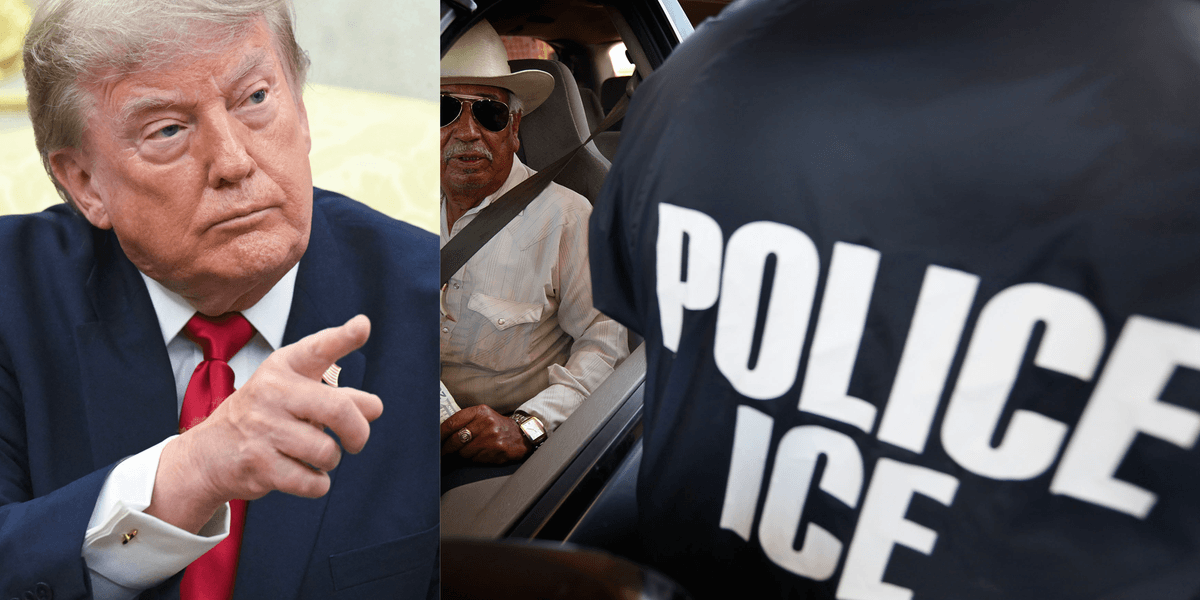
President Trump’s latest move on immigration enforcement has stirred up fresh debate inside his own administration, with ICE now being pushed back into the kind of street-level work that puts agents directly in contact with drivers and neighborhoods. The shift matters because it changes how aggressively federal officers can operate, and it comes at a time when border security, crime, and deportation politics are all colliding at once.
The big change is straightforward: ICE is being sent back into traffic stops, a tactic that puts enforcement pressure closer to the ground and gives agents more chances to identify people who should not be in the country. Supporters say that is exactly the point, because laws are only meaningful when they are actually enforced, and a paper border means nothing if federal officers are told to sit on the sidelines.
That position lines up with the hardline approach many conservatives expected from Trump in the first place. For years, voters who wanted stronger immigration enforcement have argued that the federal government should not treat illegal entry like a minor paperwork issue, especially when local communities are dealing with the fallout in real time.
At the same time, the move puts the Department of Homeland Security back in the middle of a familiar fight over tactics and priorities. Some officials prefer a narrower focus on serious criminal cases, but Trump’s decision suggests he wants a wider net, one that catches more than just the worst offenders and restores some teeth to the whole system.
Tom Homan, the border czar, has been one of the most visible faces of that tougher posture. His role has become central to how the administration talks about enforcement, and his message has been simple: if the goal is to secure the country, then the federal government cannot shy away from the everyday tools that make that possible.
The traffic stop piece is where things get especially tense. That kind of enforcement can expose people with outstanding violations, criminal records, or prior encounters with law enforcement, but it also raises the political temperature fast because critics see it as invasive while supporters see it as a long-overdue return to basic order.
Florida is one of the places where this approach resonates most strongly. The state has been at the center of immigration fights for years, and many residents there have little patience for a system that seems to reward rule-breaking while making law-abiding citizens deal with the consequences.
Trump’s move also shows how quickly his administration can pivot when it wants to. Even within the same federal structure, priorities can shift from cautious enforcement to a much more aggressive stance, and that kind of reversal sends a loud signal to ICE agents, local leaders, and illegal migrants alike.
There is also a broader political message buried in the decision. The White House is telling voters that immigration enforcement is not just about border crossings, but about what happens after people are already inside the country, moving through towns, highways, and daily life as if the laws do not apply to them.
For Republicans, that message is a feature, not a bug. They have argued for years that enforcement has to be visible to matter, and that a serious administration should be willing to use every lawful tool available instead of hoping the problem shrinks on its own.
The criticism will keep coming, no doubt. But Trump’s decision to put ICE back into traffic stops makes one thing clear: he is not interested in playing defense on immigration, and he is betting that a tougher, more hands-on approach will speak louder than the usual Washington hand-wringing.

1 Comment
The whole problem with OUR local and federal laws is that they are not enforced and those who oppose enforcing OUR laws should be removed from office by physical means as it seems that the vote to remove them is subject to voter fraud which has been proven but the liberal progressive socialist commie demon democ-rats are the one who oppose to enforcing OUR LAWS and it is time we rid ourselves from these corrupt politicians! ! ! ! ! ! ! ! !