
By OBBM Network Editorial Staff
Derived from an episode of The Andrew Branca Show.
Imagine a typical trip to your local Walmart, a routine errand that suddenly turns into a scene of chaos and danger. This unsettling scenario unfolded recently in Omaha, Nebraska, where a woman attacked a child with a knife, prompting a police officer to take drastic action. Such incidents underscore the complexities within the U.S. criminal justice system, raising questions about its true purpose and effectiveness.
The Reality Behind Headlines
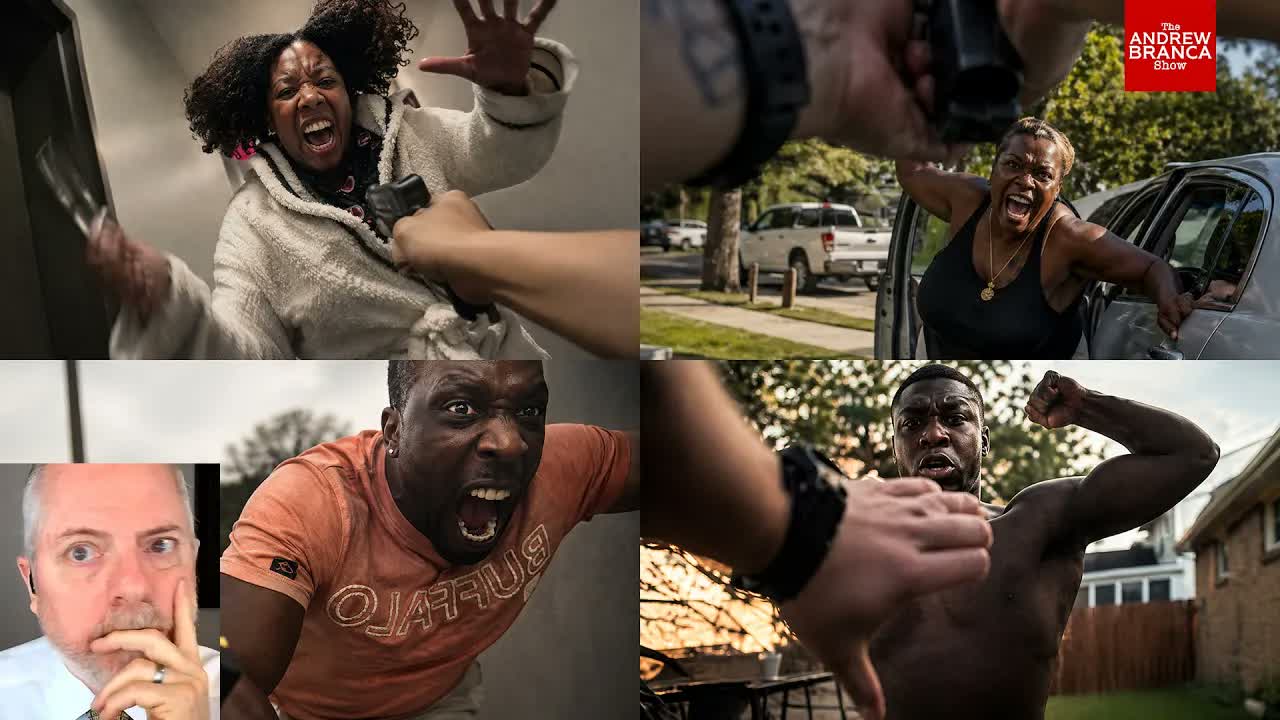
Andrew Branca delves into these complexities on his show, highlighting a shocking event that sparked a broader conversation about the U.S. criminal justice system’s current state. A police officer’s decision to use lethal force during a knife attack on a child at a Walmart is not just a news story—it’s a lens through which we can examine systemic failures. Branca argues that body-worn cameras provide crucial context, preventing misleading narratives from taking root. “Body-worn cameras have definitely been a net benefit for Americans’ perception of criminal justice generally,” he asserts.
Philosophy and Perception in Justice
Branca explores the philosophical framework that shapes our understanding of justice, suggesting that many societal problems stem from mislabeling. He shares insights from his colleague Devin Erickson, who believes that misnaming issues obscures solutions. When society labels police and courts as a “justice system,” it implies an inherent fairness that is often absent. Instead, Branca proposes viewing it as a “public safety system,” focusing on preventing future harm rather than debating moral retribution.
The Influence of Empathy and Emotion
Adding another layer to the discussion, Branca reflects on how empathy and emotional responses can impact judicial outcomes. He suggests that the feminization of societal institutions may lead to prioritizing empathy over rational decision-making, which could exacerbate civic dysfunction. By examining the interplay between natural emotional instincts and systemic needs, Branca calls for a more objective approach to public safety.
Rethinking Systemic Solutions
The conversation extends to practical solutions, such as sentencing reforms that prioritize statistics over sentimentality. Branca suggests that harsher penalties for first-time violent offenders could significantly reduce crime rates, moving the focus from rehabilitation to deterrence. This approach, he argues, aligns better with the goal of safeguarding the public.
Broader Implications
Ultimately, the challenges within the U.S. criminal justice system reflect deeper societal philosophies and perceptions. By reconsidering the language and frameworks we use, Branca and his colleagues propose shifts that could enhance public safety and trust. These discussions encourage a reexamination of how justice is perceived and applied, highlighting the need for reform that aligns with practical realities rather than abstract ideals.
The full episode of The Andrew Branca Show is available on OBBM Network TV.
Watch The Andrew Branca Show on OBBM Network TV: https://www.obbmnetwork.tv/series/the-andrew-branca-show-208238
