
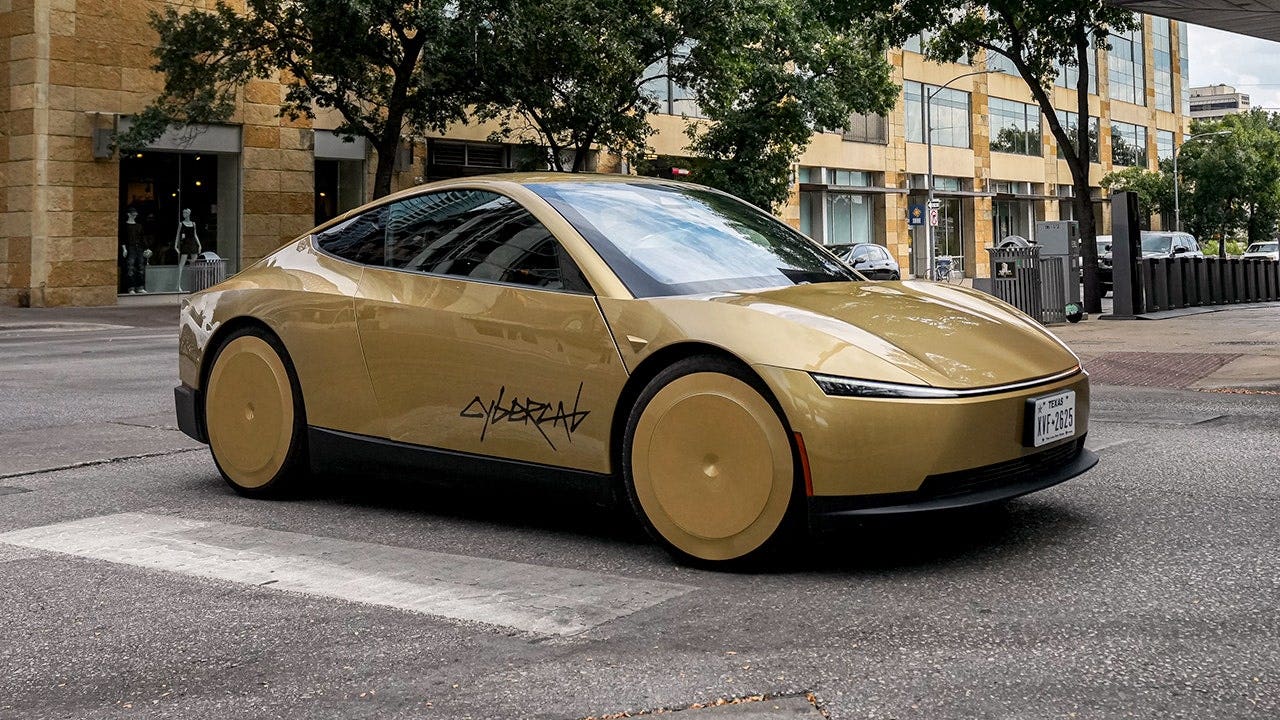
Tesla’s Cybercab has officially started picking up riders in Austin, and the tiny two-seat robotaxi is already drawing attention for more than its futuristic look. The vehicle comes with a stack of unusual rules, a few head-scratching design choices, and a fresh federal review that puts its rollout under a bright spotlight.
The cab has no steering wheel, no pedals, and no one behind the wheel to take over if something goes wrong. Tesla says cameras and AI handle the driving, which makes the cabin feel less like a car and more like a sealed-off tech pod on wheels. That setup may be bold, but it also means every detail inside matters a lot more than it would in a normal ride.
One of the biggest surprises is the age policy. Tesla says children under 13 cannot ride in Cybercab at all, while teens from 13 to 17 can ride only with an adult present for the full trip. That is a sharp contrast to Tesla’s Model Y robotaxi service, which allows kids from 8 to 17 with an adult and blocks only those under 8.
That mismatch makes the rules feel even stranger, especially for families trying to figure out what is allowed. An 11-year-old could be fine in one Tesla robotaxi and not allowed in another, even though both belong to the same service umbrella. Tesla has not publicly explained why the limits differ, leaving parents to sort through the fine print on their own.
Then there is the child-seat issue. Tesla says Cybercab does not have LATCH or ISOFIX anchors, so a booster seat has to be secured with a seat belt instead. That may sound like a small detail until someone needs it in the middle of a ride, especially because older children may still need a booster depending on size and local rules.
The cabin also includes an emergency Stop button positioned up near the dome lights. Pressing it sends a pull-over request, ends the ride, and connects the passenger with Robotaxi Support, though Tesla warns that an immediate stop may still take time if the vehicle needs to reach a safer place first. Riders can also request a pull over from the touchscreen or through the app.
Door access has its own twist too. Cybercab uses electronic door controls during normal operation, and the door nearest the rider can open automatically when someone approaches. If the power is out, the manual release is hidden in plain sight on the door panel, and Tesla warns that using it the wrong way could damage trim or even shatter glass if the window stays fully raised.
Under the body, Tesla has gone with brake-by-wire instead of a traditional hydraulic system. Electronic actuators handle braking rather than fluid-filled lines, which fits the company’s push toward a fully digital vehicle stack. That kind of setup makes sense for a driverless cab, but it also raises the stakes when software and hardware have to work together perfectly.
Some of the cabin rules feel downright unusual. Tesla says the windows can be lowered but cannot be fully opened right now, and the switches sit beneath the center screen instead of on the doors. On the plus side, the vehicle does include USB-C charging, with early launch reports suggesting enough power for laptops, even if Tesla’s public guide has not locked down that detail yet.
The biggest shadow over the rollout comes from Washington. The National Highway Traffic Safety Administration opened an Audit Query into Tesla’s certification of Cybercab for federal safety standards soon after the Austin deployment, and the agency is reviewing how the company decided the vehicle qualifies for U.S. roads. That matters because Cybercab has no steering wheel, no pedals, and no mirrors, which puts it outside the assumptions built into many older vehicle rules.
For anyone tempted to hop in, the smart move is to treat the cabin like something new and unfamiliar, because it is. Buckle up before the trip starts, find the Stop button, locate the manual door release, and remember that Tesla’s own rider rules can change what is allowed from one vehicle to another. The real test now is not the splashy debut, but whether this driverless little pod can handle real streets, real passengers, and the kind of pressure that comes with being first.

1 Comment
Make rules Uniform & based on need, demand alone
Nationwide
NO Cybercabs in my area 91011