
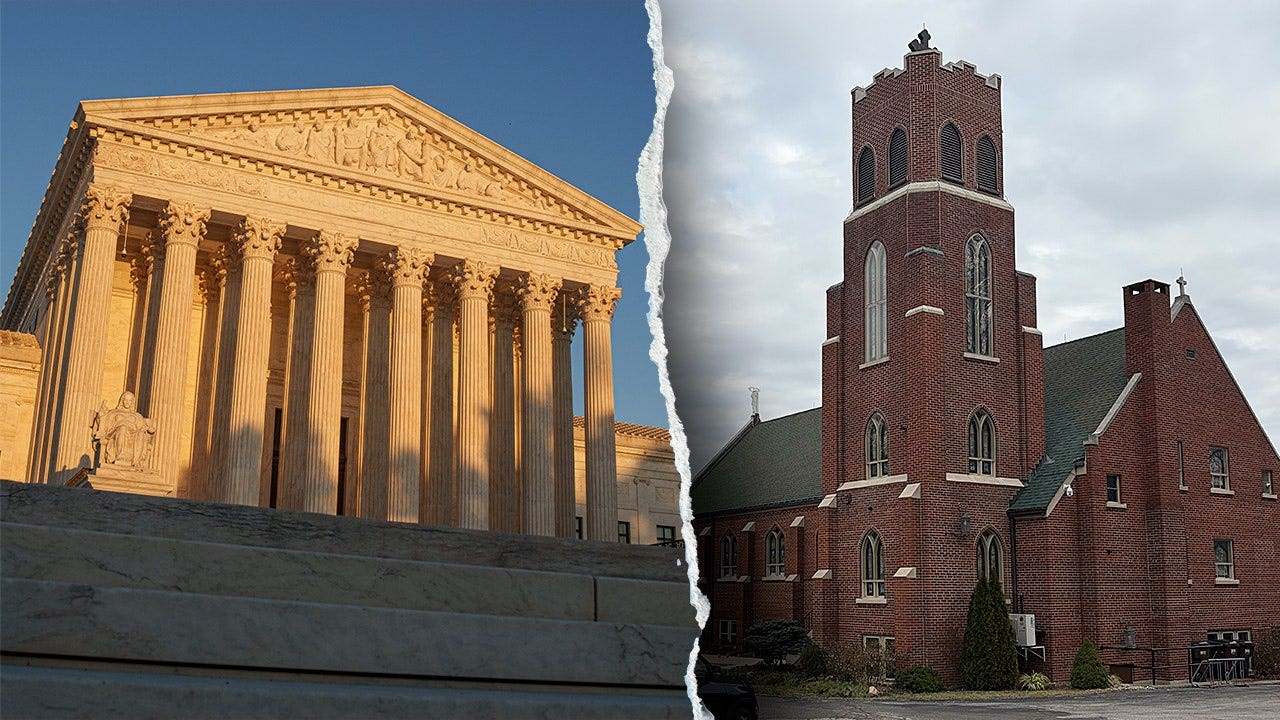
Kentucky is at the center of a high-stakes Supreme Court clash over whether a Catholic community can build a modest prayer grotto on its own land, and an 18-state coalition is lining up behind the church. The fight has turned a small local zoning dispute into a much bigger test of religious liberty, property rights, and how far government can go when neighbors object to a faith-based project.
The case involves the Missionaries of St. John the Baptist and their plan for a small shrine to the Virgin Mary in Park Hills, Kentucky. Local zoning officials originally signed off on the roughly 600-square-foot project, but neighboring homeowners Joel and Elizabeth Frederic challenged the approval and eventually won in Kentucky’s appellate courts.
At the center of the dispute is a simple question with big consequences: does blocking a religious structure on church property create a “substantial burden” under federal law? Kentucky Attorney General Russell Coleman says the answer matters far beyond one Catholic property, and he is leading a multistate push to make sure religious groups are not boxed out of using their own land for worship.
Coleman’s office says the Supreme Court is looking at the issue through the Religious Land Use and Institutionalized Persons Act, a law passed in 2000 to shield faith communities from heavy-handed zoning decisions. That statute was meant to stop local land-use rules from quietly squeezing out religious exercise, and this case could help define how strong those protections really are.
The proposed grotto is not some sprawling development. The plan calls for a shrine, plaza, walking path, and retaining wall, creating a quiet place for prayer and reflection on property the church has held for nearly a century, long before Park Hills adopted its zoning ordinance in 1974.
That history is part of what makes the case so combustible. The church says it is trying to use its own land for a modest religious purpose, while the neighbors argue the project still runs afoul of local rules and should not move forward just because it carries a spiritual mission.
A trial court first backed the city’s approval, but the Kentucky Court of Appeals later reversed course and said the zoning board had gone beyond its authority. The Kentucky Supreme Court then upheld the rejection of the church’s federal land-use claim, setting the stage for the nation’s highest court to step in.
Coleman previously defended the church’s position in Kentucky and later helped lead a separate 20-state effort urging the Supreme Court to hear the case. After the justices agreed in October, oral arguments were set for Jan. 20, 2027, giving the case a national spotlight and a long runway for legal firepower on both sides.
The church’s lawyers say the fight is about more than one shrine in one Kentucky town. They argue that if a religious group cannot build a small devotional structure on its own property, then zoning boards across the country may get too much room to shut down ordinary expressions of faith.
That argument has real muscle behind it because the project is tiny compared with the scale of the constitutional questions attached to it. Supporters say the grotto is about the size of a swimming pool, yet the legal battle around it could shape how courts handle religious land use for years to come.
The neighbors, though, have pushed back hard, saying the church has not shown why another location would not work. They also dispute the idea that courts around the country are split on how to measure a substantial burden under RLUIPA, which means the justices will have to sort through a very messy set of claims.
For religious communities, the outcome could matter in everyday ways that rarely make national headlines. A ruling in the church’s favor could make it harder for local opponents to stall small faith-based projects, while a ruling against it could give zoning authorities and objecting neighbors more leverage over what can be built on religious property.
That is why the case has drawn such intense attention from state officials and religious liberty advocates alike. A prayer grotto in Kentucky may sound narrow on paper, but the fight around it reaches straight into the tension between private property, local control, and the right to practice religion without running a legal gauntlet first.

1 Comment
Satan and his minions are always watching anyone trying to raise spiritual awareness. Now it the Satanic church or Muslims wanted to do this I’ll bet there would be almost no pushback. In fact I suspect the courts would be supporting it.