
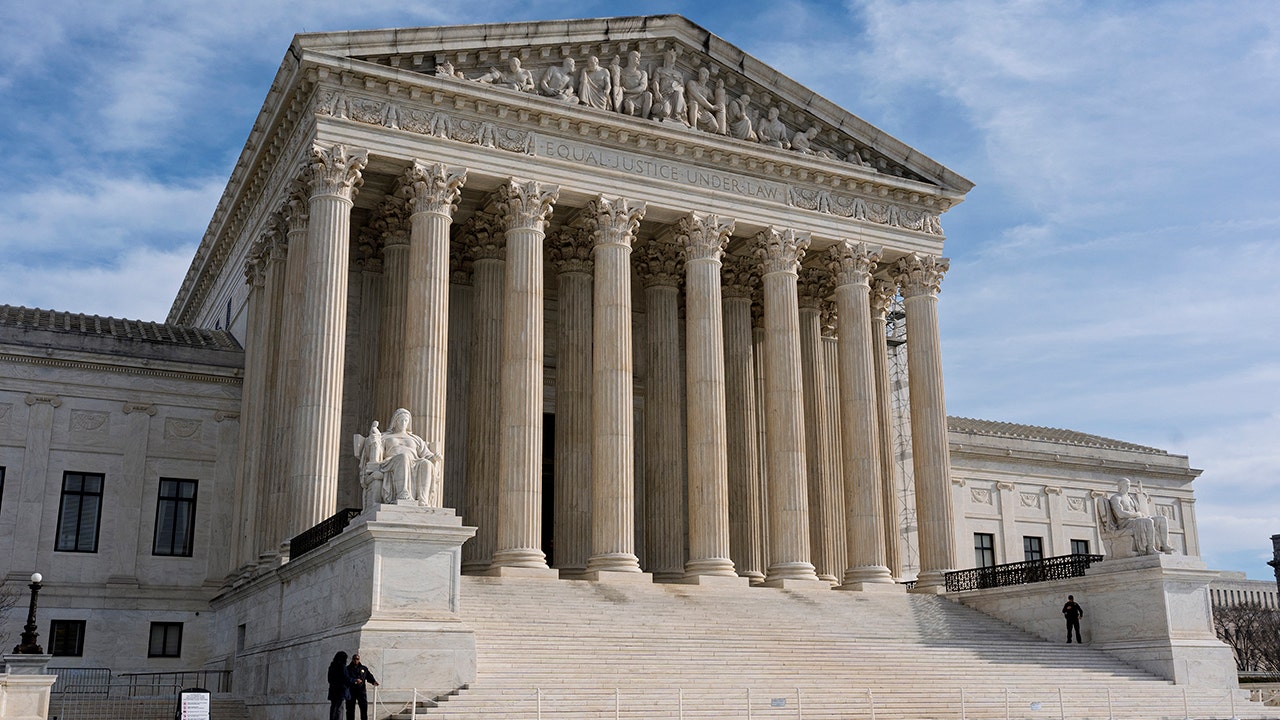
The Supreme Court has renewed a clear legal boundary by upholding state protections that allow female-only athletic competition, a decision that centers biological sex as the operative category in sports and leaves room for states to choose how to protect girls’ fairness and safety.
The court’s opinion affirmed that states may keep women’s sports reserved for biological females and found that such laws do not automatically violate Title IX or the Equal Protection Clause. That means “sex” in this legal context is being treated as biological sex, and that interpretation guided the majority. The split decision makes clear the issue remains contested and will keep states and advocates engaged.
DEMOCRATS REVOLT OVER ‘BIOLOGICAL’ WORDING IN WOMEN’S HISTORY MUSEUM BILL
This should not be controversial, yet it has become one of the most argued cultural flashpoints of our time. For decades Americans shared a common understanding of terms like male and female, and that shared reality made sports fair and straightforward. Recent years saw institutions blur those boundaries, producing real confusion and unfair outcomes for girls who train and compete under long-standing rules.
The court recognized what coaches, parents, and athletes already knew instinctively: sexes are not identically situated in athletic competition. Biological differences that affect performance matter when you are deciding how to structure fair contests in contact and strength sports. The ruling restores a baseline of common sense about competition without outlawing other approaches.
Make no mistake, this is a win worth noting, but it is not a total victory. The ruling says it is constitutional for states to create female-only categories, but it does not force states to do so. That “may versus must” distinction leaves nearly half the country still vulnerable to policies that blur competitive lines and put fairness at risk.
Because this is a split ruling, the practical impact will vary wildly by state. Some states already passed laws protecting girls’ sports, while others have not. That means fairness and safety for female athletes still depends too much on zip code and local politics.
President Trump put this issue on the national agenda and has consistently pushed protections for women’s sports. Executive actions can move the needle quickly, but they are fragile and reversible. Long-term protection requires Congress to act and make these protections statutory, not dependent on an administrative pen.
The Protection of Women and Girls in Sports Act passed the House but stalled in the Senate, showing why federal codification matters. If lawmakers truly want equal opportunity and safety for female athletes, they should make it the law of the land. Relying on temporary orders or shifting agency policy leaves girls exposed when political power changes hands.
Courts and the Justice Department can enforce existing laws, but litigation is slow and expensive. Activist states will use every procedural tool they can to delay enforcement, and injunctions will keep controversies alive for years. That means parents, donors, and athletes must keep pressure on institutions so ignoring biology carries real costs.
Institutions change when the price of ignoring reality goes up. Universities, athletic associations, sponsors, and voters all hold leverage and should use it. When schools or governing bodies sacrifice fairness for ideology, they risk losing credibility, funding, and the trust of the people they serve.
Individual athletes must keep speaking up and pursuing legal remedies when necessary. Successful lawsuits not only protect the plaintiffs but also make it more costly for organizations to institute discriminatory rules. Every win in court chips away at policies that let boys compete in girls’ sports without meaningful safeguards.
Politics will keep this issue alive through election cycles. Voters should require clarity from every candidate on one basic question: “Should girls compete against boys?” If the answer is a deflection or a reluctant yes, that stance should carry political consequences. This matter is simple enough that candidates who dodge it reveal a disconnect from commonsense voters.
At stake is more than championships and trophies; it is whether biological categories still matter under the law. Today’s decision moves the needle back toward recognizing those categories, but the work to make protections universal and enforceable is far from over. This is personal for many families; protecting girls’ fair competition is about respecting their effort and achievement.
