
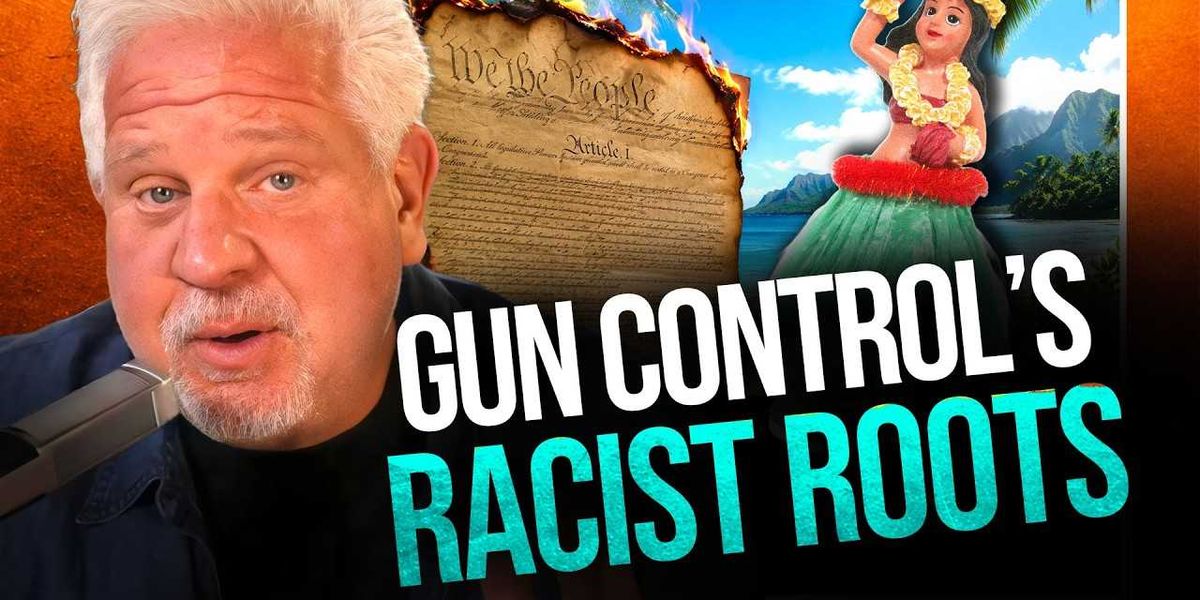
Hawaii used to bar concealed handguns from most public places under a law wrapped in the “spirit of aloha,” but a recent Supreme Court decision changed the rules, reigniting debate about rights, history, and who gets to decide where Americans can defend themselves.
For years, the Hawaii rule meant gun owners had to leave firearms at home unless a business explicitly invited them in. That policy effectively kept firearms off nearly all public lands and relied on a cultural appeal rather than a clear constitutional standard. Supporters called it polite and protective, but critics said it treated rights like optional accessories that could be turned off by signage.
“So in other words, you can’t bring your gun anywhere unless it’s posted. Where the rest of the sane world, if a store owner says, ‘I don’t want guns in here,’ they have to post, ‘No guns allowed,’” Glenn Beck explains. That line captures the real problem: rights are either respected or they are not, and making citizens ask permission to exercise a constitutional right is a dangerous path.
“They fenced off 96% of publicly accessible land with a stroke of a pen. 96%. And they called it, proudly, the vampire rule. Because like a vampire, a vampire can’t cross the threshold unless you invite them in,” he says. The image is blunt and it lands hard because the practical effect was to push lawful carriers into a narrow, vulnerable slice of public life.
This week, the Supreme Court in Wolford v. Lopez made a 6-3 ruling that the Hawaiian law violated the Second and 14th Amendments by barring licensed concealed-carry permit holders from carrying on private property open to the public. The decision restores consistency to how the right to bear arms applies outside the home, and it forces states to explain how restrictions square with constitutional text. That’s a substantive shift in a single opinion with real-life consequences.
Justice Alito’s voice loomed large in the ruling, and conservative commentators hailed the opinion as a reclaiming of a fundamental liberty. “Alito said the Second Amendment means the same thing whether you have a lei around your neck or not. It doesn’t bend to the spirit of aloha any more than it bows to the mayor of, you know, Chicago or New York,” Glenn explains. Those words underline a basic Republican stance: the Constitution protects people, not cultural slogans.
“A right is a right. It doesn’t change with zip codes,” he adds. That line cuts to the core of the debate over local control versus constitutional uniformity. If rights can be gated by local preference or hospitality customs, then citizens are left at the mercy of shifting rules rather than a stable legal guarantee.
The state’s history argument brought in a troubling reference from the 1860s, which critics say should have set off alarm bells. “If you’re going back and you’re looking for ways to defend yourself and you have to go to the South in the 1860s, it’s probably not going to be something you should say out loud,” Glenn says. “That statute in 1865 said you can’t bring a gun on another man’s property without permission. And they actually said ‘that’s tradition.’ … No, that’s not tradition. That was called the Black Code. And it was written after the Civil War to disarm free black men so they couldn’t protect their families,” he continues. “So the instrument that was used for racial disarmament, they said it’s the ‘spirit of aloha,’” he adds.
Pointing to the Black Codes as precedent undermines any claim that the law was an innocuous local custom rather than a power grab with roots in racial control. Republicans will argue the Court did the right thing by rejecting legal reasoning that relies on discredited and discriminatory foundations. Citizens should be free to carry where the law allows and not be treated as second-class depending on geography.
The ruling puts states on notice: if you want limits, show a constitutionally valid reason, don’t hide behind charm or history that carries a stain. The decision will shape how Americans move through public life and reclaim a range of spaces where the right to self-defense now stands clearer than it did a week ago.
