
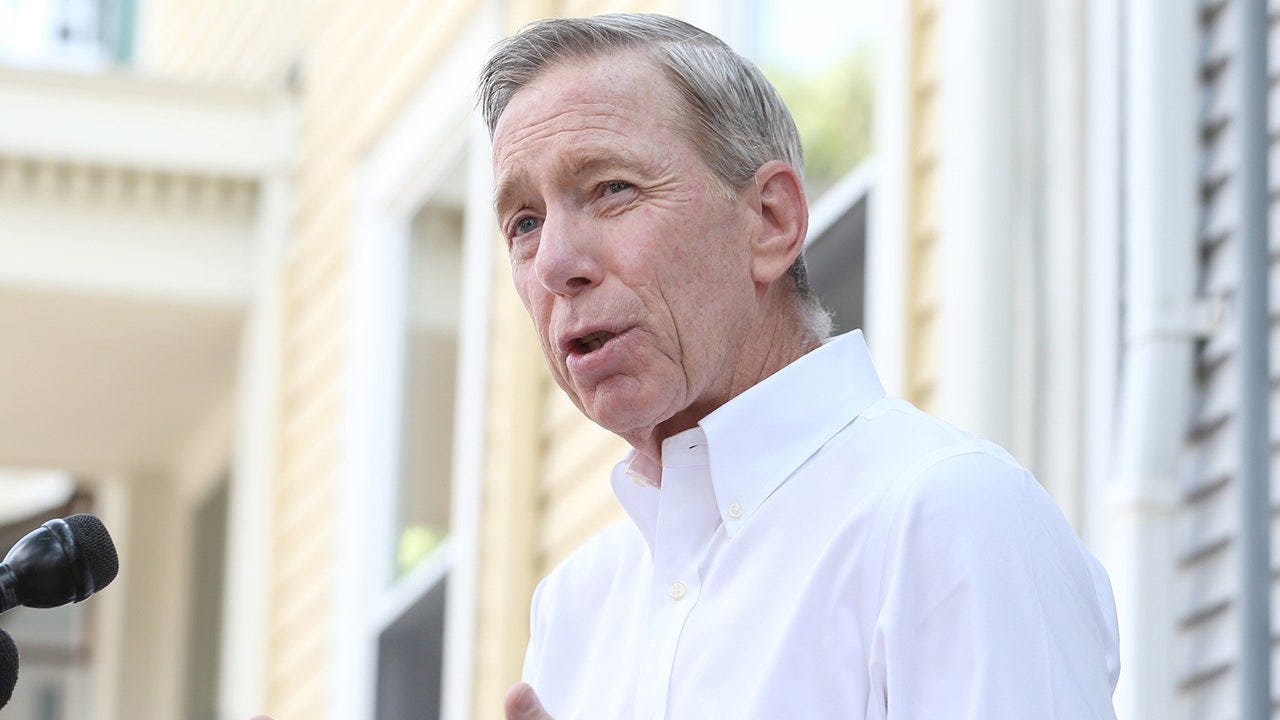
• Conservative Democrat Stephen Lynch holds a deep-blue district.
• Progressive challenger Patrick Roath comes up short despite heavy fundraising.
• Immigration, healthcare, housing, and money in politics drive the clash.
• The Laken Riley Act becomes a major fault line in the race.
• Support from unions and activist groups shows the party split in plain view.
Rep. Stephen Lynch kept his seat in Massachusetts with a win that said plenty about the state of Democratic politics in a deep-blue district. The 25-year incumbent, known for being more cautious than many in his party, turned back a progressive challenge even though his opponent had plenty of money and a loud message. It was the kind of contest that exposed how far the left is willing to push and how often voters still choose familiarity over a full-on ideological leap.
Patrick Roath, a lawyer and former aide to ex-Gov. Deval Patrick, tried to make the race a test of whether a younger, more aggressive left-wing message could break through. He outraised Lynch by about $300,000 and framed himself as the sharper voice on immigration, healthcare, housing and the influence of money in politics. But money alone did not carry the day, especially when the race started to look less like a revolt and more like an intramural brawl inside the same party.
Immigration stood out as the flashpoint. Lynch was among 46 House Democrats who backed the Laken Riley Act, a measure requiring federal authorities to detain certain migrants accused or convicted of theft and other specific crimes, and Roath made that vote a centerpiece of his challenge. Roath argued Lynch’s support was “shortsighted and expedient” and said it “demonstrates a fundamental failure to take seriously the threat that the Trump Administration poses to all Americans.”
Lynch did not run away from the issue. He called the bill “imperfect” but said the bigger problem was an immigration system that was “completely out of control.” That posture fit his long-running brand: not a firebrand, not a rubber stamp, but a Democrat willing to break with the crowd when the political wind starts blowing hard enough.
The healthcare fight was just as revealing. Roath backed Medicare for All and a government-funded system, while Lynch pushed a public option and blasted the role of for-profit hospital companies. Lynch also reminded voters that he had once voted against the Affordable Care Act because, in his view, it gave too much to insurance companies. That history made him look less like a party loyalist and more like a guy who has spent years picking his own fights.
Roath tried to paint himself as the outsider in the matchup, but Lynch countered by pointing to the challenger’s background as a corporate lawyer. That jab mattered because it undercut the idea that Roath was some scrappy anti-establishment crusader taking on the machine. Lynch’s own resume, from iron worker to union president to lawyer before Congress, also gave him a blue-collar story that still plays well in Massachusetts politics.
The endorsements told their own story. Roath lined up support from the Boston Globe, David Hogg’s Leaders We Deserve, Indivisible, the Massachusetts Teachers Association, Boston Teachers Union and American Federation of Teachers Massachusetts. Lynch, meanwhile, pulled backing from the Massachusetts AFL-CIO, Iron Workers Local 7, Professional Firefighters of Massachusetts and the American Federation of Government Employees, showing that the labor lane still has real muscle when a Democrat with a long record asks for help.
The race also had a generational edge that gave it extra bite. Lynch is 71, while Roath is 39, and that age gap fed the larger argument over whether the Democratic Party wants experience and pragmatism or a younger, more ideological brand of politics. Lynch, for his part, has been called a moderate for years, but he has insisted that label gets overstated, once joking, “Calling me the least liberal member from Massachusetts is like calling me the slowest Kenyan in the Boston Marathon,” he said in 2010. “It’s all relative.”
That line still fits the tension around him. Lynch has shifted left in some areas over time, including his support for Planned Parenthood and abortion-rights legislation, yet he still carries the image of a Democrat who can speak to skeptical voters without sounding like a protest slogan. In a district this lopsidedly Democratic, that balance can matter more than activists want to admit, especially when the party’s internal tug-of-war gets louder than the actual campaign.
Massachusetts’ 8th Congressional District remains firmly in Democratic hands, and the GOP nominee, Robert Burke, is far outside the center of the drama. The real story was the clash between two versions of Democratic politics, one rooted in labor, caution and old-school coalition building, the other driven by activist energy and a harder ideological edge. That kind of contest does not end neatly, and the next round is already sitting there in plain sight.
