
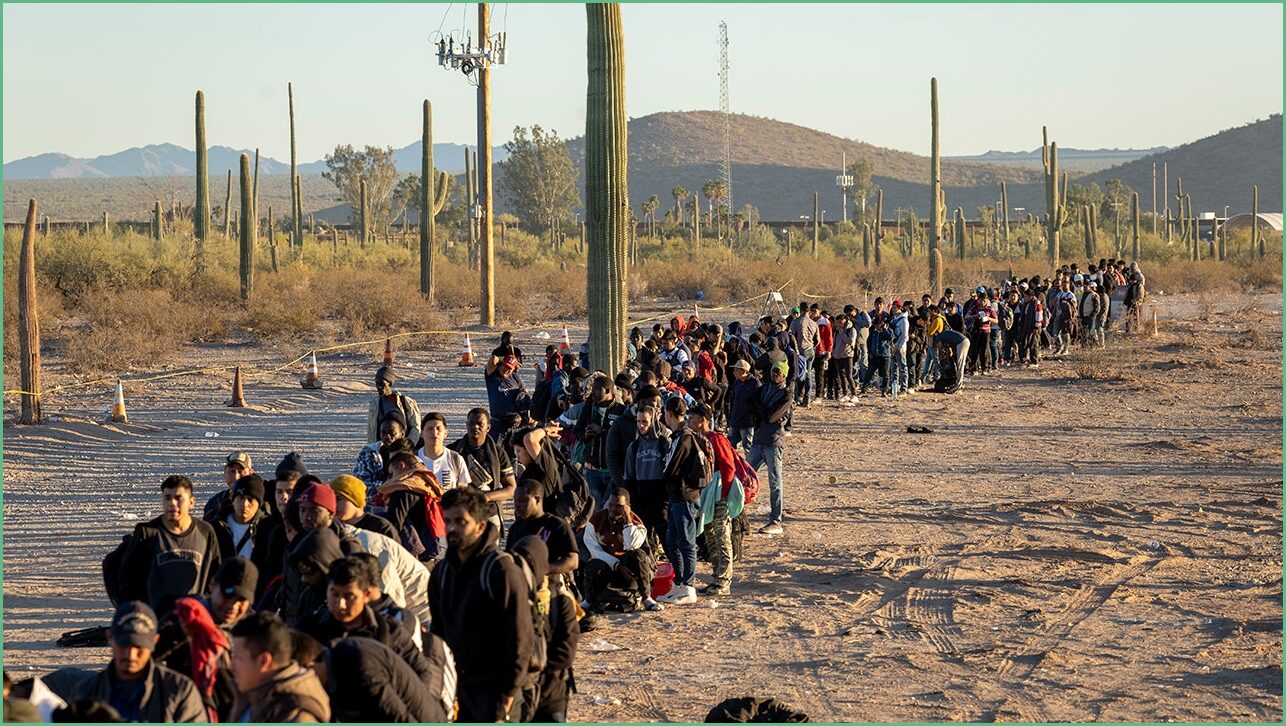
The State Department’s pause on visa processing for nationals from more than 75 countries marks a turning point in how Washington treats migration: no longer just a humanitarian issue, migration now sits squarely at the intersection of national security, economic resilience and the rule of law. This piece explains why mass migration and the remittances that flow with it can function as tools in gray-zone conflict, how they reshape labor markets and state incentives, and what recognizing that reality should mean for policy and enforcement. The perspective taken here is direct and practical, focused on protecting American workers, sovereignty and national interests.
Washington’s recent visa freeze reflects growing Republican concerns that migration is being leveraged in ways that go beyond individuals seeking better lives. In modern conflict, moves below the threshold of war can reshape economies and political incentives, and the U.S. must treat persistent, large-scale population movements through a strategic lens. When migration reaches industrial scale, the aggregate effects matter more than individual intent, and policy should follow that reality. Ignoring that shift invites problems across labor markets, enforcement and national cohesion.
For some sending states, remittances have become a policy instrument and a budget line, reducing pressure to reform and creating a steady, sanction-resistant revenue stream. That kind of dependency changes calculus: why push citizens to return when money keeps flowing in and social pressures remain manageable? The result is durable externalization of domestic failures. From a Republican viewpoint, that should signal a need for tougher negotiation and clearer consequences for states that tacitly profit from outward migration.
WHITE HOUSE ROADMAP SAYS EUROPE MAY BE ‘UNRECOGNIZABLE’ IN 20 YEARS AS MIGRATION RAISES DOUBTS ABOUT US ALLIES
Remittances are not trivial. They total hundreds of billions globally and represent a major transfer of wealth from developed to developing economies, with the United States the largest single source of outbound flows. When remittances exceed investment or aid in a country, they alter macro incentives and can prop up regimes that have little interest in curbing migration. From a policy standpoint, large-scale financial flows tied to migration are a leverage point and a vulnerability at once.
FEDS LAUNCH OPERATION TARGETING MINNESOTA REFUGEES FOR POTENTIAL DEPORTATION AMID FRAUD INVESTIGATION
Inside the U.S., reliance on abundant, low-cost labor depresses wages and distorts competition in key sectors like construction, agriculture and services. That dynamic harms American workers and weakens the social compact that binds communities together. Republican policy priorities should include enforcement that restores fairness in the labor market and ensures legal migration does not undercut domestic standards. Labor markets are a battleground where sovereignty and prosperity are defended or surrendered.
Mexico alone received more than $64 billion in remittances last year, a massive flow largely from U.S. households and workers that underscores how much private money now underwrites foreign incomes. When remittances represent a large share of GDP in countries like El Salvador, Haiti or Somalia, sending states gain political cover to avoid deep reforms or to obstruct deportations. That dynamic can be exploited by hostile actors, criminal networks or corrupt officials who see advantage in continued migration flows rather than in fixing the problems that cause them.
TRUMP STATE DEPARTMENT ORDERS GLOBAL VISA CRACKDOWN UNDER REVIVED ‘PUBLIC CHARGE’ RULE
Networks that move people across borders can also overlap with criminal or terrorist enterprises, enabling money laundering, narcotics trafficking and exploitation under the cover of remittance channels and money-service businesses. That complicates enforcement and raises the stakes for a strong regulatory response to financial flows tied to migration. Addressing these overlaps requires intelligence, targeted sanctions and coordination with private-sector payment processors to cut off abuse while preserving legitimate family support.
Seen through the lens of hybrid conflict, remittances and mass migration become asymmetric tools that can weaken U.S. labor standards, erode rule of law and stabilize bad actors abroad. The appropriate Republican response acknowledges humanitarian impulses but prioritizes enforcement, border security, and economic resilience. Recognizing scale and strategic impact does not vilify individuals; it simply demands coherent policy that defends national interest in labor markets, finance and the rule of law.
Policy choices matter: inaction allows external actors to exploit open borders and financial channels, while decisive steps can rebalance incentives in sending states and protect American workers. The contest is no longer limited to a physical border — it plays out in payrolls, remittance flows and regulatory oversight. If we want a sovereign, prosperous nation, we need to align immigration policy with national security, economic fairness and strong enforcement now.
