
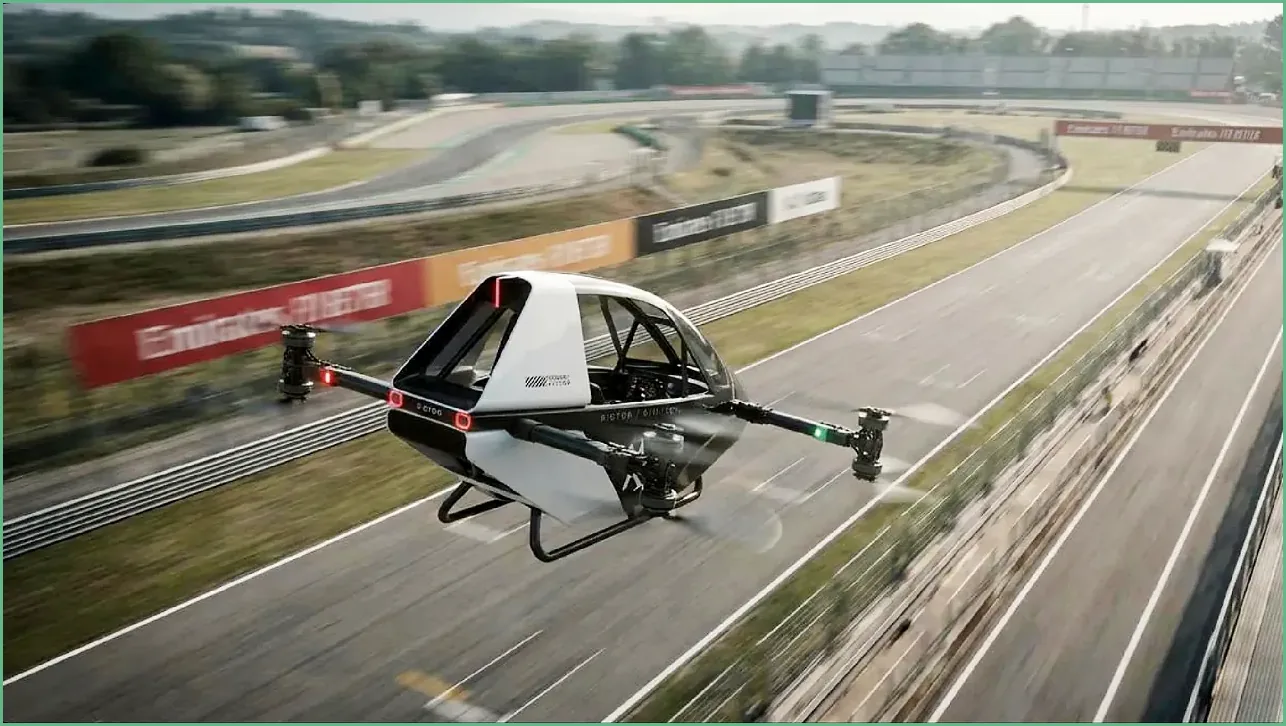
The Rictor X4 was unveiled at CES 2026 as a compact, single-seat electric vertical takeoff and landing aircraft that promises affordable short-range personal flight, folding portability and ultralight regulatory positioning. This piece walks through its basic design, propulsion approach, safety systems, claimed Part 103 compatibility, portability features, pricing and the practical questions that remain before it can be more than a polished demo. Read on for a clear, plain look at what Rictor says the X4 can do and why that matters for personal eVTOLs.
The X4 adopts a multirotor layout with four carbon fiber arms and eight propellers arranged in coaxial pairs, a choice that prioritizes redundancy and stable low-altitude handling over raw speed. Each arm folds inward so the craft can shrink down to a compact footprint meant to fit in a pickup truck bed, which is a rare and attention-grabbing design goal. The focus on short hops and low-altitude flights frames the aircraft as a commuter or professional utility machine rather than an intercity transport solution.
Rictor describes its mission as light aerial mobility, and the propulsion architecture reflects that: coaxial dual-motor setups on each axis deliver consistent thrust and built-in backup if a motor falters. A proprietary Dynamic Balance Algorithm reportedly adjusts power across all eight motors in real time to keep the vehicle stable during hover and transition. That control strategy is aimed at predictable handling in gusts and the kind of low-altitude work the company envisions.
Safety features are front and center in the X4 pitch, starting with a semi-solid state battery system and dual battery redundancy so a single module failure can still permit a controlled landing. There is also an emergency parachute system for last-resort protection and a centralized flight control computer that continuously monitors propulsion, attitude and system health. Those layers combine software oversight with hardware fallbacks in a package designed to reduce single points of catastrophic failure.
On the hardware side, the craft uses 63-inch carbon fiber folding propellers and claims a payload capacity up to 220 pounds including the pilot, which frames it clearly as a one-person vehicle with modest cargo allowance. Noise is a design target too; Rictor asserts operation below 65 decibels, though independent verification is not yet available. The company also says the aircraft can maintain a stable hover in side winds up to a Level 6 rating thanks to its control algorithm and redundant motors.
One of the most consequential claims is regulatory: Rictor intends the X4 to comply with FAA Part 103 rules for ultralight vehicles, which, if met in practice, could allow operation without an airworthiness certificate or a pilot license. The plan relies on autonomous pre-programmed flight paths and very low altitude operation, reportedly down to about three meters above ground, to fit within the ultralight envelope. That approach sounds promising on paper, but actual legality will hinge on FAA interpretation and how the aircraft is used in the real world, where Part 103 still imposes meaningful operational limits.
Portability is a repeated selling point: the folded X4 is said to occupy roughly 42 cubic feet, making pickup-truck transport and roadside recharging part of the user story. Rictor highlights in-vehicle charging capability so owners could potentially top up between hops without a dedicated airfield, which would be a practical edge for short-range use. The reality of daily life—charging speed, grid compatibility and safe in-vehicle power transfer—will be practical details buyers will want clarified before placing orders.
Price is another headline: a launch figure of $39,900 with a $5,000 deposit positions the X4 far below most personal eVTOLs currently discussed, and that affordability is part of what makes the announcement memorable. The company behind the project is Kuickwheel Technology, and Rictor says first customer deliveries are targeted for the second quarter of 2026. As with any ambitious aircraft program, those timelines should be taken as aspirational until prototype testing and production ramp-up are publicly documented and verified.
Personal eVTOLs sit in a tough middle ground between cool concept and everyday reality, with cost, regulation and safety all slowing broader adoption to date. If the X4 actually matches Rictor’s claims, it could broaden access to short-range personal flight beyond a tiny enthusiast niche. But delivering reliable performance, securing a clear regulatory path and proving production readiness are high bars that will determine whether this stays a compelling idea or becomes a practical tool.
The X4’s mix of folding hardware, redundancy and ultralight positioning makes it one of the more aggressive personal eVTOL pitches to surface from CES in recent memory, even if unanswered questions remain. Interest will hinge on hands-on testing, independent noise and safety results, and the FAA’s real-world reading of Part 103 when autonomous, low-altitude operations are proposed. Until we see routine flights outside controlled demos, skepticism is reasonable, but the concept is worth watching as personal aviation tries to move from prototypes to everyday use.
