
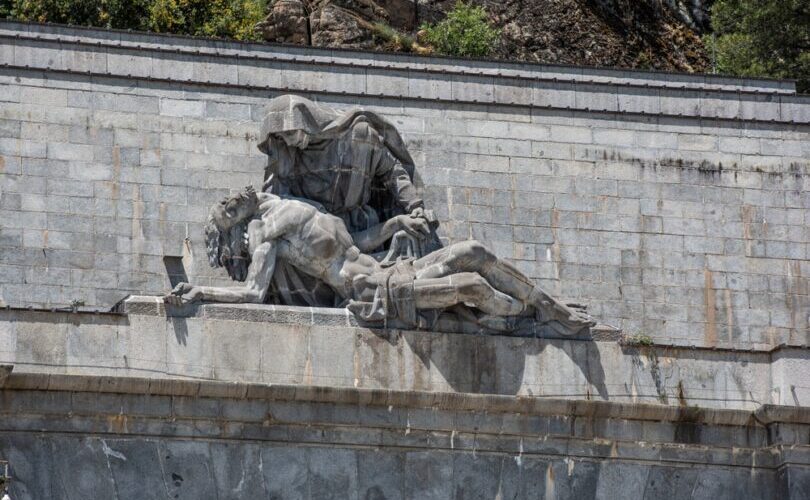
The Spanish Civil War still casts a long, grim shadow 90 years after it began, and its darkest truth is hard to miss: a wave of anti-Catholic violence tore through Spain while the world argued over politics and ideology. What followed was not just a military conflict, but a ruthless assault on churches, clergy, and ordinary believers that left scars the country never fully shook off.
The conflict exploded on July 18, 1936, after years of growing chaos, radicalization, and foreign meddling. Spain became a magnet for outsiders who thought they were joining a noble fight for democracy, yet many of them ended up inside a brutal revolution that swallowed faith, law, and basic human decency.
For decades, the story outside Spain has often been narrowed down to familiar left-wing myths and literary gloss. But the testimony of Spanish bishops from the period paints a far different picture, one centered on persecution, planned violence, and a determined effort to erase the Catholic Church from public life.
That persecution did not begin with the shooting. It had been building for years as anti-Catholic sentiment spread through the political left after the monarchy fell in 1931, turning streets, schools, and government offices into battlegrounds of hatred. Churches were burned, clergy were hunted, and the campaign against the faithful kept escalating until violence became the norm.
The bishops described a society being pulled apart from within, with political freedom weakened by manipulation, canceled votes, and the steady pressure of revolutionary forces. They also pointed to Soviet support, arguing that communist organizers and propaganda were laying the groundwork long before the uprising turned open and bloody.
What makes the Spanish case so chilling is the scale. According to the Church’s own accounting over the years, thousands of bishops, priests, nuns, seminarians, and lay Catholics were killed for their faith, while churches and sacred spaces were desecrated or destroyed across the country. The numbers are not just statistics, either, because each one represents a life cut short in rage and contempt.
The attacks were often savage enough to shock even hardened observers. Victims were not only executed, but humiliated, mutilated, and thrown aside as if their very existence had to be erased from memory, a cruelty that was meant to send a message to everyone else who still dared to believe.
The Spanish bishops made a point of rejecting the idea that the Church had somehow brought this upon itself. Their 1937 letter insisted that the destruction was sudden, coordinated, and tied directly to the anti-Christian climate that had already taken hold, not some spontaneous reaction to church policy or social privilege.
That matters because the usual story gets things backward. Instead of a clean clash between democracy and reaction, the bishops saw a planned Marxist revolution trying to seize the country, crush its opponents, and remake Spain from the ground up, with the Church placed squarely in the crosshairs.
There is also the uncomfortable fact that history is often shaped by whoever survives loudest. In Spain, the memories that spread beyond its borders were filtered through writers, propagandists, and political sympathizers who preferred a cleaner, more heroic narrative, while the murdered clergy and laity were pushed to the margins.
That is why the Church’s recognition of Spanish martyrs has mattered so much. Each beatification and canonization has served as a reminder that these were not abstract casualties of a civil conflict, but men and women who were targeted because they represented a faith the revolution wanted gone.
Even now, the numbers keep growing as the Church formally recognizes more of those killed in the 1930s. The memorials, documents, and martyr lists do more than preserve names, because they challenge the polished myths that still cling to the war and force a harder look at what happened when ideology turned murderous.
Spain’s civil war did not just decide who would govern the country. It exposed how quickly political fanaticism can turn into religious extermination, and how easy it is for a culture to forget the victims once the loudest side has had enough time to spin the story its own way.

1 Comment
Pre WW2 setting for later WW2 ahead