
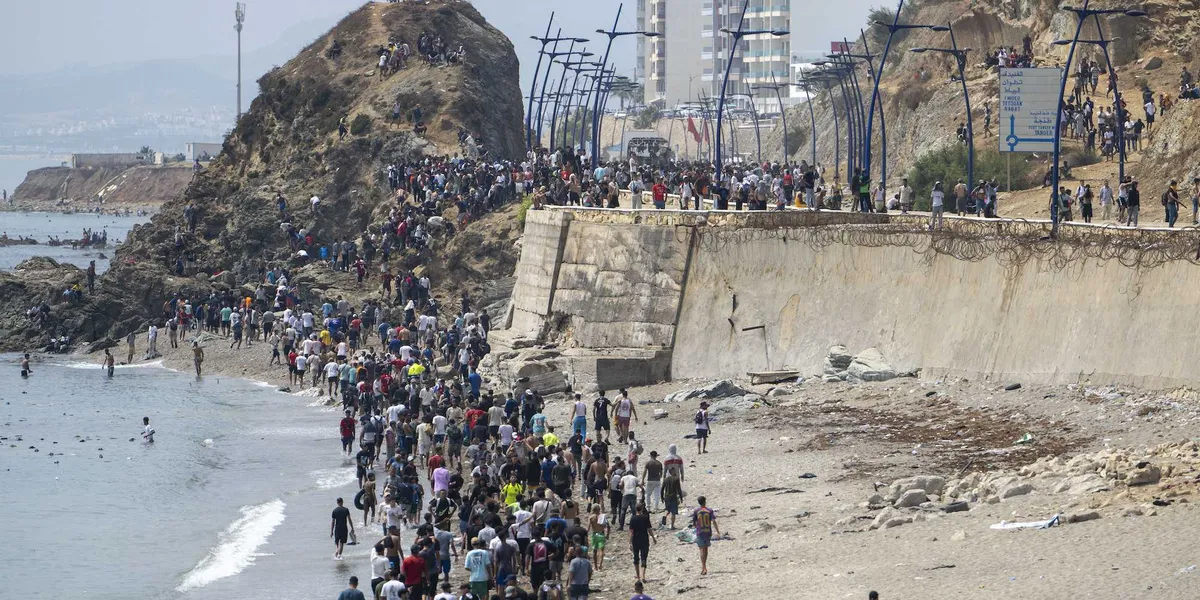
Spain’s tiny Ceuta territory is once again at the center of a hard-edged migration fight, with authorities saying thousands of migrants have been removed and that the pressure along the border is far from over. The numbers are sharp, the stakes are high, and the story sits right at the crossroads of border security, political control, and a growing clash between Spain and Morocco.
Ceuta is small, but it has long carried outsized importance because of where it sits. Sandwiched between Spain and Morocco, it has become one of the most visible flashpoints in Europe’s migration debate, where every surge, pushback, and border standoff gets watched closely. For Spanish officials, the territory is not just a map point. It is a test of whether the state can actually hold the line.
According to the report, Spain says 25,000 migrants have been expelled from the territory, and at least 34 people have died in the broader crisis tied to the area. That kind of toll puts a cold, brutal edge on the issue, stripping away the slogans and forcing attention onto the human cost of repeated crossings and enforcement crackdowns. The situation has become a painful reminder that migration policy is never just theory when it plays out on a fence line.
Ceuta’s challenge is not new, but it keeps getting louder. When people move in large numbers toward a small territory with limited space and limited resources, the pressure builds fast, and the response can turn rough just as quickly. Spain has been left trying to balance security, sovereignty, and public order while facing constant scrutiny from both domestic critics and international observers.
Morocco is part of the picture too, whether officials want that front and center or not. Any movement across the border touches on diplomacy, enforcement, and the uneasy reality that both countries have a stake in how tightly that frontier is controlled. When tensions rise, the border becomes more than a border. It turns into leverage, warning, and headline all at once.
The political side of this is impossible to ignore. Migration fights have a way of exposing which governments are serious about control and which ones prefer slogans over action, and Ceuta has become one of the clearest examples of that divide. For many voters, especially those frustrated by years of wavering policy, the question is simple: who is actually defending the border?
The deaths reported in connection with the crisis also sharpen the debate in a way that statistics alone never can. Every enforcement move carries risk, and every failed crossing tells its own story about desperation, instability, and the ugly reality of mass movement into a small, heavily watched territory. That is what makes Ceuta so hard to talk about without the conversation turning emotional fast.
Even so, the core issue remains straightforward. A small Spanish enclave cannot absorb endless pressure, and no country can pretend that open-ended migration surges will sort themselves out. If authorities do not keep firm control, the border stops being a border and starts looking like a permanent crisis zone.
Spain now faces the familiar problem of trying to hold order while the world watches and argues. Ceuta has become a symbol, but it is also a warning, showing how quickly migration can overwhelm a small place when policy is weak and enforcement is constantly under strain. For residents, officials, and migrants alike, the tension is not fading anytime soon.
