
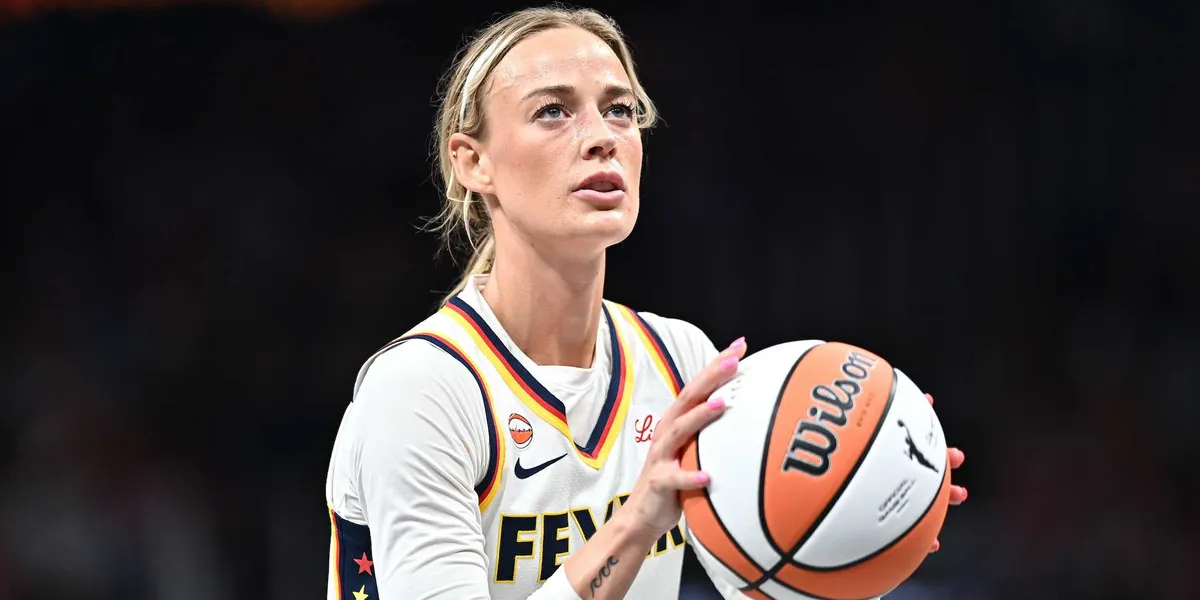
Sophie Cunningham walked into a hostile Canadian crowd and got the full treatment, with boos pouring down before the game even had room to breathe. Instead of folding or feeding the noise, she answered with composure, grit, and the kind of cold confidence that tends to travel well in sports. The moment hit a nerve because it landed right in the middle of bigger arguments about the WNBA, women’s sports, and the pressure athletes face when the conversation gets political.
The reaction from the stands was loud enough to set the tone early, but Cunningham never seemed interested in giving the moment extra oxygen. That kind of poise matters in pro sports, where a player can either get dragged into the circus or turn the volume down by staying locked in. In this case, the boos became part of the show, but not part of the script Cunningham was willing to follow.
What made the scene stand out was the contrast between the crowd’s hostility and her calm response. Plenty of athletes try to outshout the noise or make everything about themselves, but Cunningham took a sharper route by letting the moment speak for itself. That usually lands harder, especially when fans are looking for a meltdown and get discipline instead.
There is also a bigger layer here that reaches beyond one game in one country. Women’s sports have been under a brighter spotlight than ever, and every high-profile flashpoint tends to pull in arguments about fairness, competition, identity, and who gets to define the lane. Cunningham’s presence in that conversation has made her a target for some and a favorite for others, which is exactly why the reaction around her keeps getting intense.
That tension is part of what has made the WNBA such a talking point lately. The league is getting more attention, more scrutiny, and more cultural baggage than ever, and players often end up carrying battles that go way beyond basketball. When the crowd starts booing, it is rarely just about the stat sheet. It is about the whole messy collision between sports, culture, and public opinion.
Cunningham’s answer to the noise was simple: keep her cool and keep moving. That kind of response can hit harder than a dramatic comeback because it refuses to hand the moment over to the loudest people in the building. In sports, that kind of restraint can feel almost rebellious, especially when the expectation is that everyone will snap back on cue.
The Canadian crowd may have thought the boos would rattle her, but the bigger takeaway was how little control that kind of atmosphere actually has over a veteran mindset. Athletes know every arena has its own energy, and some nights come with more bite than others. Still, the ones who thrive are often the ones who treat the noise like weather and keep playing through it.
That is part of why the reaction around Cunningham stretched beyond the final whistle. Fans are increasingly drawn to athletes who look unshaken when the pressure gets personal, and Cunningham fit that mold in a way that felt natural rather than staged. The moment was not just about being booed, it was about refusing to let the crowd set the emotional temperature.
For supporters of women’s sports, scenes like this have become a reminder that the spotlight can be a blessing and a headache at the same time. More attention means more energy in the building, more debate online, and more chances for every move to be magnified. Cunningham handled that spotlight with a steady hand, and that alone made the whole episode land with force.
What happened in Canada did not need a dramatic ending to hit home. The crowd brought the heat, Cunningham stayed composed, and the contrast did the rest, leaving a snapshot of modern sports culture that was impossible to miss.
