
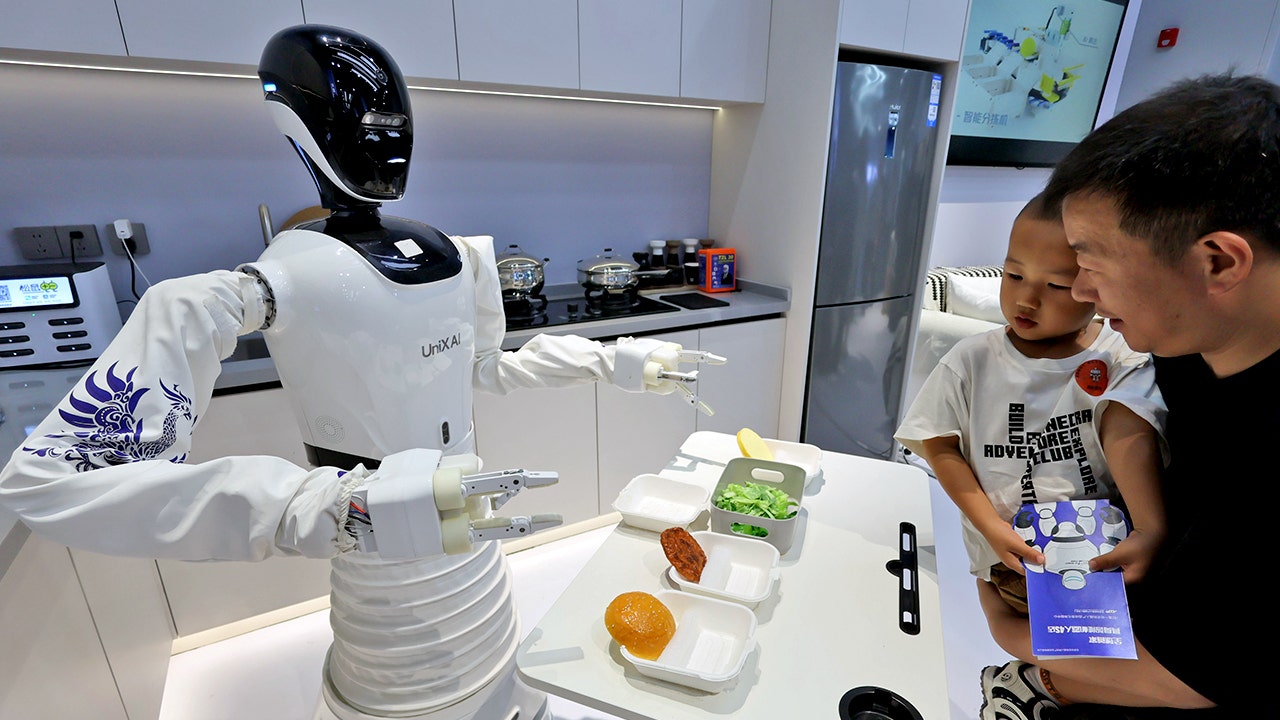
The UniX AI Panther is a new home robot being trialed in real houses that combines mobility, sensing and robotic arms to handle multi-step daily chores, and it’s sparking fresh debate about what a practical, general-purpose household helper could actually look like. This article walks through its design choices, capabilities, real-world testing, the embodied AI that powers it, the technical and social challenges it faces, and why adoption will hinge on trust, price and reliability.
The Panther line targets whole-routine assistance rather than single jobs, aiming to move through a home and complete sequences of tasks without nonstop human direction. That shift makes it more like an assistant than a tool; instead of just vacuuming or mowing, it tries to wake you, prepare a meal and tidy up afterward in demonstration runs. Testing in real residences and service environments is the core of the push to prove it can operate outside the lab.
Physically, the robot sits in a middle height range and uses wheels for locomotion, a choice that emphasizes balance and longer runtime over humanoid walking. Onboard power allows several hours of active use per charge, varying with how intensively it’s worked. Twin articulated arms can lift a few dozen pounds and the platform includes a multi-microphone array so it can hear and respond to spoken commands naturally.
Sensing and mapping are central to how it navigates messy households. Cameras and depth sensors feed visual data while LiDAR builds spatial maps so it can plan routes and dodge obstacles. That sensor fusion is what lets it identify counters, doorways and furniture and then decide how to approach and manipulate objects safely.
The demonstrations UniX AI has shared focus on multistep activities like preparing simple food items, putting things back where they belong and interacting with standard appliances in situ. Completing a chain of actions rather than stopping after each move is what separates these demos from one-off task robots. Real homes vary wildly, so running through entire routines without supervision is the real technical milestone.
At the heart of the promise is embodied AI, which ties decision-making directly to physical action instead of only to conversation or remote control. That means the software must plan sequences, assess success or failure at each step and adapt on the fly when something unexpected appears. It’s a harder problem than voice assistants solve, because the robot’s body and the messy world both matter constantly.
Still, plenty of technical hurdles remain before many households will welcome one in full time. Lighting changes, soft materials, oddly shaped items and narrow gaps remain pain points for perception and manipulation systems. Tasks that seem trivial for people, like folding laundry or handling flexible food packaging, expose limits in current grasping and motion planning.
Beyond engineering, privacy and safety conversations are unavoidable. A mobile robot with cameras and microphones inside a private home creates new vectors for data collection and accidental exposures. Strong safeguards, transparent data handling policies and robust physical safety systems will be essential before broad consumer trust can form.
Market fit depends on more than capability: cost, reliability and service support matter as much as technical skill. Many early adopters will want clear guarantees on maintenance, software updates and predictable performance; otherwise the robot becomes another appliance that’s more hassle than help. Expect gradual rollouts in controlled environments before a mainstream consumer product appears.
Sign up for my FREE CyberGuy Report
AI ROBOT NOW HELPS TRAVELERS AT SAN JOSÉ AIRPORT, US TARGETS CHINESE ROBOTS OVER SECURITY FEARS, HUMANOID ROBOT SHOWS SPEED AND REAL SKILL
Take my quiz: How safe is your online security? Cyberguy.com.
