
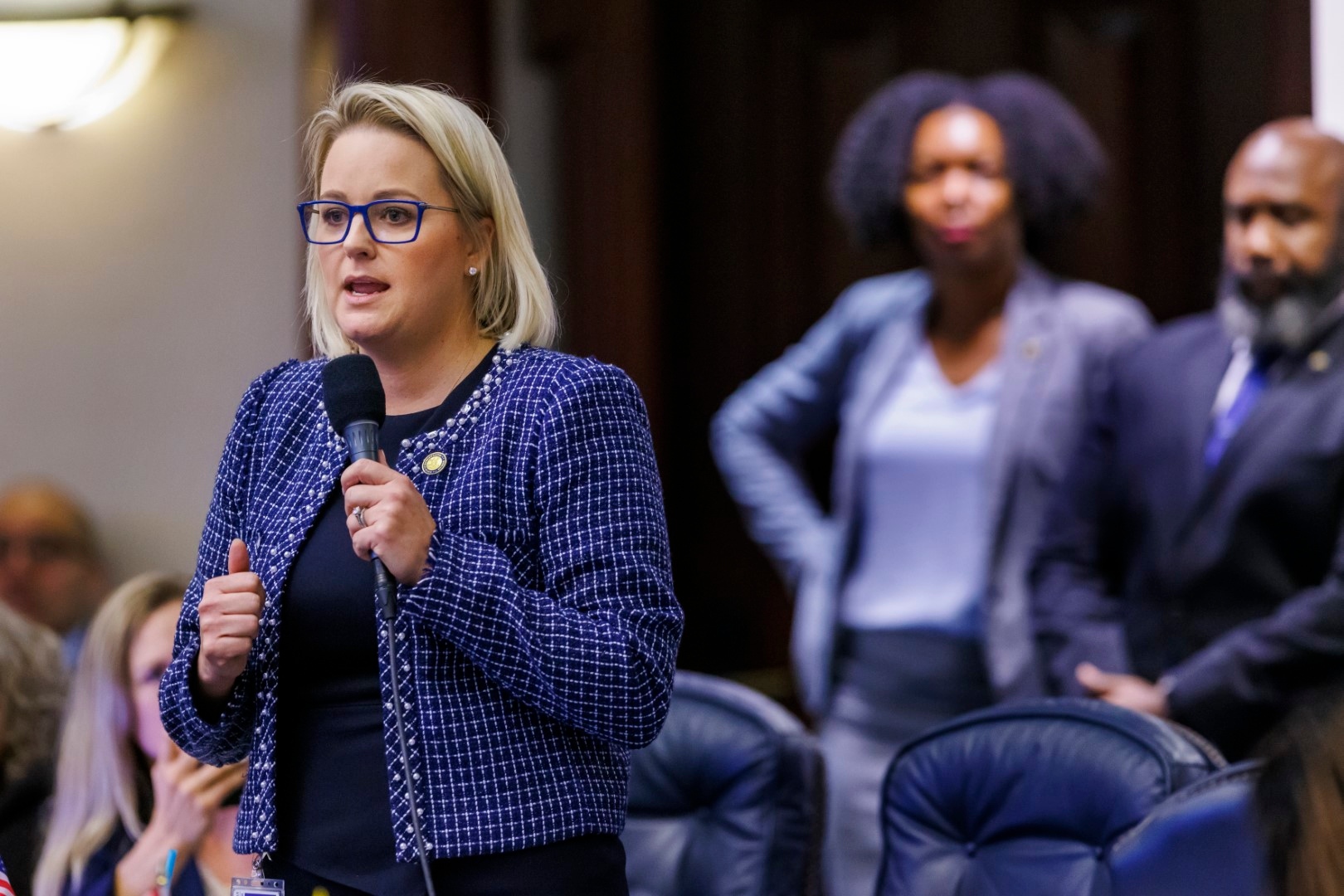
In a dramatic shift that underscores Florida’s changing political landscape, State Representative Hillary Cassel of District 101 announced on Friday that she is leaving the Democratic Party and joining the Republican Party. Cassel becomes the second Democratic legislator in Florida to flip parties this year, strengthening the Republican supermajority in the state legislature.
Cassel cited the Democratic Party’s lack of unequivocal support for Israel and its failure to connect with everyday Floridians as key reasons for her decision. Her move follows a similar switch earlier this year by Tampa’s Representative Susan Valdés. Together, their defections highlight the mounting challenges faced by Democrats in the Sunshine State.
Cassel made her decision public in a Twitter post, stating that it was driven by her dedication to her constituents and her alignment with Republican principles.
“This decision was not made lightly but comes from a deep sense of responsibility to my constituents and my commitment to the values that guide my service,” Cassel wrote. “I will be joining the Republican Conference of the Florida House of Representatives because I believe in their vision for a better, more prosperous Florida.”
Her concerns with the Democratic Party’s direction were evident in her statement:
“As a proud Jewish woman, I have been increasingly troubled by the Democratic Party’s failure to unequivocally support Israel and its willingness to tolerate extreme progressive voices that justify or condone acts of terrorism. I’m constantly troubled by the inability of the current Democratic Party to relate to everyday Floridians. I can no longer remain in a party that doesn’t represent my values.”
Cassel’s switch bolsters a Republican Party that already holds a commanding supermajority in the Florida legislature. Republicans gained significant ground in the state during the 2024 elections, flipping districts and further consolidating power.
Cassel represents a district that has experienced a notable political shift in recent years. While Joe Biden won the district by 14 points in 2020, it swung 16 points toward the GOP in 2024, with Donald Trump narrowly carrying the district.
Her departure from the Democratic Party is emblematic of this broader trend, as Republicans capitalize on discontent among moderates and centrists.
Florida House Speaker Daniel Perez welcomed Cassel to the Republican fold with a celebratory tweet:
“I am proud to share that @RepCassel has joined our House Republican Conference. Welcome to the team!”
Cassel’s decision did not come out of the blue. Earlier in December, she shared an infographic highlighting the Republican Party’s dominance in Florida’s upcoming legislative session.
“Understanding the makeup of our State Legislature is key to navigating the upcoming session and addressing the needs of Floridians,” she tweeted at the time.
Her transition to the Republican Party now formalizes what many saw as an inevitable move.
Cassel’s defection is the latest blow to Florida Democrats, who are grappling with internal divisions and dwindling voter support. The party’s struggles to maintain cohesion on critical issues—such as unwavering support for Israel—have alienated some of its members.
Cassel specifically cited the Democratic Party’s tolerance of progressive voices that “justify or condone acts of terrorism” as a significant factor in her decision. This critique aligns with broader criticisms of the party’s leftward drift, which some argue has made it less relatable to everyday voters.
The Democratic Party’s struggles in Florida reflect a nationwide trend of polarization within its ranks, as moderates and progressives clash over key policy and messaging strategies.
Cassel’s switch is part of a larger movement among moderate Democrats who feel alienated by their party’s direction. Her decision to join the GOP mirrors similar shifts across the country, as Republicans appeal to voters and legislators disenchanted with Democratic leadership.
The implications of Cassel’s move extend beyond her district. It signals to other moderate Democrats in swing districts that switching parties may not only align with their values but also resonate with their constituents.
Cassel’s current term runs through November 2026, giving her ample time to solidify her position within the Republican Party. As she begins her tenure as a Republican legislator, her focus will likely be on delivering tangible results for her constituents while navigating the dynamics of her new party affiliation.
For the Democratic Party, her defection serves as a wake-up call to address its internal divisions and reconnect with voters. With Florida becoming an increasingly challenging battleground, the party faces an uphill battle to regain its footing.
As Florida’s political landscape continues to shift, Cassel’s decision may mark the beginning of a broader realignment in the state’s legislative makeup. Whether this trend continues will depend on how effectively both parties address the concerns and priorities of Floridians in the years ahead.

2 Comments
Never trust a turn-coat. DemoRat yesterday, Repub today, something else tomorrow.
James 1:8
A double minded man is unstable in all his ways.