
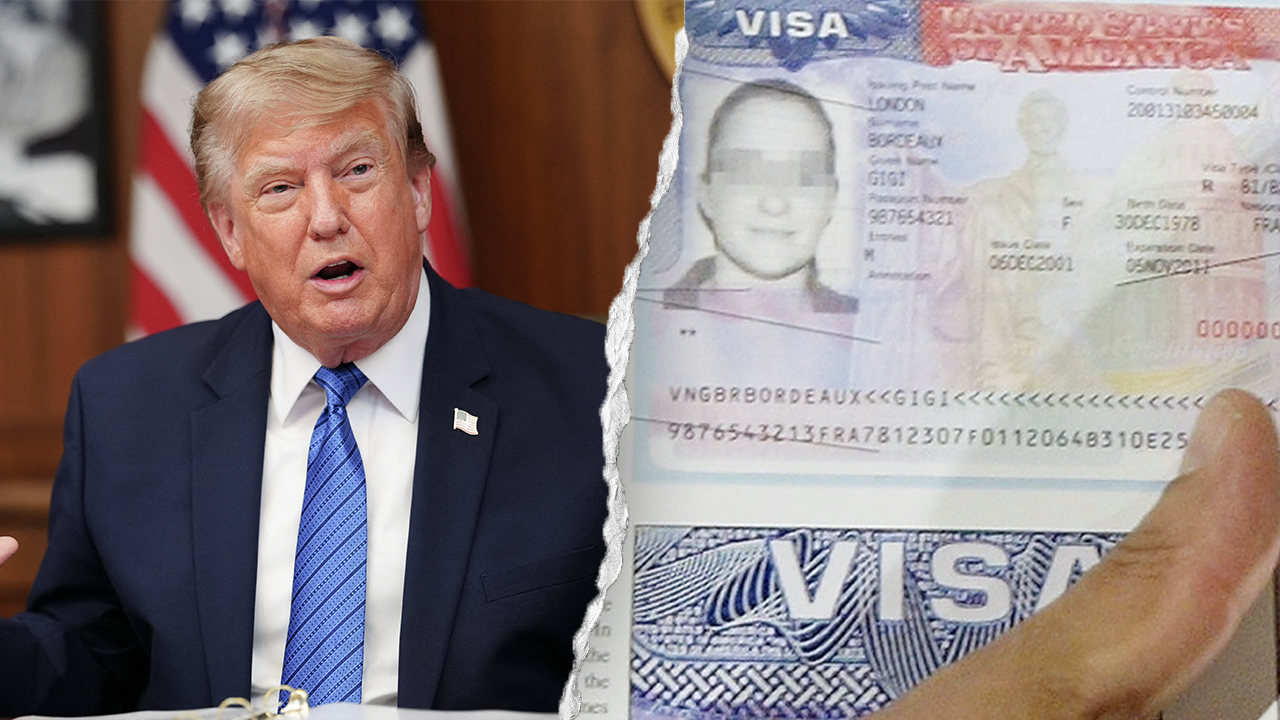
A California appeals court handed the Trump administration a clean procedural win in a fight over the Diversity Visa lottery, shutting down an attempt to force the State Department to reopen the application window. The case turned less on the policy itself and more on whether the law firm behind the challenge had any right to bring it in the first place, a point the judges said it did not.
The dispute centered on the 2027 Diversity Visa lottery, a program that sends about 55,000 green cards each year to applicants from countries with low immigration rates to the United States. After the State Department delayed the registration period and then left it closed, a lower court ordered the government to open the pool, setting up a direct clash with the administration’s position.
That order did not survive review. In a 2-1 decision, the Ninth Circuit blocked the injunction and said the immigration law firm Red Eagle could not sue the federal government over the pause because it lacked standing, which is the legal threshold that decides whether a plaintiff can even get into court.
The timing of the pause added fuel to the case. Officials had already delayed the process after signaling that changes were coming, and the program later faced even more scrutiny after a Portuguese national who had received a lottery visa was tied to a deadly shooting at Brown University and another killing involving a Massachusetts Institute of Technology professor.
The panel took pains to keep its ruling narrow. It did not bless the State Department’s conduct, and it made clear that the decision was about procedure, not a full approval of how the agency handled the visa lottery registration period.
“We do not endorse the Department’s failure to open the lottery registration period,” the court wrote. That line left the legal door open on the policy debate while closing the door on this particular lawsuit, at least for the law firm that brought it.
The judges also worried about what would happen if a law firm could claim injury based on broad, indirect harm. In sharp language, the court said allowing that kind of theory would “open the floodgates,” inviting lawyers to chase government decisions wherever they could spot a possible grievance.
That reasoning mattered because Red Eagle was not suing on behalf of a specific visa applicant who had been denied a spot in the lottery. Instead, the firm said the pause hurt it in its work representing clients in the process, and the court said that was too thin to support a federal lawsuit.
The ruling also fits a familiar pattern for the Ninth Circuit, which has often been at odds with Trump-era immigration policy. The court previously weighed in against key parts of the 2017 travel restrictions and blocked a policy that would have denied asylum to certain migrants who crossed the southern border between ports of entry.
Still, this time the outcome favored the administration on a threshold question that often decides cases before they really get rolling. Abhishek Kambli, a former federal prosecutor and partner at Holtzman Vogel, called it a “very easy call” in a post on X, arguing that the law firm was trying to sue over a hypothetical injury instead of a direct one.
Trump has long targeted the visa lottery as a broken system, saying it should give way to a merit-based approach. In his January 2018 State of the Union address, he pushed for ending the program, and he later said in a meeting with lawmakers that the lottery allows the “worst of the worst” to come into the country.
He also framed the system as random and reckless, arguing that countries do not send their best candidates into a hopper for selection. The debate around the lottery has never really cooled, and the court’s latest move keeps that fight alive while siding with the administration on who gets to argue it in the first place.

1 Comment
Victory 1