
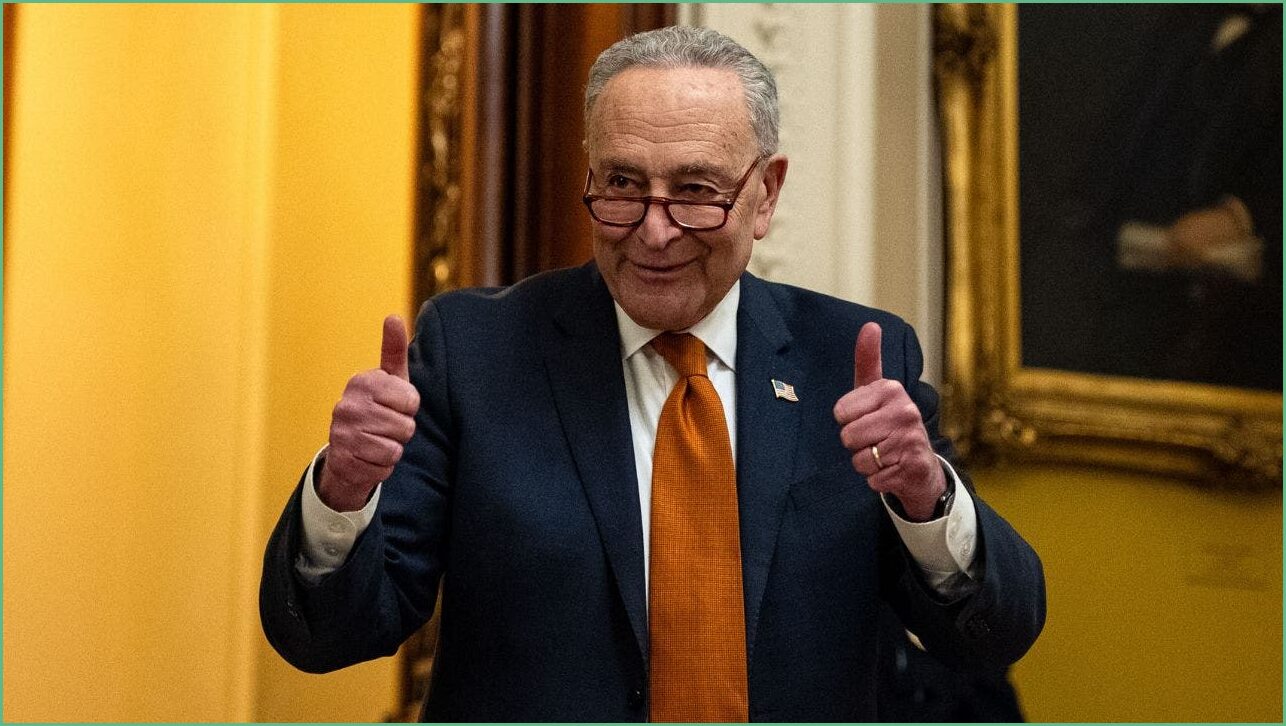
The “Schumer Shutdown” collapsed this week, ending a painful, record-setting halt to federal services just as the country marked the Marine Corps 250th and Veterans Day. Lawmakers scrambled to reopen airports and restore SNAP benefits, but the political damage is already real. This piece walks through who flipped, why the stunt mattered, and where blame rightly lands.
The shutdown’s end came only after mounting pressure and a handful of defections from the Democratic Senate caucus. Millions felt the effects — federal workers, travelers, families relying on nutrition programs — and that human toll is a political scar. Republicans will use those consequences to hammer home that Democrats chose politics over governing.
A small group of Senate Democrats broke with their leadership and joined Republicans to reopen the government, exposing the fragility of Schumer’s plan. The defectors included Catherine Cortez Masto, Jacky Rosen, Dick Durbin, John Fetterman, Maggie Hassan, Jeanne Shaheen, Tim Kaine and Independent Angus King. Their action undercut the narrative that the party was unified behind this shutdown strategy.
There’s a simple political reality here: honoring veterans while shutting down government looks bad and voters notice contradictions. Whether those senators were ashamed, pragmatic, or just tired of the mess doesn’t change the optics. For Republicans, the moment is a clear example of Democratic chaos and poor leadership.
BLAME GAME: REPUBLICANS CLAIM SCHUMER FORCED SHUTDOWN ‘BECAUSE HE’S TERRIFIED’ OF AOC PRIMARY CHALLENGE
Some of the defections came early and consistently sided with reopening; others flipped only after pressure mounted. That split exposed a party that is at war with itself, torn between its establishment figures and its activist left flank. The result was a leadership miscalculation that inflicted real harm and offered no coherent benefit.
Chuck Schumer, as Senate leader, is the obvious target for accountability. His strategy looked aimed at smoothing over internal challenges rather than protecting the public from needless disruption. Republicans will argue he gambled the government so he could avoid a primary fight, and many voters will see that as unpardonable political cynicism.
“In a hypothetical matchup for the 2028 Democratic primary for the U.S. Senate in New York, Ocasio-Cortez leads Schumer by a 19-point margin, 55% to 36%,” according to a Data for Progress poll. That polling line gives context to why Schumer might have been anxious about internal party threats and why he would take risky stands to shore up his position. Political survival instincts do not excuse running the country off a cliff.
There’s talk about practicalities, like whether a candidate could run for both the Senate and president in New York’s 2028 calendar, and those legal quirks will bounce around courtrooms and party offices. But policy debates and election rules feel academic to the people who missed paychecks or sat stranded in airport terminals. For many voters, the question is simpler: who fixed this and who caused it.
The shutdown will echo beyond immediate hardships and into future campaigns, where memory matters and reminders are effective. Democrats may hope the public moves on, but Republicans will keep the episode visible in ads and speeches. Political scars tend to outlast the short headlines, especially when leadership choices are at fault.
History will keep track of how parties handle internal pressure and the consequences of those choices. Schumer’s gamble has handed Republicans a political weapon and left Democrats to explain why governance was sacrificed to intra-party angst. The disconnect between rhetoric and service is the story voters will judge at the ballot box.
