
- Show Samsung’s new foldables and the shift in design
- Cover the Galaxy Z Fold 8, Z Fold 8 Ultra, and Z Flip 8
- Highlight the Galaxy Watch 9 and Galaxy Watch Ultra 2
- Explain the new smart glasses and their AI-driven features
- Keep the main launch details, specs, and pricing front and center
Samsung’s latest Unpacked event came packed with more than just a pair of new foldables. The company used the moment to push its phone lineup, refresh its smartwatch family, and show off a fresh take on smart glasses. The big story is simple: Samsung is trying to make its entire ecosystem feel tighter, smarter, and a lot more premium.
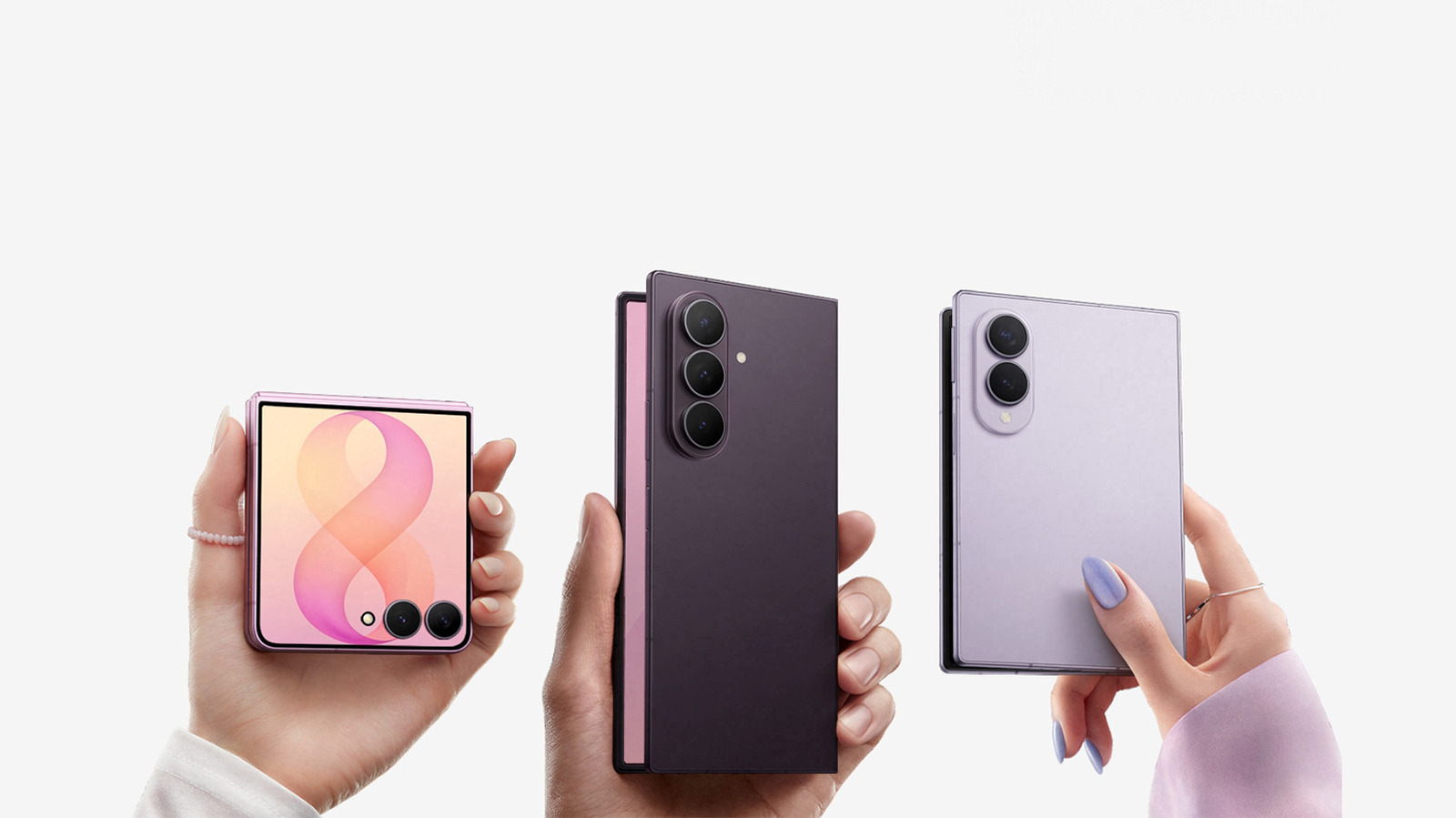
Leading the charge is the Galaxy Z Fold 8, which now leans into a wider, more passport-like shape. That move gives it a distinct look and should make the large inner display feel more natural for reading, browsing, and streaming. At 201 grams, it also lands as Samsung’s lightest foldable yet, which matters when a phone already has plenty going on mechanically.
Under the hood, Samsung did not hold back. The Z Fold 8 runs on the Snapdragon 8 Elite Gen 5, offers up to 16GB of RAM and 1TB of storage, and includes a 4,800 mAh battery. Its camera setup sticks with dual 50-megapixel wide and ultrawide sensors, while the outer 5.5-inch 120Hz AMOLED display opens into a 7.6-inch main screen with a 4:3 aspect ratio.
Samsung says that wider inner panel is meant to make everyday use feel less cramped. Watching movies or flipping through books should feel more relaxed on a screen built for a broader canvas. It is the kind of change that does not scream for attention at first glance, but it could end up being the detail people feel every day.
Then there is the Galaxy Z Fold 8 Ultra, which plays the role of the bigger, flashier option. It stretches to an 8-inch display and upgrades the camera system with a 200-megapixel wide lens, a 50-megapixel ultrawide, and a 10-megapixel 3x telephoto camera. The battery grows to 5,000 mAh and supports 45W fast charging, so this one is clearly aimed at power users who want the top shelf version.
The Galaxy Z Flip 8 gets its own round of refinements instead of a total reinvention. Samsung says its new Flex Titanium tech mixes “a titanium-alloy film with an enhanced titanium plate, to make foldables thinner while maintaining durability.” That is the sort of behind-the-scenes upgrade that should help a clamshell phone feel sturdier without turning it into a brick.
Pricing starts at $1,199 for the Z Flip 8, $1,899 for the Z Fold 8, and $2,099 for the Z Fold 8 Ultra. Those numbers keep Samsung squarely in premium territory, but that was never in doubt here. The company is clearly betting that the mix of design tweaks, stronger hardware, and polish will keep buyers reaching for the newest version.
Samsung also refreshed its wearable lineup with the Galaxy Watch 9 and Galaxy Watch Ultra 2. The Watch 9 stays close to the familiar formula, with a circular aluminum case, 40mm and 44mm sizes, and Super AMOLED displays that can hit 3,000 nits of brightness. It is the everyday option, built for people who want the core smartwatch experience without going overboard.
The Galaxy Watch Ultra 2 is the tougher, more adventurous cousin. Samsung says it is 12% slimmer than the previous model even though it packs a bigger 800 mAh battery, and the titanium case is built for rougher conditions. The 5,000-nit display is a bold spec, and the new Trail Run mode plus hydration guidance shows Samsung is leaning hard into outdoor fitness and recovery tracking.
Both watches run on the Snapdragon Wear Elite platform and support dual-band Wi-Fi, LTE, Bluetooth 6.0, and NFC. The Watch 9 starts at $379 with 32GB of storage, while the Watch Ultra 2 begins at $699 and doubles that storage. That puts Samsung’s wearables in a competitive lane, especially for people already invested in the Galaxy ecosystem.
The most futuristic piece of the event may be the new smart glasses, developed with Gentle Monster and Warby Parker. They run Android XR on the Snapdragon AR1 Gen1 platform and skip the display entirely, instead relying on a camera, microphone, and speakers. Gemini sits at the center of the experience, making the glasses feel more like a voice-first assistant than a tiny wearable screen.
That approach gives the glasses a different vibe from the usual tech demo gimmick. You can ask them to capture photos, save useful information to Samsung Notes, or share your view during a video call, which makes the hardware feel practical instead of flashy for the sake of it. Battery life is rated at up to nine hours, and the charging case can deliver seven more full charges before you need to hunt for a wall outlet.
