
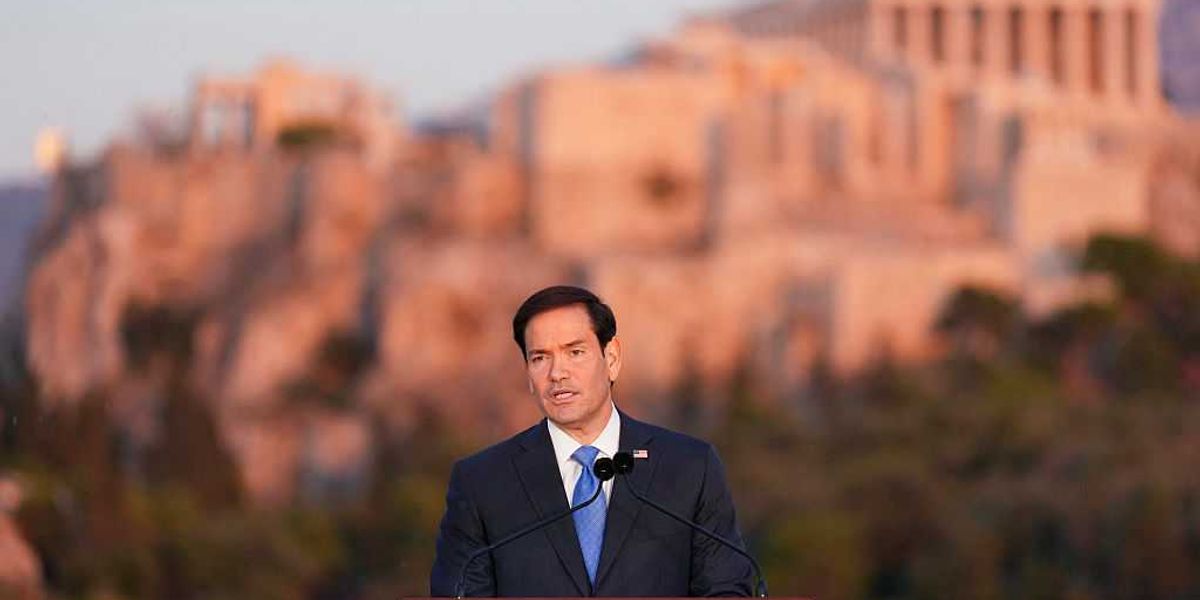
Western civilization is under pressure, and the warning is getting louder from one of Washington’s top voices. The moment feels heavier than a passing headline, with questions about strength, identity, and whether the West still knows what it stands for. That tension sat at the center of Marco Rubio’s remarks, which tied NATO, national resolve, and the fate of modern civilization into one blunt message.
Rubio framed the current era as more than a routine stretch of global uncertainty. He described it as a point where the choices of the West could shape what comes next, especially as old assumptions about security and stability get tested hard. The tone was not calm or academic, but sharp and urgent, with the clear suggestion that hesitation now could carry long-term costs.
The comments leaned heavily on the idea of Western exceptionalism, a phrase that still sparks debate but remains central to a certain vision of the world. In Rubio’s telling, the West is not just another region juggling interests and alliances, but a civilization with a distinct inheritance worth defending. That kind of language is meant to do more than praise tradition, because it also pushes back against the habit of treating Western strengths like they appeared by accident.
NATO also played a major role in the message. The alliance was presented not as a ceremonial relic or a clubhouse for bureaucrats, but as a serious military structure that depends on willpower as much as hardware. If member countries stop taking defense seriously, the whole system starts to wobble, and that warning lands harder when the world keeps handing out reminders that peace is never automatic.
The broader backdrop is easy to see. Europe faces pressure from war, migration strains, economic unease, and political fatigue, while the United States keeps getting pulled into arguments about responsibility abroad and focus at home. Against that scene, a defense of Western civilization sounds less like a slogan and more like a challenge to leaders who have grown comfortable managing decline instead of confronting it.
Rubio’s message also reached beyond military matters and into culture, where confidence has become a scarce commodity. Civilizations do not hold together on weapons alone, and the speech-style warning suggested that the West’s deeper problem may be moral drift, not just strategic risk. When people stop believing their institutions matter, even the strongest alliances start to feel brittle.
That is where the phrase “inflection point” carries real weight. It suggests a fork in the road, a place where small decisions can produce big consequences and where delay can become its own kind of surrender. The message was unmistakable: the West can still choose seriousness, or it can keep drifting until the choice is made for it.
Greece, with its deep place in the story of Western civilization, provided a fitting setting for the broader theme. Its historical role naturally evokes questions about democracy, heritage, and continuity, which makes it a useful backdrop for warnings about cultural and political endurance. The symbolism matters because speeches like this are rarely just about the room they are delivered in, but about the lineage they invoke.
What stood out most was the mix of admiration and alarm. Rubio celebrated the West as something durable and worth protecting, but the celebration came with a warning sharp enough to sting. That combination has a way of landing with people who feel the world is getting less steady by the day, especially when the familiar language of strength is paired with the unsettling sense that strength is no longer guaranteed.
