
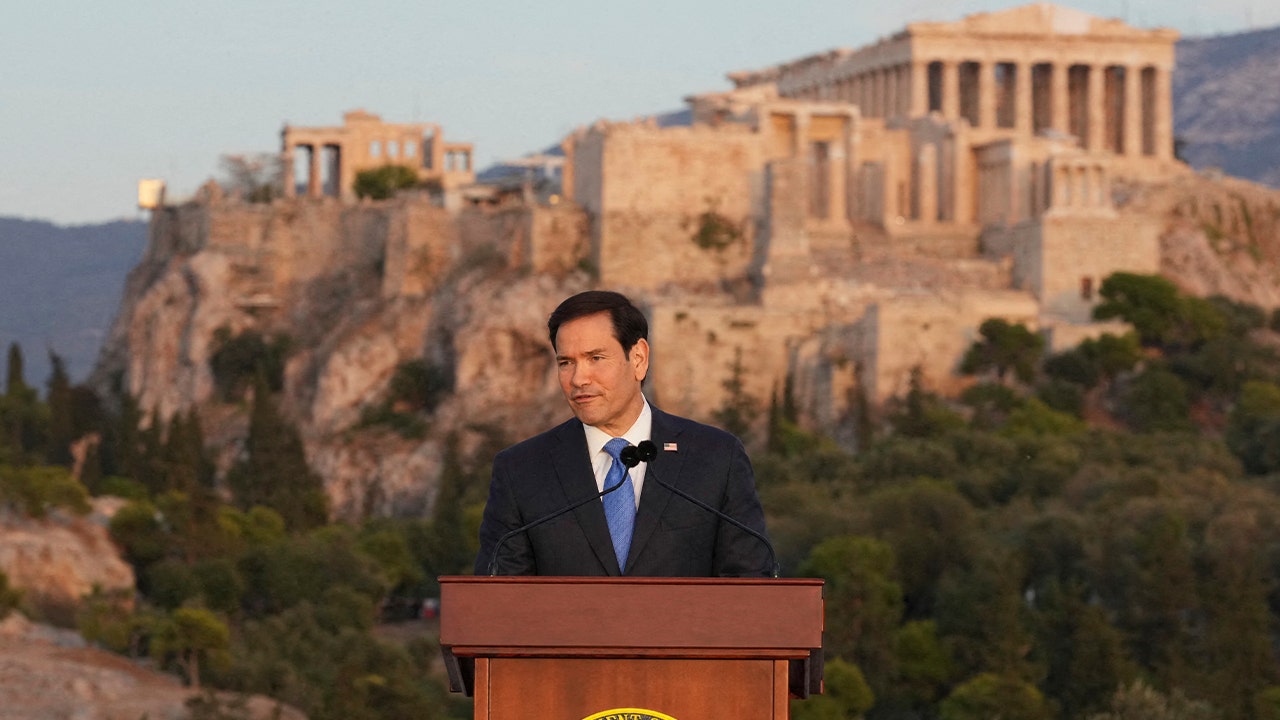
Marco Rubio’s recent diplomatic run through Greenland, Iceland, Denmark, and Panama has turned the Arctic and nearby sea lanes into a fresh front in the contest with China. The bigger picture is hard to miss: whoever gets access, influence, and leverage in these waters gains a real edge in trade, military reach, and long-term global power.
China’s push for superpower status depends heavily on control of chokepoints and shipping routes. That means the Arctic is no longer some far-off ice sheet on the edge of the map, but a strategic highway that is opening up as the climate changes and traffic picks up.
Rubio’s stop in Reykjavík carried strong symbolism, especially because it echoed a famous Cold War moment when Ronald Reagan and Mikhail Gorbachev met there. The setting underscored a simple reality: the High North still matters, and it still shapes how the United States and its allies think about deterrence, surveillance, and defense.
In Iceland, Rubio described the country as a “critical outpost for monitoring clandestine behavior and deterring our adversaries.” He did not promise a new military buildup, but he made clear that any expanded American role would depend on Iceland’s approval, keeping the door open without overreaching.
The Greenland deal with Denmark is the real prize in this broader effort. It gives Washington a stronger hand in blocking Chinese influence in the Arctic while preserving Greenland’s sovereignty, which was a major concern for Copenhagen and an important political safeguard in the final agreement.
That matters because the Arctic is changing fast. As ice retreats, shipping routes become more usable, and with that comes a scramble over sea lanes, undersea access, airspace, and missile defense, along with the kind of quiet competition that can shape military planning for decades.
The agreement also gives the United States a more direct role in screening foreign investment tied to critical sectors. It strengthens American access while limiting the chance that non-NATO rivals can quietly gain a foothold in a region that is becoming more valuable by the month.
Russia is part of that equation too. NATO cohesion has become even more important as Moscow keeps ratcheting up pressure across the alliance, making Arctic stability less of a niche concern and more of a front-line issue for the West.
Panama shows why this approach is not just about the far north. For years, concern has been growing that China has used commercial influence to edge into a position of advantage around the canal, even as officials denied the scale of the problem.
Rubio’s discussions with Panamanian leaders helped trigger a ruling that scrapped a contract tied to the canal’s Pacific and Atlantic entrances after it was found unconstitutional. That was a sharp reminder that influence operations do not always need soldiers on the ground to produce leverage, only a steady hand on the economic levers.
There is also a lesson here about method. Hard talk and threats may grab headlines, but they can rattle allies, stir panic, and muddle the very diplomacy needed to lock in real gains.
The more durable win comes from patient bargaining that leaves the United States stronger, its partners more secure, and China boxed out of key terrain. Rubio’s Arctic and Atlantic push fits that model, and it puts America in a far better position as the fight over sea lanes, shipping chokepoints, and alliance strength keeps getting hotter.
