
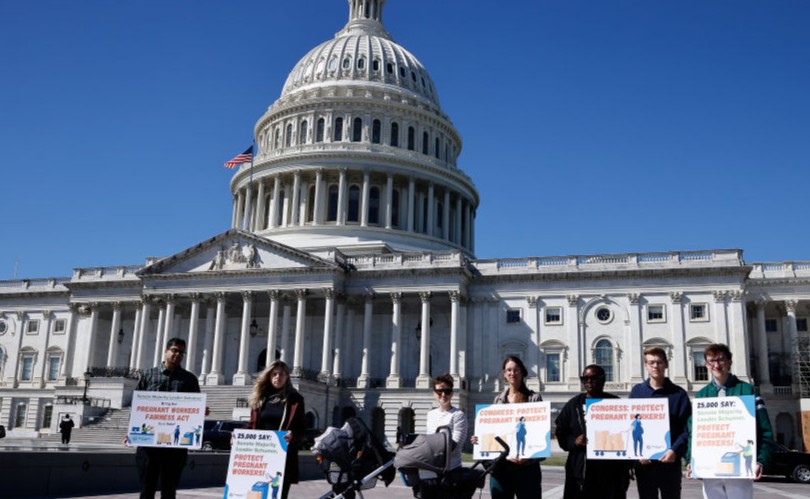
The ruling at stake is simple: Republicans say a law meant to protect pregnant workers has been warped into a federal command that forces employers to compromise their conscience on abortion, and they want the courts to strip that mandate away. This piece lays out why GOP lawmakers see the Biden-era accommodation as a dangerous overreach, how it clashes with religious and moral freedom, the practical risk to small businesses, and the legal path they are urging the courts to take.
Republican lawmakers argue the Pregnant Workers Fairness Act was never supposed to be a vehicle to compel participation in abortion-related services. They view the latest guidance as an aggressive reinterpretation that converts reasonable workplace protections into a blanket requirement, and they find that unacceptable. From their standpoint, forcing employers to facilitate actions that violate their beliefs crosses a clear line.
The core complaint centers on conscience and religious freedom. Employers with sincere moral objections see a mandate like this as effectively punishing them for standing by those convictions. For conservatives, protecting the right to operate a business without being coerced into doing something they view as wrong is not a fringe position, it is a basic liberty.
There are also practical worries about how the mandate would play out day to day. Small businesses and faith-based organizations fear fines, litigation, and administrative headaches if they try to stick to their principles. GOP critics say the rule could force owners to either violate their conscience or face steep penalties, which is a lose-lose scenario for free enterprise.
Legally, Republicans point to separation of powers and statutory intent. They contend Congress did not intend for the Pregnant Workers Fairness Act to be transformed into an abortion accommodations directive, and that the administration overstepped by reinterpreting the statute to reach beyond its original scope. The GOP view is that courts should step in to correct that overreach and restore the law to its intended balance.
There’s also a political dimension. For Republicans, defending conscience rights is a key campaign issue that mobilizes voters who are tired of federal agencies rewriting rules from the executive branch. GOP lawmakers see the court case as an opportunity to reassert limits on administrative power and to protect citizens who object to participating in abortion for moral reasons.
Beyond principle, the fallout could be tangible: lost jobs, shuttered programs, and strained community services if employers decide they can’t afford the legal risk. Conservatives argue the better course is clear legislation that protects pregnant workers without trampling conscience rights, rather than a regulation that answers the policy debate by fiat. That, they say, preserves both workers’ protections and employers’ freedoms.
In urging the court to remove the accommodation mandate, Republican leaders are making a broader stand for religious liberty and for the idea that federal agencies should not stretch statutes to fit political goals. Their push is aimed at ensuring employers aren’t forced to choose between their beliefs and their livelihoods while keeping a platform for Congress to work out policy details through lawmaking rather than administrative fiat.
