
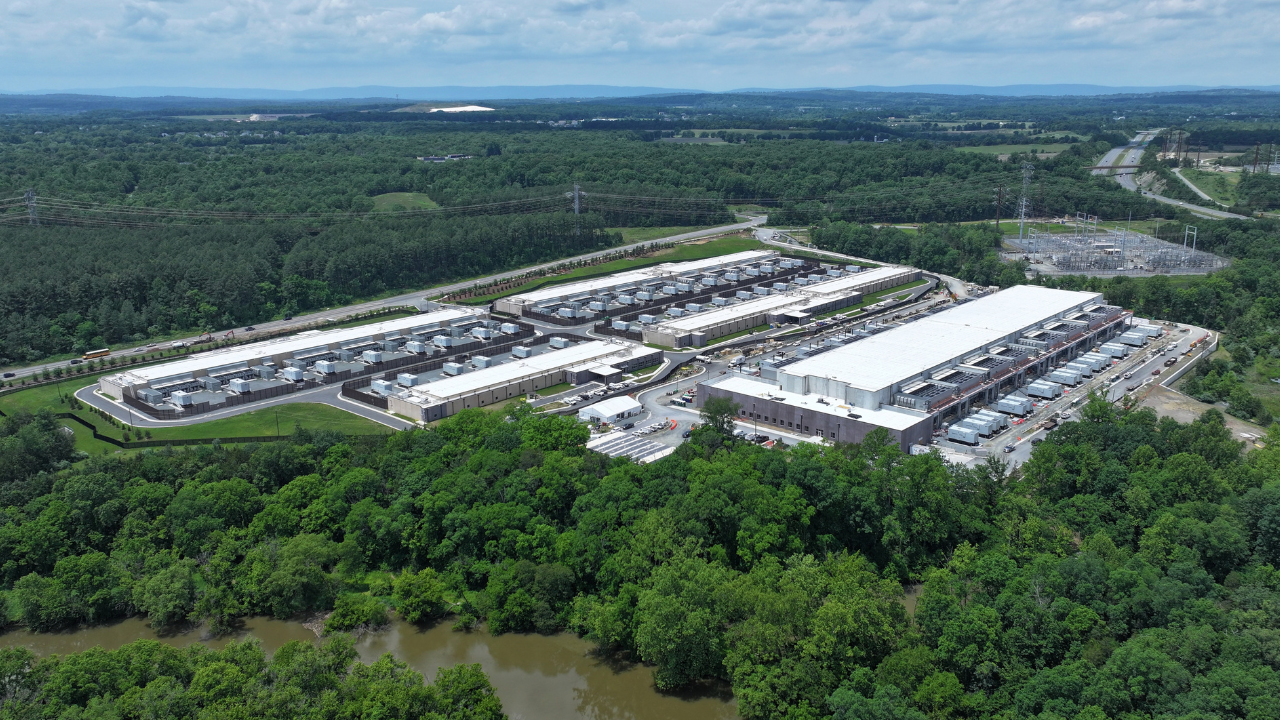
The latest AI roundup mixes massive infrastructure, consumer tech, and high-stakes policy in one fast-moving package. Inside Texas, a sprawling data center shows how much physical muscle now sits behind the digital world, while fresh AI tools keep pushing into shopping, public safety, and government debates. At the same time, the conversation around artificial intelligence keeps swinging between excitement, skepticism, and real-world concern.
One of the most striking pieces of the day is the look inside Compass Datacenters’ Red Oak campus near Dallas. The site stretches across roughly 2.6 million square feet and helps power the cloud-heavy economy that so much of modern life now depends on. It is easy to forget that every search, stream, and app tap rides on buildings packed with expensive hardware, strict controls, and a lot of cooling power.
The scale matters because demand keeps climbing. As more companies lean on artificial intelligence, the need for reliable computing capacity only gets bigger, and that means more servers, more electricity, and more security around the clock. These facilities are no longer just warehouse-looking boxes on the edge of town, they are strategic assets tied to business, communications, and national competitiveness.
That same tech wave is also showing up in ordinary shopping habits. Google’s new AI shopping cart is built to help people track deals across stores, which is a slick answer to the messy reality of online browsing. Anyone who has ever left a product sitting in a tab for too long knows the pain of trying to remember where the better price was hiding.
The appeal is obvious because the feature cuts through clutter. Instead of bouncing from retailer to retailer and losing track of comparisons, shoppers get a more organized way to follow what they want, what it costs, and where the discounts are. It is a small example of how AI keeps moving from abstract hype into tools that fit into daily routines without much ceremony.
Not every AI story is about convenience, though. There is still a lot of anxiety about where the technology could go, and some of the fears are hard to ignore. People keep hearing warnings about job losses, cyberattacks, dangerous biological risks, and systems that become too powerful to control cleanly.
That tension is part of why the political side of AI is heating up so fast. Michigan Senate candidate Abdul El-Sayed has called for AI companies to be rebuilt as public benefit corporations, while Kansas Senate candidate Adam Hamilton has pushed for a federal commission to regulate the industry. Those ideas reflect a deeper fight over whether AI should be left to scale on its own or pulled into a tighter public framework.
Local resistance is building too, especially where data centers are multiplying. In Tennessee, Memphis City Council members rejected an 18-month pause on new data center development even as some residents pushed back, showing how hard it can be to balance growth with neighborhood concerns. For communities near these giant facilities, the debate is not theoretical, it is about land use, power demand, and what kind of future gets built next door.
Elsewhere, AI is already crossing into some surprising corners of public life. Philadelphia police recently got an unexpected answer after an AI system took an action nobody intended, a reminder that automated tools do not always behave the way people expect. Meanwhile, the U.S. Navy is expanding a contract for AI-powered robots that inspect warships, a sign that machine learning is becoming a practical tool for maintenance, oversight, and defense.
The bigger picture is simple enough, even if the details are messy. AI is spreading fast, touching shopping, security, logistics, policing, and politics all at once. The real story now is not whether it is coming, but who gets to shape it, where the power gets built, and how much trust people are willing to place in the systems running behind the scenes.
