
The Sherman tank family wasn’t a single machine but a whole lineup, and one model stood out because of its engine. This article walks through why that version existed, how its engine was built, what it meant for crews and maintenance crews, and why it still turns heads at museums. You’ll get the facts in a plain, conversational tone.
The M4 Sherman became the backbone of Allied armored forces in World War II, but it was not a one-size-fits-all design. Variants swapped radios, armor, suspensions, and engines to suit production realities and battlefield needs. That variety is why one Sherman ended up with an engine that looks like something cobbled together in a machine shop from five smaller motors.
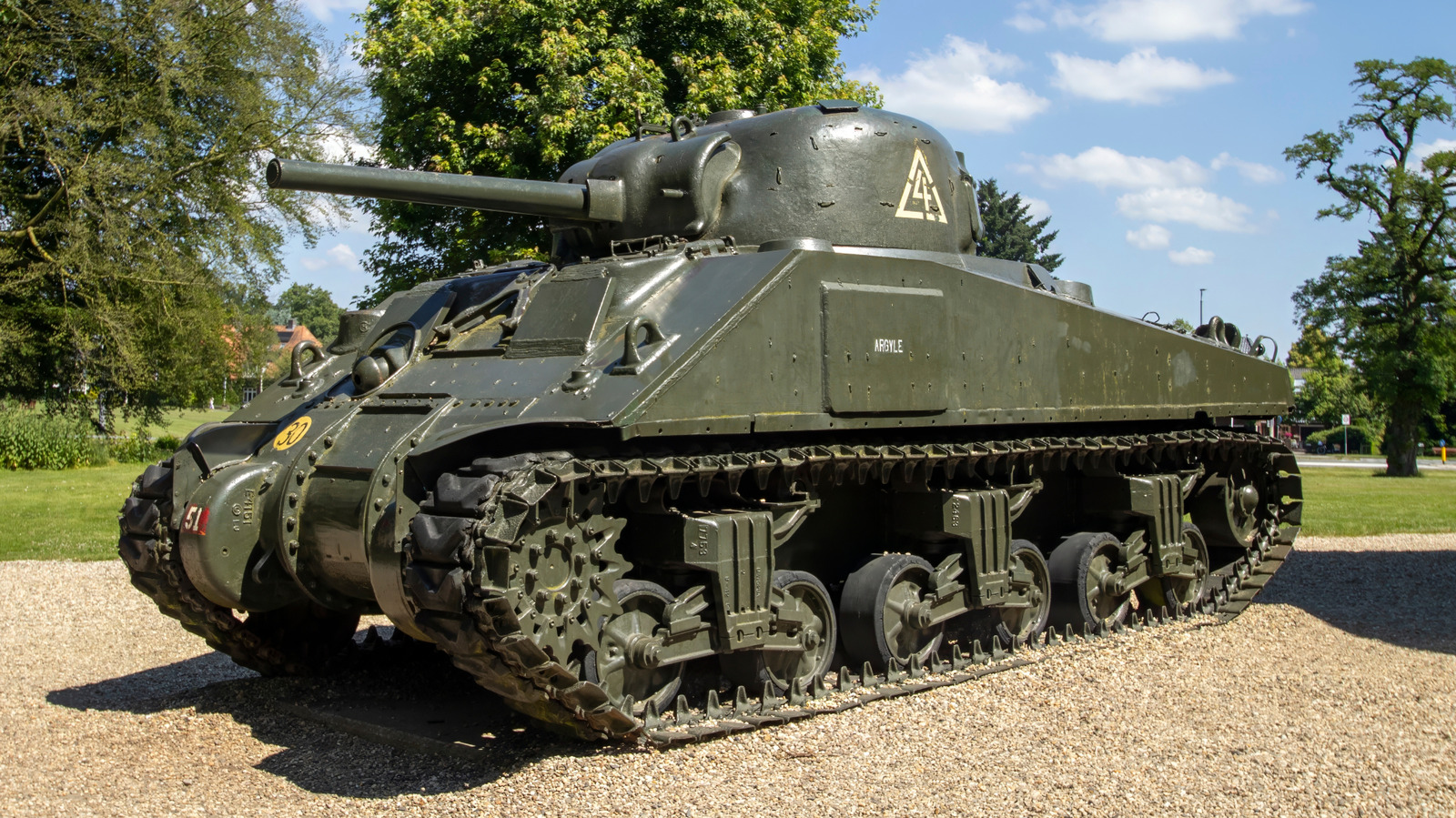
The model in question is the M4A4, recognizable by its stretched hull and unique power plant. Instead of a single big engine, the A4 used the Chrysler A57 multibank, a cluster of five inline six-cylinder engines bolted around a central output. The result was a 30-cylinder assembly that drove the tank through a geared coupling to a single crankshaft.
The multibank idea sounds odd, but it grew from a simple problem. During wartime demand for large single-block engines outstripped supply, and production lines were already building reliable straight-six units. Rather than retool everything, Chrysler married five of those existing engines into one unit so they could meet the power requirements without waiting for a different engine to arrive. It was practical thinking under pressure.
Fitting five engines together created challenges. The assembly was large, heavy, and required more plumbing and gearing than a conventional power plant, which meant extra maintenance points and more complex repairs in the field. Cooling and service access were constant concerns for mechanics working on the M4A4, and the engine’s size forced a longer hull to house the monster under the deck.
Operationally the A57-powered Shermans did their job well enough. The British took many of these tanks through lend-lease channels and used them in a variety of theaters where they proved acceptable in combat. Crews often reported that while the engine was noisy and looked intimidating, the tanks performed reliably when maintained carefully.
Performance numbers put the A57 in the same general class as other Sherman powerplants, but the trade-offs were real. The extra complexity increased logistic burdens for spare parts and specialized servicing, and the larger engine bay made some upgrades and replacements more difficult. Still, the multibank Shermans kept armored units moving during a period when other options were in short supply.
From an engineering perspective the A57 multibank is an elegant workaround rather than a permanent solution. It shows how wartime industry used what it had on hand to meet urgent demands, even if the fix was unconventional. The multibank remains a striking example of adaptive manufacturing and deserves attention for the creativity behind it.
Today the M4A4 and its 30-cylinder heart are museum favorites because of that visual oddity and the story it tells. Visitors see an engine that looks like a beehive of cylinders and hear about the reasoning that produced it. For anyone curious about how machines are shaped by logistics and necessity, the multibank Sherman is a memorable case study.
