
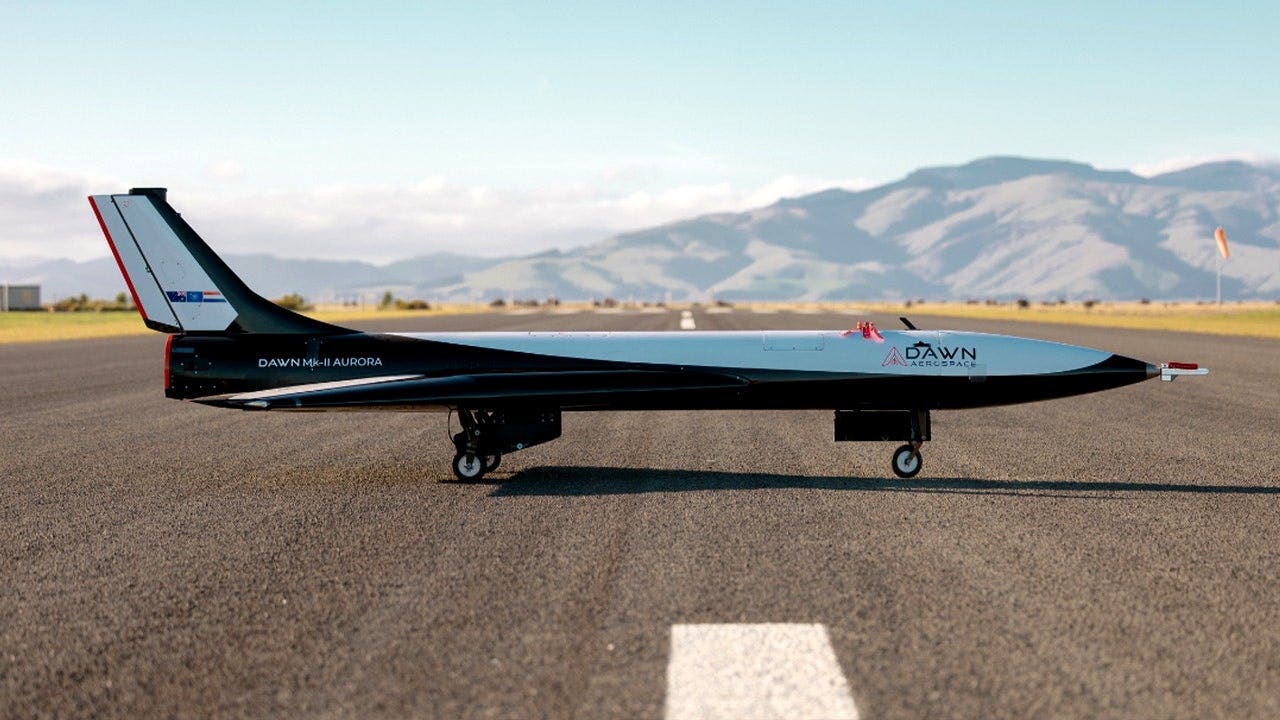
The Runway-to-Space Spaceplane Challenge is opening a new path for research by letting teams fly experiments on a reusable spaceplane that takes off and lands on a runway, speeding up access to brief microgravity and enabling faster iteration. This piece explains how the Aurora vehicle and an upgraded Oklahoma spaceport are designed to make edge-of-space flights routine, who can apply, and what the flights will offer. It highlights the potential shift from rare, high-stakes launches to a cadence more like aviation and why that matters for innovation.
The new program centers on a reusable spaceplane that operates more like an aircraft than a traditional rocket, landing on a runway and turning around to fly again. That approach promises shorter wait times between experiments and a lower cost per flight, which matters when small teams want to test early-stage ideas. The result could be a dramatic change in how quickly concepts get validated and improved.
The spaceplane in focus has already flown more than 60 missions as its operators refine rapid turnaround procedures and payload handling. It can reach speeds above Mach 3.5 and climb to altitudes near 62 miles, giving payloads a short but usable window of microgravity. Each flight can provide just over two minutes, which is enough for many experiments that need momentary weightlessness rather than long-duration orbital exposure.
“Meaningful access to microgravity typically means going to orbit, which is expensive, slow, and often out of reach for early-stage ideas,” said Stefan Powell, CEO of Dawn Aerospace. “Aurora changes that by giving teams a fast, lower-cost way to access microgravity and iterate within months. It’s not a substitute for long-duration missions, but it enables experiments that would otherwise never leave the ground, turning ideas that might never have flown into viable missions that can ultimately progress to orbit.”
There is a clear analogy to commercial aviation where planes land, are serviced, and take off again within hours, and the goal is to create that same rhythm for edge-of-space access. Instead of designing a once-and-done experiment for a single, expensive launch, researchers can iterate, learn, and fly revised versions much sooner. That loop of testing and refining has powered rapid progress in other industries and could do the same for space-enabled science.
Former NASA Administrator Jim Bridenstine also sees the bigger picture. “This competition is about capturing the imagination of scientists, engineers and researchers, while also enabling a new way of working, where research can move faster, iterate more frequently, and strengthen U.S. leadership in space-enabled science and industry.” Those words underline the program’s aim to broaden participation and encourage faster cycles of discovery.
The challenge will be hosted at an upgraded Oklahoma spaceport with investments in infrastructure tailored to spaceplane operations, and it is led by the Oklahoma Space Industry Development Authority. Applications must be led by an Oklahoma-based university or research institution, while allowing out-of-state collaborators to join. This structure keeps local institutions central while still tapping wider expertise.
Key dates and limits are set so teams can plan: the application window opens April 16, 2026, and closes Sept. 25, 2026, at 5 p.m. CT, and flights are expected to start in mid- to late 2027. Selected teams will be allowed payloads up to 33 pounds, with individual missions offering up to about 127 seconds of microgravity at altitudes of roughly 62 miles. The timeline gives groups time to build and test hardware while the spaceport finishes upgrades.
The practical effects reach beyond aerospace labs: more frequent access to microgravity can shorten development cycles in materials science, biology, and sensing technologies. Routine experimentation tends to invite competition, lower costs, and push innovators to try bolder approaches. Over time, advances that began as short microgravity tests could migrate into commercial products and public services.
This shift from rare, high-stakes missions to reusable, runway-launched flights changes the risk calculus for early experiments and expands who can participate in space research. If the model scales, it may transform how teams validate ideas and how quickly space-enabled breakthroughs move into everyday use. The program’s early milestones and scheduled flights will be worth watching as a test case for routine access to the edge of space.
