
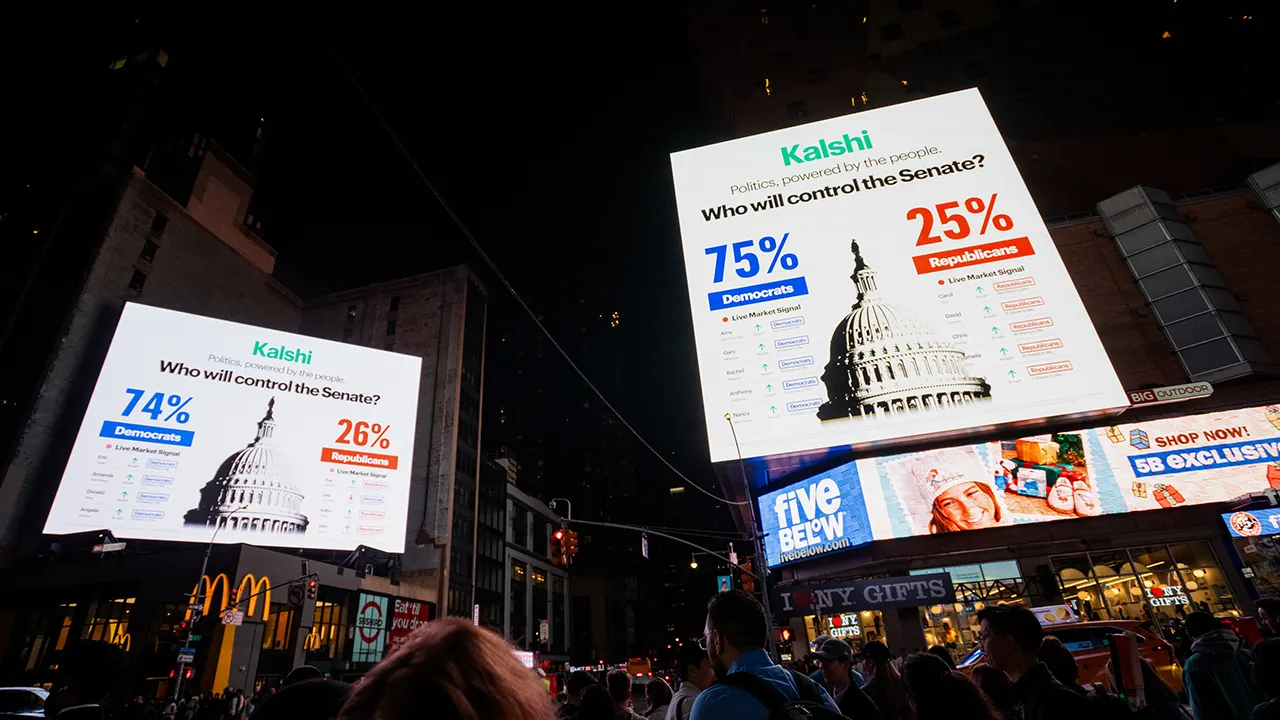
Billions poured into the midterms, and a lot of that money was spent trying to shape public perception instead of just winning votes. In the middle of the noise, prediction markets stood out by doing something simple and brutal: forcing people to put real money behind their claims. When Election Day arrived, they looked less like a gimmick and more like one of the sharpest tools for reading political reality.
The 2026 cycle shattered spending records, with political advertising reaching more than $12.8 billion. In places like Texas, where a Senate race climbed into the hundreds of millions, voters got drowned in a flood of confident predictions, polished messaging, and nonstop attacks. Every campaign swore it had the edge, every analyst had a hot take, and every super PAC acted like its candidate was destined for victory.
That kind of environment makes it hard to separate signal from spin. The legacy media added to the churn by picking sides, cutting ads, and repeating the same frantic narratives until the whole thing felt like a never-ending noise machine. Prediction markets offered a cleaner read because they did not care about confidence, branding, or talking points. They cared about price, risk, and what actually seemed likely to happen.
On Election Day, those markets proved they were not just guessing in the dark. Across tracked federal contests, Kalshi had the eventual winner ahead in 98% of races. That kind of result matters because it showed the markets were not only identifying obvious winners, but also picking up on close calls in battlegrounds where conventional punditry often gets loud and sloppy.
The bigger point is calibration. Kalshi reviewed more than 2.2 million resolved markets from its launch through mid-2026 and found that prices lined up closely with outcomes as events got nearer. In plain English, a contract priced at 30 cents tended to resolve around 30% of the time, while a 90-cent contract landed around 90% of the time. That is not magic. That is information getting distilled into a number people can actually use.
Independent researchers have reached similar conclusions. Outside analysis from Brier.fyi and a major study published in the Proceedings of the National Academy of Sciences both pointed to the same basic truth: prediction markets tend to behave the way efficient markets should, where prices reflect real odds instead of wishful thinking. Even reviews of this year’s primaries showed candidates winning about as often as their market prices implied.
Critics still love to point at surprise outcomes as if one upset destroys the whole idea. That misses how probability works. If a candidate is given a one-in-three chance and wins, that does not mean the market failed. It means the market got the odds right and the underdog landed the punch.
What makes prediction markets useful is not perfection, but discipline. They create a place where confidence gets tested against cash, which is a lot more honest than a press release or a cable-news monologue. A campaign insider can bluff all day, but a trader has to live with the consequences of being wrong.
That also gives markets a role in a media world that keeps shrinking its reporting muscle. Serious data work takes time and money, and those are exactly the things newsrooms have been trimming for years. Prediction markets create a reason for more research, more scrutiny, and more people digging into the numbers instead of shouting over them.
For readers, that means a better information diet. When a single market price condenses a mountain of public data, insider knowledge, and crowd judgment, it becomes a useful shortcut through all the spin. It is not about replacing journalism or polling. It is about adding another layer that rewards accuracy instead of loudness.
There is also something refreshingly blunt about the whole idea. People are used to politicians and pundits acting like certainty is free, but it never is. Once money is on the line, vague bravado starts to lose its shine, and reality gets a bigger say in the conversation.
That is why the rise of these markets feels bigger than one election cycle. They reflect a broader hunger for truth that cuts through media theater and political hype. When the noise gets louder, the appeal of a number that has skin in the game only gets stronger.

1 Comment
who will win 2028 race?