
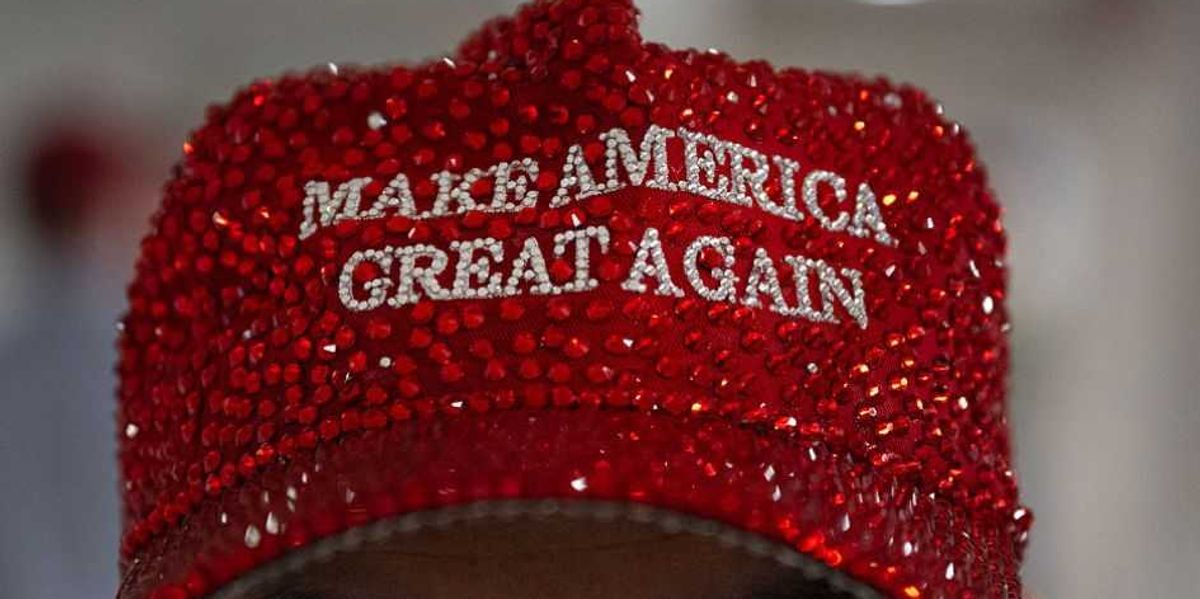
I walked into a small Portland cafe and found myself thinking harder about a hat than the coffee. This piece follows one short, clear decision: a bright red baseball cap, a city split on politics, and the choice to avoid trouble. It’s a personal, blunt look at how clothing can turn into a political test in certain neighborhoods.
I live on the West Side of Portland where people keep to themselves and tolerate a lot without fuss. The East Side is different — loud declarations on storefronts, flags, and statements that make political identities impossible to ignore. I don’t go there often, so an ordinary coffee run felt a bit like stepping into another cultural zone.
That day I showed up wearing a red Phillies baseball cap because I rotate hats for softball and convenience. To me it’s a team hat, nothing political, just red and comfortable. To some people on the East Side, bright red means something else entirely.
“Who in their right mind would wear an actual MAGA hat on the East Side of Portland? You might get attacked by a woman with face tattoos.”
I noticed faces and styles at the outdoor tables: couples wrapped in conversation, tattooed patrons, and bold fashion statements that read like opinions. People wear their politics openly in that part of town, and that changes how you move and what you wear. Even harmless choices can attract attention when the environment reads costumes as statements.
My Phillies cap is almost the same shade as a MAGA hat, and that is the problem. From the corner of someone’s eye it’s an easy mistake to make, and mistakes on the East Side can escalate into a scene. I’ve seen the social pressure and the quick judgments that follow a single flash of red.
Back home on the West Side you can wear nearly anything without a second look. Here it felt different, and I admitted to myself I wanted the meeting to be simple and quiet. That’s not cowardice so much as choosing a little peace over provocation on a weekday morning.
I used to own an actual MAGA hat from volunteering with a Republican statewide campaign, and I remember how weird it felt to carry that kind of visible support in certain places. Some hats are symbols and they carry baggage. I kept a high-quality one locked away after the early days; it looked clean and proud but I rarely brought it out.
When I saw my reflection in the cafe door and the bold white P on the hat, the choice felt immediate and concrete. Walk in and answer questions, or swap hats in the parking lot and have a normal coffee. I chose the latter because confrontation serves nobody useful that morning.
Changing the hat felt small but meaningful; it was a way to control an interaction without pretending my views had shifted. I didn’t hide my politics, I just avoided an unnecessary hassle while catching up with an old friend. Sometimes practical decisions beat symbolic gestures when the goal is connection, not spectacle.
There is a real cost to wearing certain symbols in cities where one side dominates the cultural space. People who disagree loudly and sometimes aggressively create a climate where neutral actions get politicized. I don’t like that, and I don’t think it’s healthy for civic life.
My friend who lives on the East Side likely leans left and lives a life shaped by that neighborhood’s norms. I considered how my hat would force him into an awkward place: defend, explain, or perform surprise. It’s rude to put someone through that, so I didn’t.
Practicality won out: I dug a backup Dodgers hat from the car, smoothed it out, and went back inside. My friend and I talked about ordinary things, nothing politicized, and the conversation went where it should — toward people and memories, not partisan theater. The cafe stayed a quiet, civil place for the hour we were there.
Portland’s East Side can feel like a political checkpoint if you let it, and that’s the larger problem. When clothing and small choices become tests, the city loses the simple pleasure of ordinary encounters. I want a place where a hat is a hat and a conversation is a conversation.
I have no interest in hiding my beliefs forever or surrendering public spaces to one way of thinking. I also prefer to pick my moments and preserve the chance to argue on terms that matter. Wearing a different hat for coffee was a tactical decision, not a surrender of principle.
We all make small compromises to keep daily life functioning, and this was one of mine. If you’re in a neighborhood where identity signals are amplified, think about the stakes of a single accessory before you step inside. Sometimes it’s wisdom to live to fight another day and keep the coffee steaming instead of the drama brewing.
