
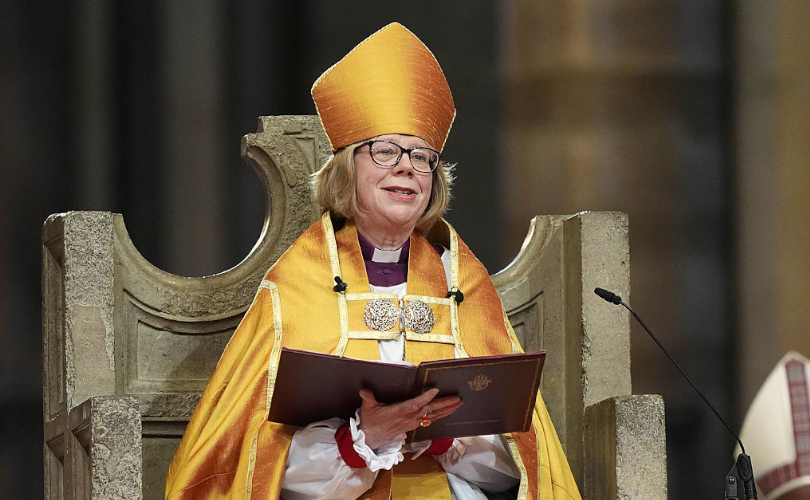
The visit brought a brief, high-profile moment of Christian encounter: Anglican Archbishop of Canterbury Sarah Mullally offered a blessing at the Clementine Chapel while Catholic Archbishop Flavio Pace made the Sign of the Cross nearby, a scene that drew attention for its symbolism and the questions it raises about liturgy, custom, and ecumenical practice.
The action took place inside the Clementine Chapel during a Vatican visit, a setting steeped in centuries of ritual and meaning. Watching two senior church figures perform adjacent gestures in that space turned a private liturgical movement into a public conversation about hospitality and protocol. Observers noted both the calm efficiency and the symbolic weight of the moment, as it was brief but visually striking.
The Anglican leader offered what was described as a blessing, a gesture familiar in many Christian traditions but understood differently from one denomination to another. Archbishop Mullally’s role as the senior Anglican cleric present framed the action as an expression of pastoral care and ecumenical goodwill. In parallel, Archbishop Pace’s Sign of the Cross registered as a distinctly Catholic response, rooted in sacramental tradition and personal devotion.
For many onlookers, the scene suggested a desire to acknowledge shared Christian roots while still recognizing separate identities and practices. Ecumenical gestures like this often aim to build bridges without erasing doctrinal differences, and this moment fit that pattern. At the same time, such encounters can create questions among faithful who look for clarity about what specific actions mean within each tradition.
Inside a chapel that carries deep historic resonance, protocol matters as much as theology. The Clementine Chapel is part of a larger liturgical landscape where gestures, postures, and words are carefully measured and meaningful. Simple bodily movements, when performed by high-profile clergy, can be read as statements about relationship and respect between institutions as well as between individuals.
The fact that an Anglican archbishop who is also the first woman to hold that office participated in a visible blessing added another layer of discussion for some audiences. That detail intersected with broader conversations about ordination and ecclesial roles across denominations, conversations that continue to shape interchurch dialogue. Yet for many attendees, the interaction remained a straightforward act of mutual recognition carried out with courtesy.
Reactions varied, as they often do with public ecumenical moments. Some commentators welcomed the gesture as a sign of closer ties and cooperative spirit, while others called for sharper distinctions to be kept between different sacramental understandings. Clergy and laypeople alike weighed the scene against their own expectations for liturgical propriety and institutional boundaries.
Whatever the immediate reactions, the episode underscores how small actions can carry big significance in religious life. A blessing, a cross, a posture in a chapel — each can communicate respect, difference, or both at the same time. These moments will continue to appear at intersections where churches meet, and they will keep prompting conversation about what unity and difference look like in practice.
