
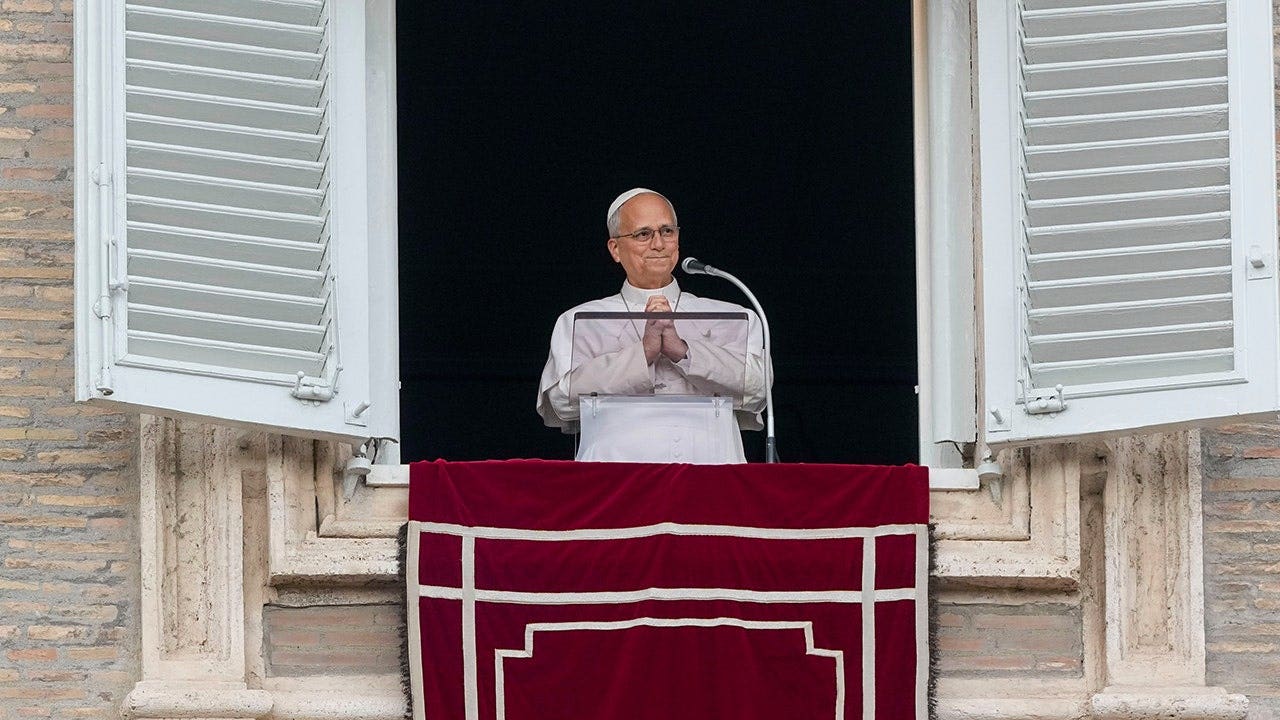
American-born Pope Leo XIV has stepped into a bit of history by doing something no pope has ever done before: casting a vote in a U.S. election. The Vatican confirmed that the first pope born in the United States submitted a mail-in ballot in Illinois, adding an unexpected political footnote to an already remarkable papacy. The move also puts a spotlight on his long habit of civic participation, both in the United States and while living abroad.
The Holy See Press Office said Leo, born Robert Francis Prevost, has voted whenever he has been able to as a U.S. citizen. It also noted that during his years in Peru, he took part in elections there as well. The message was simple enough, but the symbolism landed hard: a pope rooted in American citizenship taking part in the democratic process from inside the Vatican.
That detail matters because Leo is the first America-born pope in the Church’s more than 2,000-year history. His vote was submitted by mail in Chicago, and the Vatican said that fits a long-standing practice of civic participation. In a world where public figures often dodge anything that smells political, this one was refreshingly direct.
The timing also drew attention because Illinois ballots include a high-profile governor’s race. Democrat J.B. Pritzker is seeking another term, while Republican Darren Bailey and independent Collin Corbett are also on the board. Even without campaign chatter from the pontiff, the fact that a pope is participating in that contest gives the race an extra dose of global intrigue.
Will County clerk’s office chief of staff Kim Fladhammer said Robert Francis Prevost was listed among those who requested a vote-by-mail ballot for the upcoming election. Illinois election officials also made clear that state law allows registered voters to cast ballots by mail, with no excuse required. That framework makes the pope’s participation legal, ordinary, and still wildly unusual at the same time.
Matt Dietrich of the Illinois State Board of Elections said the old absentee-voting rules are gone. Any Illinois registered voter can vote by mail now, and that includes people overseas under federal law. In practice, Leo’s ballot is part of a system built to widen access, even if the voter in question happens to be the leader of the Catholic Church.
The announcement arrived while the pope was still drawing attention for his health and recovery. The Vatican said on Oct. 13 that he underwent a procedure at Agostino Gemelli University Hospital in Rome to remove a small tumor on his right lung. Later, doctors said no further cancer treatment was needed after the surgery, a major step that eased concerns around his condition.
Leo’s recovery has been closely watched, especially after he was seen publicly for the first time since the operation. His return to view carried a sense of momentum, the kind that makes every new appearance feel more important than the last. Against that backdrop, the election news added another layer to a story already packed with firsts, health questions, and public fascination.
His decision to vote also fits the plain-spoken civic ethic the Vatican described, with citizenship not treated like a ceremonial label but as a responsibility. That stance is rare in modern public life, where so many influential figures prefer to float above the messy business of elections. Leo, at least on this issue, appears perfectly content to stay grounded in it.
The story has a certain charm to it. A pope from the United States, voting from Rome, tied to a ballot in Illinois, while the rest of the political world does what it always does and turns even the simplest act into a headline. In this case, history, faith, citizenship, and election law all landed in the same place at once, and none of them seemed interested in leaving quietly.
