
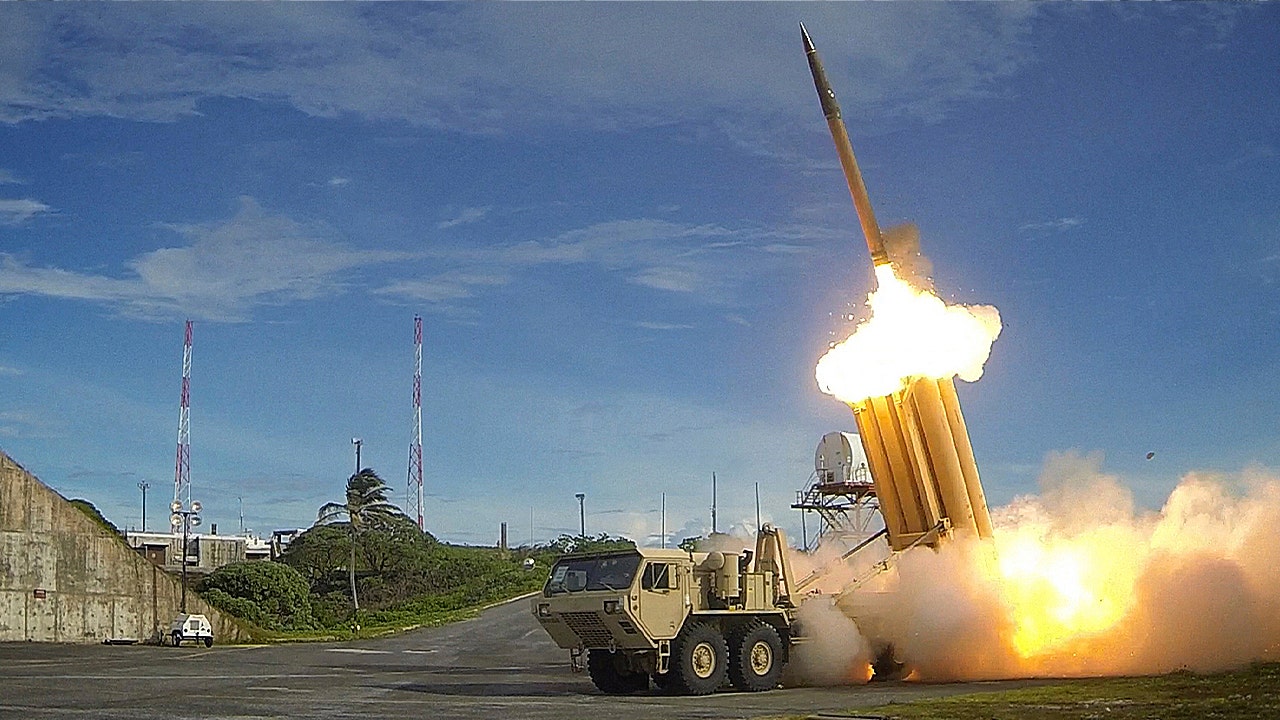
The Pentagon is shifting gears after years of buying missile defenses in small batches while threats kept piling up. New budget plans point to a much bigger push for Patriot and THAAD interceptors, driven by the hard lesson that America can burn through high-end weapons faster than many expected.
That change did not come out of nowhere. Missile-heavy fighting in the Middle East has forced U.S. forces, Israel, and Navy ships to lean on advanced interceptors again and again, draining some of the most valuable rounds in the arsenal. The result is a sharper focus on stockpiles, readiness, and how thin those shelves really are.
The Army’s fiscal 2027 plan is especially aggressive on PAC-3 MSE missiles, calling for a huge jump in purchases compared with recent years. The proposed buy would push the program far beyond the modest levels seen in prior budgets, and that matters because PAC-3 MSE and THAAD sit at the heart of U.S. ballistic missile defense.
Patriot batteries are built to shield troops, airfields, and other critical sites at shorter ranges, while THAAD is designed to reach higher and farther to knock missiles down before they get close. Together, they form a layered defense that commanders depend on when the sky starts filling with incoming fire. When those interceptors run low, every plan gets tighter and every risk gets bigger.
Recent budgets show how slowly the buildup came before this abrupt turn. PAC-3 MSE procurement dipped from 328 missiles in fiscal 2022 to 252 in fiscal 2023, then fell again to 230 in fiscal 2024 and 214 in fiscal 2025. THAAD production stayed even smaller, with only 11 interceptors bought in 2024 and 12 in 2025.
That history now looks painfully out of step with the threat picture. The Army Requirements Oversight Council reportedly lifted the PAC-3 MSE goal from 3,376 missiles to 13,773 in April 2025, a move that shows just how quickly officials are trying to catch up. The scale of the change makes the earlier caution look less like prudence and more like a dangerous delay.
Retired Rear Adm. Mark Montgomery called it a long-running munition problem, not a surprise failure. The point, as he framed it, is that the United States did not enter this stretch of conflict with enough high-end weapons ready to go. That critique lands hard when the Pentagon is scrambling to refill bins that should never have gotten so empty.
The pressure goes beyond the current fight with Iran. China looms over every serious debate about missile defense because a Pacific conflict would likely mean massed salvos, repeated strikes, and a fight that could drag on much longer than anything seen so far. In that kind of war, inventory is not a side issue, it is the backbone of survival.
Defense analysts have been warning for years that the math did not add up. Procurement decisions competed with other priorities across the Pentagon and Congress, and the interceptor accounts often lost out. Now the bill is due, and the effort to expand production is running into the same old reality that factories, supply chains, and trained workers do not appear overnight.
Even the new procurement targets are only part of the story. Buying missiles on paper is one thing, but building the industrial muscle to sustain much higher output is something else entirely. Rocket motors, seekers, guidance components, and other specialized parts all have to move in sync, and that makes a rapid rebound slow, messy, and expensive.
The Army’s shift to take on THAAD procurement in fiscal 2027 shows how serious the response has become. The plan supports hundreds more interceptors than before, signaling a move from cautious purchasing to emergency-scale rebuilding. Still, the deeper challenge is not just making more missiles, but making enough of them fast enough to matter if a bigger war ever erupts.
