
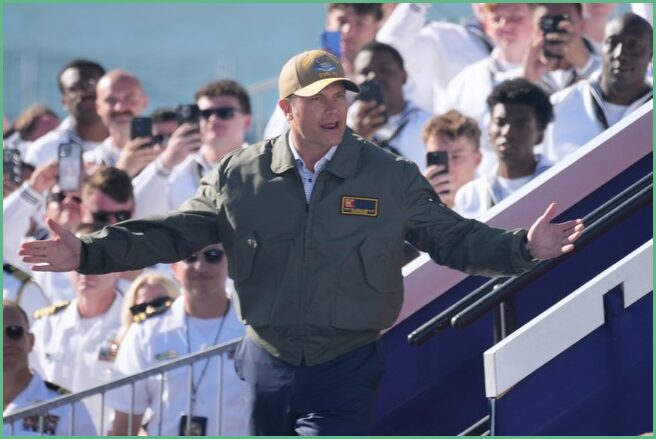
The Pentagon press corps balked when Secretary of War Pete Hegseth rolled out new conduct rules in September. They tighten who can move where inside the building and how reporters interact with military personnel. Hegseth says these steps are about protecting operations and personnel, not muzzling coverage.
Under the guidance, reporters must wear visible credentials, be escorted outside certain areas, and stop soliciting classified leaks from service members or civilian staff. Those restrictions simply align Pentagon credentialing with the rules that govern other U.S. military installations. The goal is to stop insiders from using accredited access to feed damaging stories.
Pentagon access is a privilege, not a right. So, here is press credentialing FOR DUMMIES:
- Press no longer roams free
- Press must wear visible badge
- Credentialed press no longer permitted to solicit criminal acts
DONE. Pentagon now has same rules as every U.S military installation
Hegseth began tightening access after a rash of leaks that harmed operations and reputations. In May he ordered stricter protocols, and those practices are credited with helping keep Operation Midnight Hammer, the strike aimed at Iran’s nuclear infrastructure, from being telegraphed.
To ordinary Americans these rules look like common sense. The harm has come from insiders who quietly shop secrets to reporters, not from responsible coverage. Yet the Pentagon press corps has reacted as if those limits are an existential attack rather than routine security.
When the department set a signing deadline, almost every major outlet announced it would refuse to sign the pledge, with One America News Network the only organization noted as willing to comply. That predictable standoff is exactly what Hegseth anticipated and what the Department prepared to enforce.
The policy “constrains how journalists can report on the U.S. military, which is funded by nearly $1 trillion in taxpayer dollars annually,” said the New York Times’s Washington bureau chief, Richard Stevenson. “The public has a right to know how the government and military are operating.”
The Atlantic, the Wall Street Journal, NPR, Reuters and the Guardian, along with the trade publications Task & Purpose and Breaking Defense, said they were not signing either. Fox News, Hegseth’s former employer, has not yet said whether it would sign the pledge.
The Atlantic’s editor in chief, Jeffrey Goldberg, who was added to a Signal group chat including Hegseth earlier this year, said the constraints on journalists violate their First Amendment rights. As a result, the magazine’s staffers won’t sign.
The media policy is the latest attempt by Defense Secretary Pete Hegseth to clamp down on journalists covering the Pentagon. The Defense Department’s media staff rarely conducts briefings, kicked out many mainstream news organizations from their dedicated desks, and restricted movement within the Pentagon facilities.
Multiple outlets and the Pentagon Press Association are talking lawsuits, but those suits look more like a tactic to slow enforcement than a principled defense of free speech. Court challenges can freeze change for months, which is useful if your goal is to preserve comfortable access rather than tighten security. Expect procedural fights and delay, not a quick constitutional knockout for the press corps.
It’s unlikely the Supreme Court will rule that roaming the Pentagon to gather classified material is protected speech. Expect the fight to play out in lower courts where judges can delay and preserve old habits. That outcome serves the media organizations that prefer access over accountability.
At 5 p.m. Eastern today, access for anyone who refuses the rules will be curtailed. When The New York Times posted its refusal on “X” yesterday, Pete Hegseth replied in the only language that cuts through the chatter.
‘[A waving hand emoji]. Bye.’
