
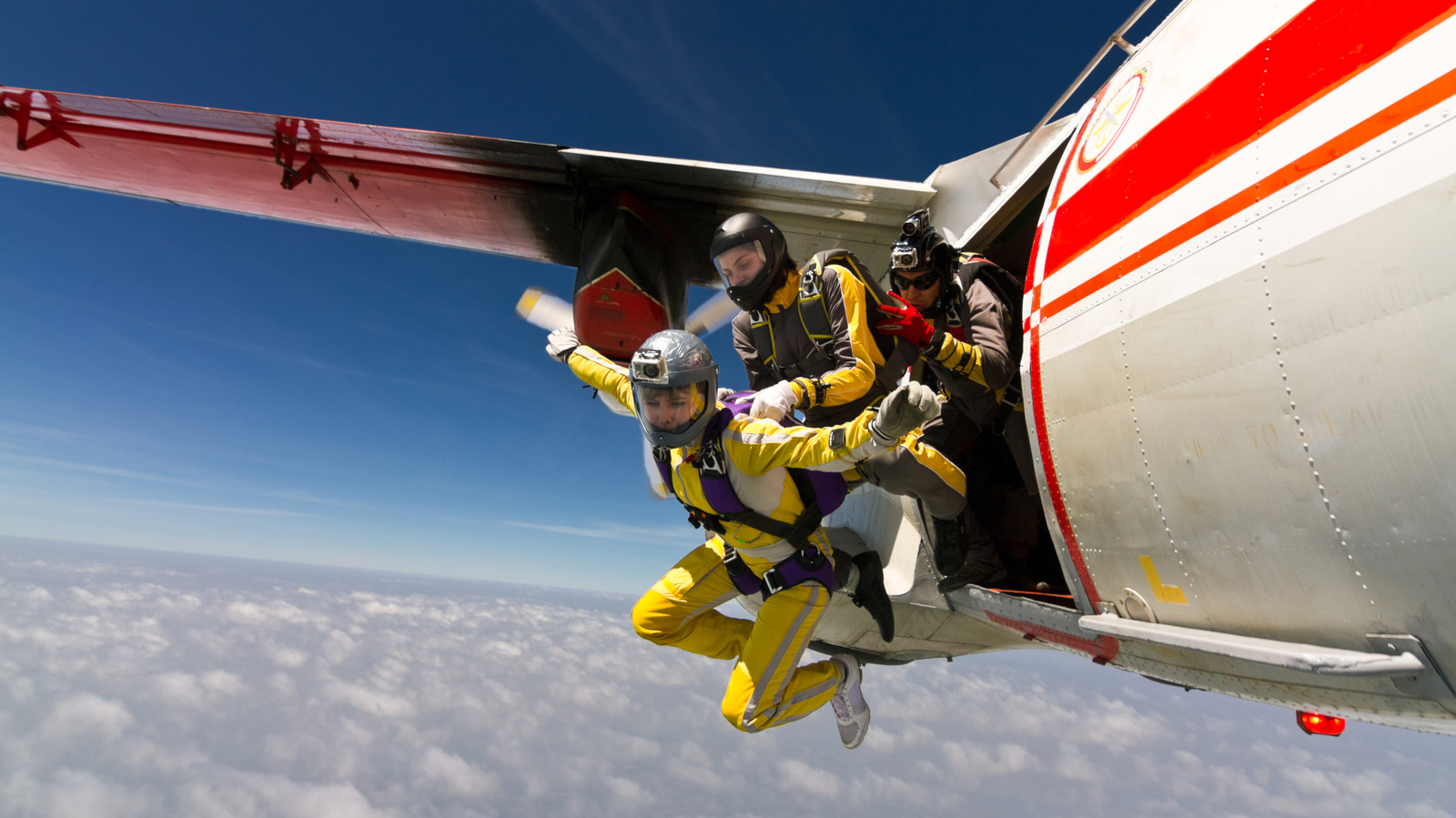
I’ll explain why commercial airliners don’t carry parachutes, walk through the physics and logistics involved, outline the human and procedural limits, explore safety tradeoffs and regulations, and point to the realistic alternatives that actually make flying safe.
At first glance it seems obvious: parachutes save lives, so why not give one to every passenger? The practical picture is harsh. Commercial jets cruise at altitudes and speeds that turn a simple jump into a near-impossible survival scenario.
Most passenger jets fly above 30,000 feet where the air is thin, temperatures are extreme, and oxygen is scarce. Without pressurization and supplemental oxygen, a person exposed to that environment will quickly lose consciousness. Even if someone stayed awake, deploying a parachute where air density is low is unreliable and dangerous.
Speed is another unforgiving factor. Typical cruise speeds exceed 500 miles per hour, and at that velocity a human exiting a cabin would be subjected to brutal windblast and turbulence. Protective gear and specially designed exit procedures could mitigate some risk, but building aircraft and cabins to allow safe egress at those speeds would radically change plane design and capacity.
Weight and space matter to airlines. Parachutes, harnesses, and the training infrastructure to use them safely add significant mass and take up cabin real estate. That added weight increases fuel burn and ticket prices, and any space taken up for parachute storage reduces seats or emergency equipment that already has proven safety value.
Human factors make the idea even less practical. In an emergency, panic and confusion multiply; asking hundreds of largely untrained people to don chutes and jump in orderly fashion is unrealistic. Evacuations are already chaotic during ground incidents, and forcing midair egress would demand an extraordinary level of calm, strength, and training that far exceeds what passengers can be expected to have.
Regulatory and operational barriers stack on top of the physical ones. Certification authorities require rigorous testing for any system added to an aircraft, and parachute-equipped evacuation systems would need a level of redundancy and reliability that is hard to prove. Airlines also prioritize measures that reduce accident likelihood rather than rely on an escape plan that may not be viable at altitude.
There’s also the sobering math: most fatal airline accidents occur during takeoff or landing phases where parachutes offer no advantage. Structural failures that could in theory allow a parachute exit are extremely rare compared with events like runway overruns or controlled flight into terrain. Investing in pilot training, maintenance, and improved safety systems prevents many more fatalities than outfitting cabins with parachutes would.
Technology alternatives do a better job of saving lives. Enhanced avionics, redundant systems, collision-avoidance tech, and improved crew procedures focus on preventing the emergency in the first place. Aircraft manufacturers and regulators have favored resilient design and fail-safe systems because those approaches lower overall risk without imposing impossible demands on passengers.
Finally, consider special-case solutions. Some small aircraft and military platforms do use parachutes or ejection systems where missions and flight envelopes make them practical. But those are tightly controlled environments with trained crews and specific aircraft designs. Scaling any of those solutions to a commercial jet full of civilians simply does not translate safely or economically.
