
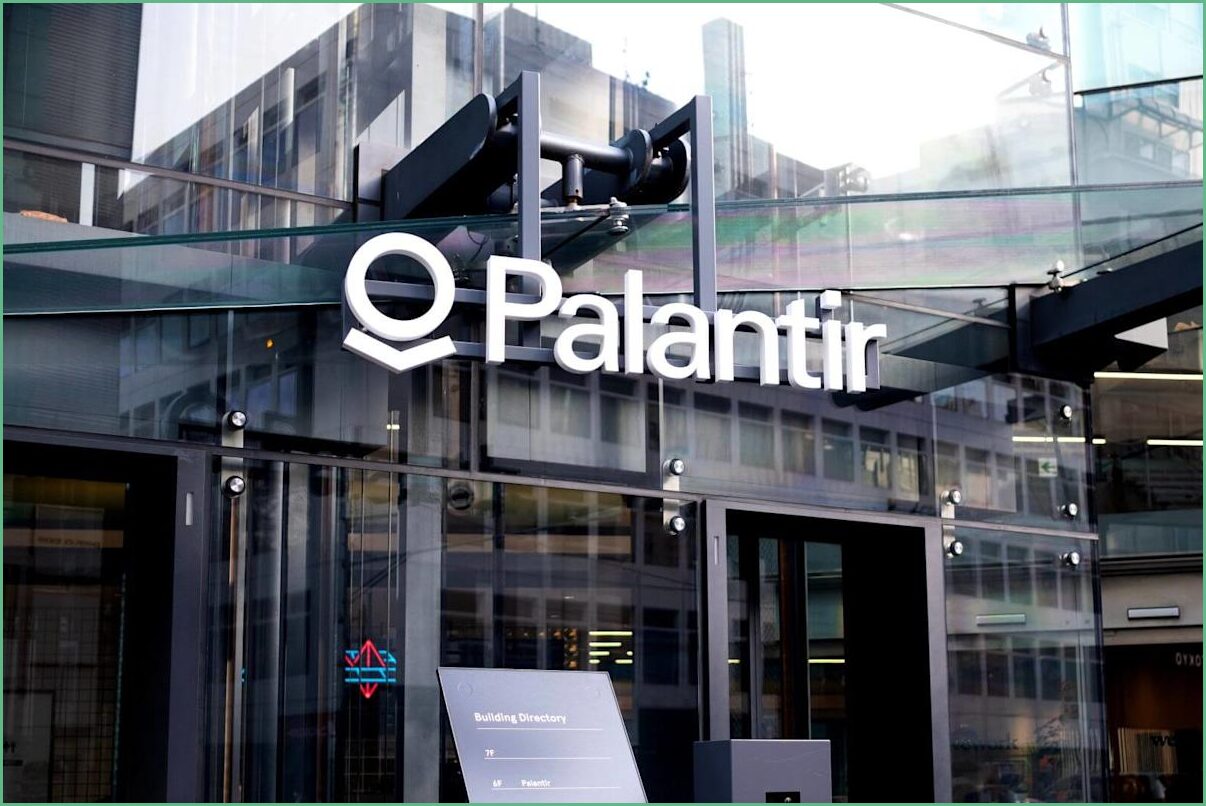
Palantir’s latest earnings beat and raised guidance failed to stop a sharp selloff, and this piece examines whether that dip is a buying opportunity by weighing valuation, analyst warnings, peer comparisons, and consensus sentiment.
Shares fell hard after the results, with the stock sliding again in morning trading, even though revenue and guidance looked solid on paper. That disconnect between fundamentals and price action is the story here: strong operational results met with investor concern over how much they should pay for growth.
Valuation is the headline issue driving the mood around Palantir right now. The company trades at a forward price-earnings multiple near 465x, a figure that makes many investors wince and has put the name among the most expensive on market lists heading into 2026. With that kind of premium, even small signs of slowing momentum can trigger outsized selling.
Jefferies senior analyst Brent Thill has been particularly vocal, urging caution and steering clients away from buying the post-earnings dip. He calls the multiple “extreme.” and argues that even with substantial acceleration he wouldn’t justify the current price, citing the view that it can’t be explained away merely by faster growth.
Thill went further by saying that Palantir would still look richly priced unless it “accelerates to 60% 4-year compound annualized growth rate (CAGR).” He maintained an “Underperform” rating and attached an updated target that implies a steep downside. That $70 target signals a risk of more than 60% from recent levels, a math problem that fuels the bearish case.
Contrast that with how the market values other AI names and the comparison gets awkward for Palantir. Nvidia, often treated as the AI benchmark, is trading at roughly 48 times forward earnings—far below Palantir’s multiple—despite far greater scale and earnings power. Even bullish scenarios for Nvidia that envision massive market caps still leave its multiple well under Palantir’s current reading.
Another layer of investor skepticism comes from capital return policy, or the lack of one. Palantir does not pay a dividend, so holders get no income buffer against sharp valuation swings, which matters when the multiple feels stretched. For many market participants, that lack of income amplifies the downside risk if sentiment turns.
Still, performance this year has been dramatic: stock gains exceed triple digits from the start of the year, which shows how quickly optimism can drive a name higher. Big year-to-date returns can be a double-edged sword, drawing fresh buyers while also creating a larger pool of potential sellers who may react to any sign of trouble.
Wall Street’s aggregate view remains cautious at best, with the consensus rating settling at “Hold” and a mean target that sits well below recent intraday highs. That middle-ground stance reflects a split between analysts who see long-term promise in Palantir’s government and commercial contracts and those who worry the market is already pricing in perfection.
The decision to buy a post-earnings dip comes down to risk tolerance and conviction in a high-growth story priced as if everything must go right. If you believe Palantir will sustain an unequaled growth run and justify sky-high multiples, adding on weakness might make sense. If you worry about multiples reverting or AI euphoria cooling, patience or a more defensive approach could be prudent.
For investors weighing the trade, the core facts are clear: strong quarterly results and raised guidance on one side, stretched valuation and a sizeable analyst target gap on the other. That tension is exactly why the question of buying the dip in Palantir today is less about the report itself and more about how much risk you are willing to accept for a richly priced growth name.
