
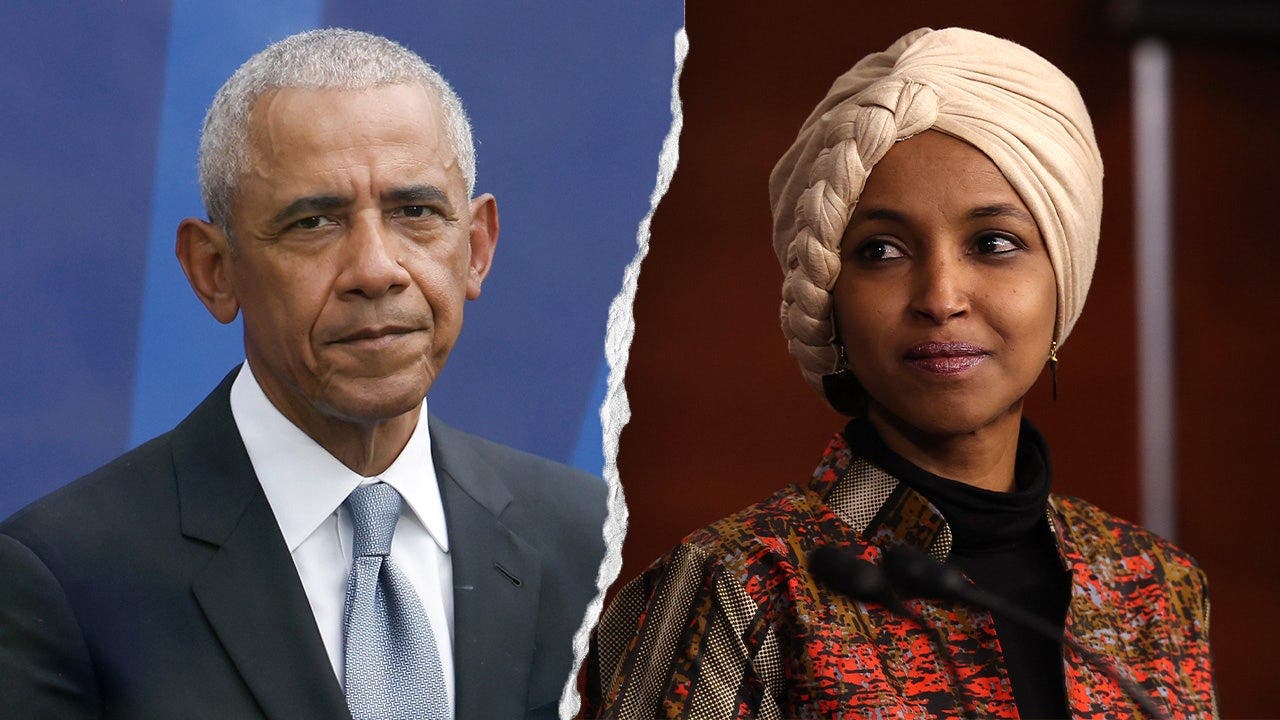
Barack Obama is back in the middle of a familiar fight over Ilhan Omar, and this time the story carries a sharp twist. He blasted Donald Trump’s administration for a criminal probe into Omar, but reporting now suggests Obama’s own team had already looked into the same basic allegations years earlier and quietly stepped away.
That’s where the criticism lands hard. Obama framed the current inquiry as “appalling,” yet the earlier federal review under his watch reportedly examined whether Omar had entered into a sham marriage with Ahmed Nur Said Elmi to help him get a green card. The twist is not just that the case existed, but that it was found to have some evidence behind it before being shelved.
According to the account discussed in the article, the Obama-era Department of Homeland Security and the FBI dug into the matter in 2016. The focus was on whether Omar’s marriage was real or whether it was a paper setup designed to dodge immigration rules. That kind of question does not fade just because it becomes politically inconvenient.
The piece also points out that the old probe was not dropped because investigators supposedly came up empty. Instead, it was set aside over a statute of limitations issue tied to the suspected felony. That detail matters, because it changes the story from “nothing there” to “we had a problem, but the clock may have run out.”
Marriage fraud is only part of the larger picture. The article says the current scrutiny around Omar also includes questions about her citizenship history, possible use of a false name, and a birth date that may not match other records. There is even a separate look at her financial dealings, which suggests the wider investigation is not staying in one lane.
What makes the legal side messy is that the timeline can keep moving. Fraud cases often turn on later acts, like filing papers, securing benefits, or hiding the original scheme. If those steps happened later, the argument that everything was simply too old gets a lot weaker.
The article also highlights a different route that Obama’s Justice Department could have taken. Instead of leaning only on a criminal case, officials could have pursued civil immigration fraud, which does not carry the same limitation problems. That path can lead to denaturalization and deportation if someone obtained citizenship through deception.
That possibility hangs over the whole debate. The standard of proof for civil action is lower than in a criminal case, so a case that is hard to prove beyond a reasonable doubt may still be serious enough to unwind citizenship if the evidence is strong. In that sense, the decision to stop short years ago looks less like caution and more like a choice.
Obama’s public attack on Trump also runs into another problem: the timing. He accused Trump of weaponizing the federal government against a “law-abiding elected official,” but he did not mention that his own administration had already opened the door to the same allegations. Leaving that part out makes the criticism sound less like principle and more like selective outrage.
There is also a factual dispute around Omar’s age at the time she applied for derivative citizenship through her father. Obama stated it as settled that she was 17, but the article says her autobiography and other documents call that into question, suggesting she may have been 18 and therefore ineligible for that route. If that turns out to be true, the stakes jump fast from political embarrassment to possible legal fallout.
The larger theme is the same old Washington double standard. One side gets righteous speeches, the other gets the full blast of the law, and then everyone pretends the past never happened. In this case, the paper trail keeps pointing back to the Obama years, and that makes the moral finger-pointing look especially thin.
Even now, the article suggests, Obama is acting as if his version of events should be taken on faith. But the details around the marriage probe, the citizenship questions, and the decision not to push the case further are hard to wave away. Once those pieces are laid out, the noise around the accusation gets a lot louder than the accusation itself.
