
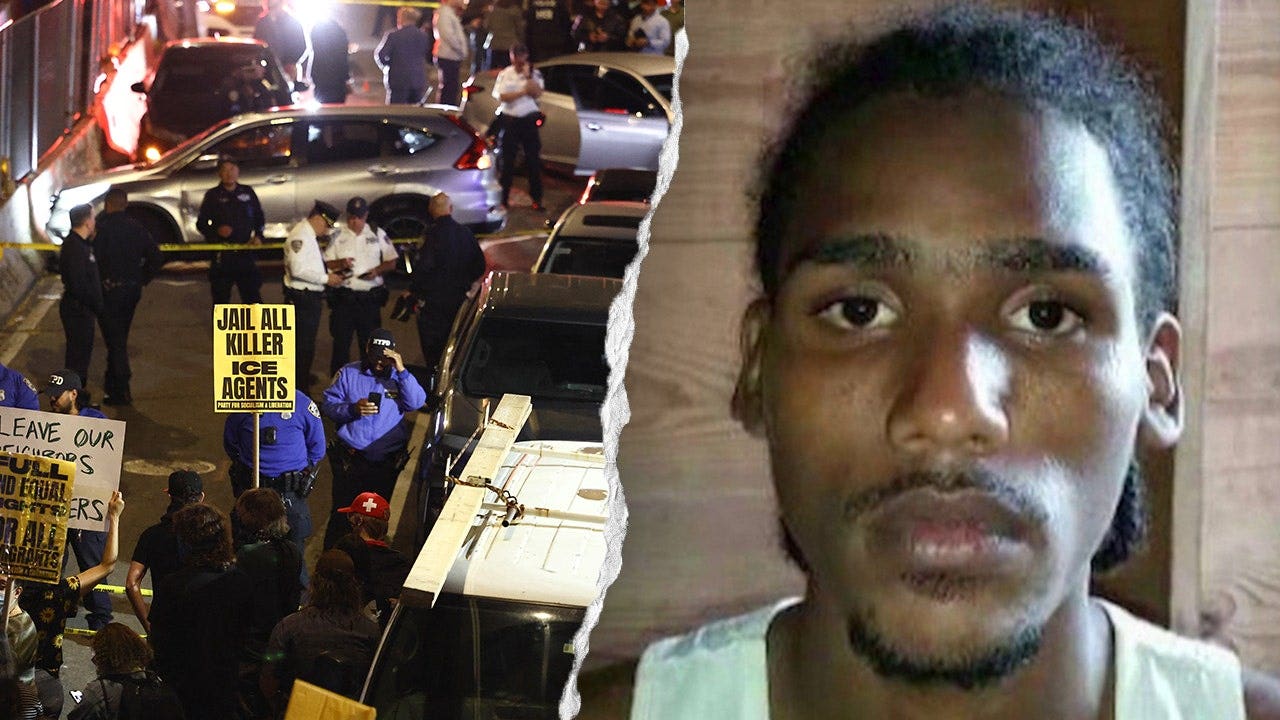
The NYC ICE shooting has become more than a tense law enforcement encounter in a city street. It quickly turned into a bigger fight over responsibility, victimhood, and how fast a person can be recast as a symbol when politics takes over.
Oscar Belgal was driving with his young son in the car when ICE officers moved in during an arrest attempt in Marble Hill. What happened next was chaotic, disputed, and now under review by federal and local investigators.
That part of the story matters, but so does what came after. In the rush to condemn ICE, some activists and politicians brushed aside Belgal’s record, his choices, and the basic idea that personal conduct still counts.
According to the account laid out by authorities, officers approached Belgal’s SUV in plain clothes, and the situation escalated quickly. Belgal drove off, officers pursued him, and a shot was fired that struck him in the neck while his child remained unharmed in the back seat.
Belgal’s legal team tells a different version, saying he panicked and tried to protect his son after being confronted by armed men. That dispute will be sorted out by the investigations, but the public reaction started long before the facts were fully settled.
Belgal was not a blank slate. He had a prior robbery case, a later narcotics indictment, and allegations from federal officials that he was in the country illegally and tied to a gang, all of which made the effort to turn him into a pure symbol feel a lot less honest.
That is where the story gets ugly. Once the shooting hit the public conversation, Belgal’s identity started shrinking down to one thing only: an immigrant father wounded in front of his child.
That framing was useful for people eager to attack ICE. It also had the effect of washing away whatever responsibility Belgal may have carried for his own decisions, as if calling out his record was somehow the real crime.
This is where the idea of white guilt comes roaring in. Under that framework, the focus is not on what a person did but on which group he can be placed in, and that shift can wipe out accountability in a hurry.
That kind of thinking makes it easy to excuse bad behavior if the person can be cast as oppressed. It also makes it dangerous to tell the truth, because truth itself gets treated like an attack.
When Darializa Avila Chevalier said Belgal’s history did not even matter, the point was obvious. The real concern was not accuracy or justice, but preserving a moral script in which ICE is always the villain and the subject of the story is always a victim.
Zohran Mamdani and others pushed the same line, demanding outrage from the public while skipping over the parts that complicate the narrative. That is the trick, and it is a familiar one: erase the full person, keep the useful image, and let the movement feed on it.
The deeper problem is that this habit does not just distort one case. It trains people to stop asking hard questions whenever race, immigration, or policing enter the picture, and that makes honest public debate nearly impossible.
Belgal’s son is the innocent one in all this, and his fear should matter more than the political noise around him. A child in the back seat should never have to become the emotional centerpiece of a citywide ideology war.
Even so, the presence of that child cannot magically erase everything else. A father can love his son and still be responsible for his own actions, and a government can be scrutinized for force without pretending every other fact has vanished.
That is the part too many activists do not want to face. They want the sympathy without the standards, the outrage without the accountability, and the headline without the full human being standing behind it.
