
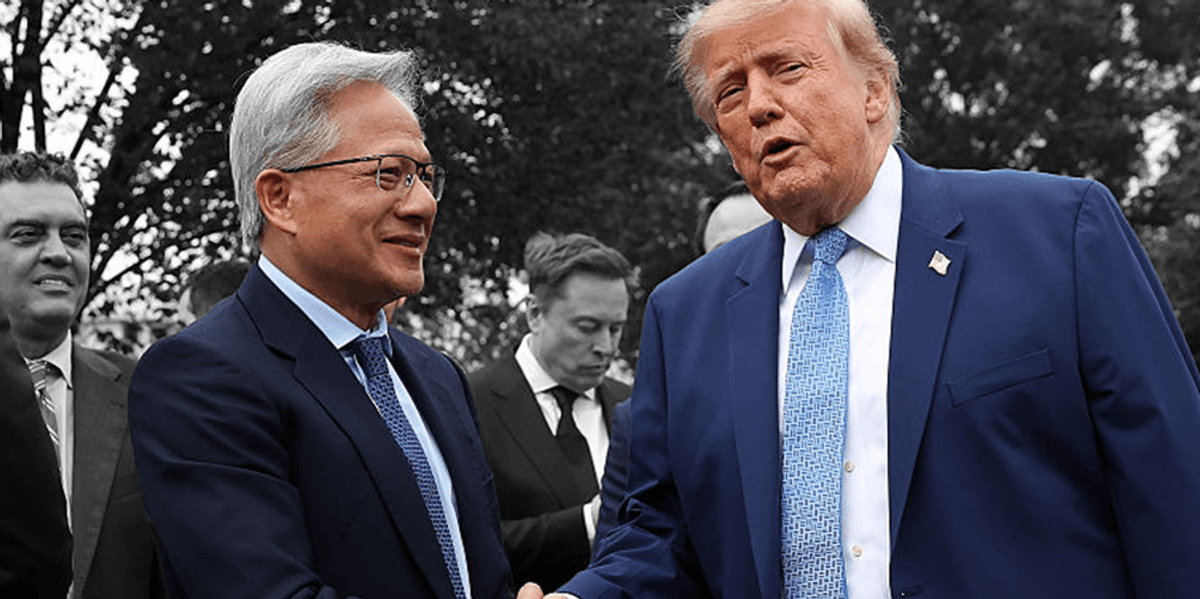
Nvidia got a fresh boost of attention after Donald Trump praised the company and nodded to Jensen Huang’s decision to bring back a former engineer, but the spotlight did not land evenly across the tech world. The reaction showed just how quickly a single policy and leadership moment can ripple through Big Tech, Wall Street, and the wider debate over American tech power.
Trump’s comments put Nvidia in a flattering light, especially as the company stays at the center of the AI boom. A move like rehiring a top talent can look small on the surface, but in a market this competitive, it sends a loud message about ambition, loyalty, and who gets to shape the next wave of technology.
That kind of praise tends to matter more than people think. Nvidia has become one of the clearest symbols of American dominance in advanced chips, and any public endorsement from a major political figure adds another layer to the company’s already massive profile. Investors notice, competitors notice, and the whole sector starts reading between the lines.
But not every tech company came out smiling. News like this can stir frustration among rivals who are already under pressure from Nvidia’s reach, especially when one firm appears to get a public boost while others are left dealing with the fallout of a highly concentrated market. In tech, momentum is everything, and even the optics can shake confidence.
Anthropic and Amazon sit in a different part of the story, but they still feel the heat whenever the conversation turns to AI leadership and chip supply. The race to build, train, and scale powerful AI systems depends on hardware, cloud muscle, and executive decisions that look mundane until they suddenly are not. When Nvidia gets the spotlight, everybody else in the chain has to measure where they stand.
Trump’s praise also fits into a larger pattern of political attention flowing toward companies seen as strategically important to the United States. Chips are not just another product category anymore, they are part of the country’s economic backbone and a key piece of national strength. That makes every personnel move, hiring decision, and public statement feel bigger than it used to.
Jensen Huang has built Nvidia into a company that can move markets with a keynote speech, and that kind of power changes the tone of the entire debate. Supporters see discipline, vision, and a rare ability to stay ahead of the curve. Critics see a giant with too much influence, too much leverage, and too much control over the direction of a critical industry.
JD Vance has also been one of the names hovering around the broader conversation about tech, industry, and American competitiveness, where the old guard and the new guard keep colliding. That clash is part of why stories like this get so much traction. They are never just about one company or one hire, because the bigger fight is about who gets to lead the future and on what terms.
For Nvidia, the moment is another reminder that its every move will be watched with a mix of admiration and suspicion. For everyone else in the sector, it is a blunt signal that the AI race is not slowing down, and the companies that can secure talent, chips, and credibility will keep pulling ahead. The pressure is only going to get sharper from here.
