
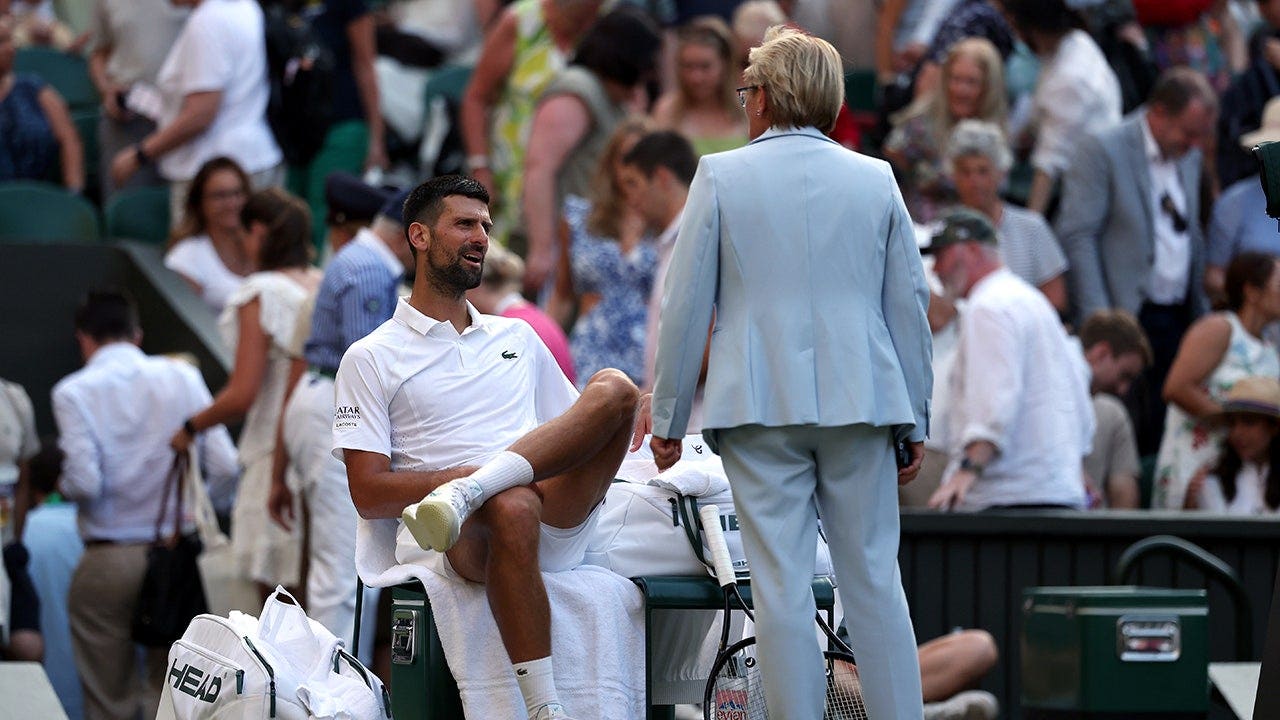
Novak Djokovic locked horns with tournament supervisor Denise Parnell over whether to shut the Centre Court roof during what became the longest quarterfinal in Wimbledon history, a tense moment that put rules, timing and temperament under the spotlight.
The disagreement happened late in a marathon match where rain and fading light nudged officials toward closing the roof. Djokovic pushed back, questioning the timing and the impact on play, while Parnell pressed the tournament’s duty to protect fair conditions. Both sides felt the moment was more than routine procedure, and it showed in the sharp exchange.
Centre Court has long been treated as the sport’s grandest stage, and closing the roof changes the whole feel of a match. Players worry the surface and ball behavior shift, and that can swing momentum after hours of battling. For Djokovic, who reads conditions and routines carefully, any interruption during a long match becomes a strategic factor as well as a comfort issue.
Denise Parnell’s role is to make the call when weather and light threaten safety or fairness, and officials say those choices are never easy. They must balance broadcast schedules, player safety and the integrity of the contest all at once. In practice that can mean making split-second decisions under pressure, and the human element of those calls is part of the story here.
Spectators noticed the tension, with murmurs and pointed looks traveling through a crowded Centre Court as debate unfolded. Crowd energy in long matches can swing like tide, and any procedural pause often amplifies noise and nerves. When elite players and officials visibly spar, it often becomes the headline rather than the scoreline itself.
Long matches test equipment and endurance, and Wimbledon’s heritage adds another layer of scrutiny to every operational choice. The tournament’s traditions push organizers to preserve a certain rhythm, yet modern tennis demands flexibility when weather interferes. That friction between history and practicality is exactly where disputes over closing the roof flare up.
Coaches and commentators later dissected the episode, weighing whether Djokovic’s pushback was tactical or a genuine concern about court conditions. Some saw it as a savvy attempt to influence momentum, while others framed it as a clear request for consistency in playing surface and lighting. Whatever the motive, it exposed how small decisions can feel huge in marathon matches.
Officials pointed out that rules exist to keep play fair across conditions, and that the supervisor must consider players on both sides, broadcasters and the wider schedule. Still, making such calls in real time means judgment calls, and those choices will always invite debate. The exchange between Djokovic and Parnell underscored how tennis governance often happens in front of a live audience.
The moment added a new chapter to Centre Court lore without changing the match’s outcome on paper, but it did remind everyone that tennis is part sport and part theater. Players, fans and officials all left with a clearer sense that the line between procedure and personality is thin. The tournament now faces the same ongoing question: how to make fast, fair decisions when history and the moment collide.
